Cooperative banks operate in one of the most tightly regulated environments in the financial ecosystem. While their strength lies in community trust and localized operations, the increasing complexity of regulations, reporting requirements, and digital transactions has made compliance more demanding than ever. This is where cooperative bank digital compliance tools become essential.
Compliance is no longer just a backend requirement—it is a core operational layer that directly impacts scalability, trust, and long-term sustainability. For cooperative banks aiming to modernize and compete with fintech platforms, adopting digital compliance tools is not optional—it is foundational.
In this article, we explore what digital compliance tools are, why they matter for cooperative banks, and how infrastructure platforms like Finspring enable compliant, scalable systems.
What Are Cooperative Bank Digital Compliance Tools?
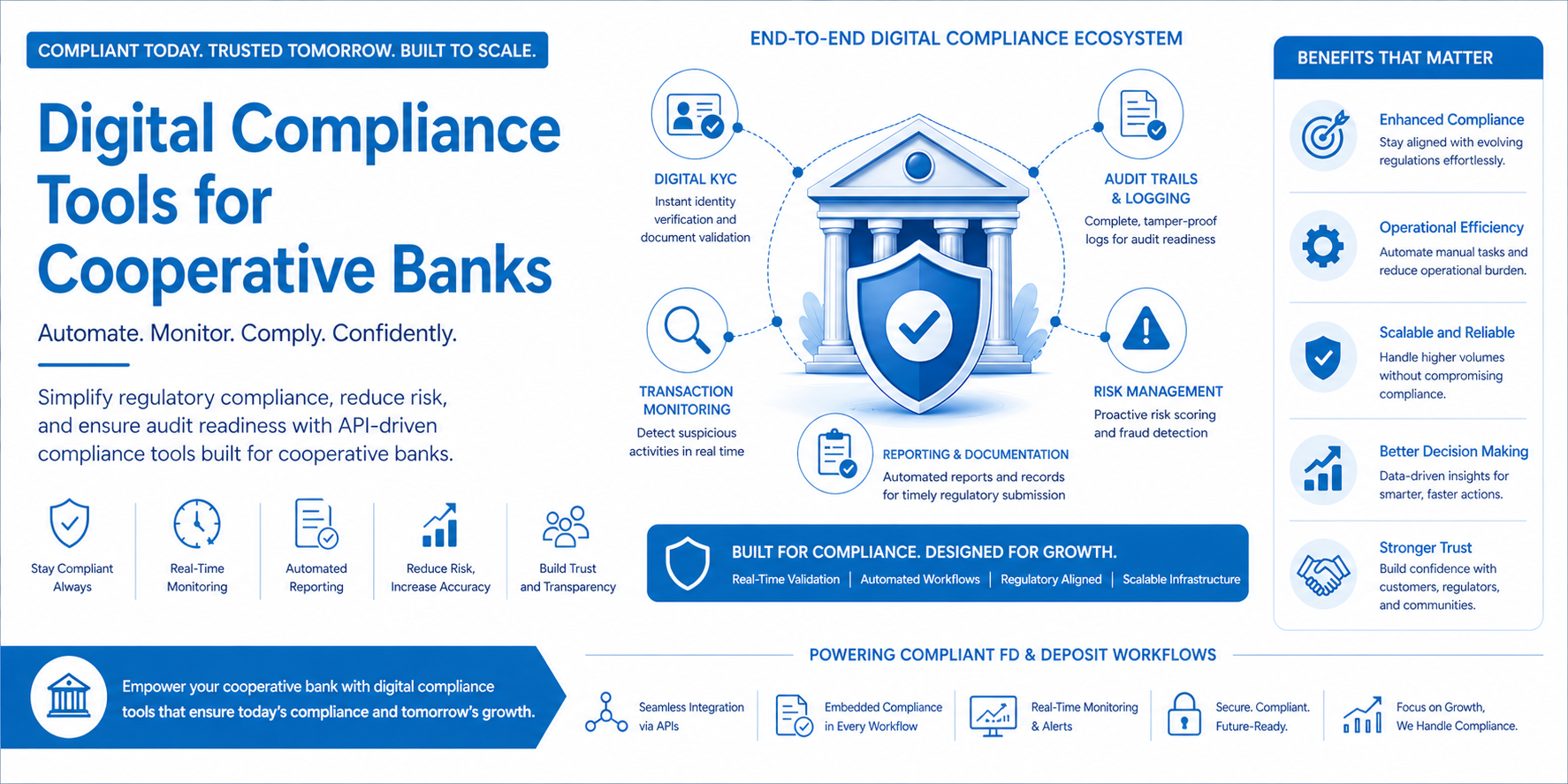
Cooperative bank digital compliance tools are software systems and infrastructure layers that automate, manage, and enforce regulatory requirements across all banking operations. These tools are designed to handle:
- KYC (Know Your Customer) verification
- Transaction monitoring
- Reporting and audit trails
- Risk management
- Regulatory compliance workflows
Instead of relying on manual processes, these tools ensure that compliance is integrated into daily operations, reducing errors and improving efficiency.
Why Compliance is More Challenging for Cooperative Banks
Cooperative banks face unique challenges when it comes to compliance, largely due to their structure and legacy systems.
1. Manual and Paper-Based Processes
Many cooperative banks still rely on:
- Physical documentation
- Manual verification
- Offline record-keeping
This increases:
- Processing time
- Error rates
- Compliance risks
2. Evolving Regulatory Requirements
Regulators are continuously updating guidelines related to:
- KYC norms
- Reporting standards
- Data security
Keeping up with these changes manually is difficult.
3. Limited Technical Resources
Compared to large banks, cooperative banks often have:
- Smaller IT teams
- Limited budgets
This makes building compliance systems internally challenging.
4. Increased Transaction Volumes
As digital adoption grows, transaction volumes increase, making manual compliance processes unsustainable at scale.
The Shift to Digital Compliance
Digital compliance tools address these challenges by automating workflows and embedding compliance directly into the infrastructure.
Key advantages:
- Real-time validation of transactions
- Automated reporting and documentation
- Reduced manual intervention
- Improved accuracy and consistency
This shift transforms compliance from a reactive process into a proactive system.
Core Components of Digital Compliance Tools
To effectively support cooperative banks, compliance tools must include several critical components.
1. Digital KYC Systems
KYC is the foundation of compliance. Digital tools enable:
- Instant identity verification
- Document validation
- Automated onboarding workflows
This ensures that all customers meet regulatory requirements before accessing services.
2. Transaction Monitoring
Compliance tools must track:
- Transaction patterns
- Suspicious activities
- Threshold breaches
Real-time monitoring helps detect and prevent fraud or regulatory violations.
3. Audit Trails and Logging
Every action must be recorded, including:
- User activities
- System events
- Transaction details
This ensures transparency and audit readiness.
4. Reporting and Documentation
Compliance requires:
- Accurate reports
- Timely submissions
- Standardized formats
Digital tools automate these processes, reducing the burden on teams.
5. Risk Management Systems
Advanced tools include:
- Risk scoring models
- Fraud detection algorithms
- Alert systems
These help banks identify and mitigate risks proactively.
Traditional vs Digital Compliance Systems
| Aspect | Traditional Compliance | Digital Compliance Tools |
|---|---|---|
| Process | Manual | Automated |
| Speed | Slow | Real-time |
| Accuracy | Error-prone | High |
| Scalability | Limited | High |
| Audit Readiness | Reactive | Continuous |
Challenges Without Digital Compliance Tools
Cooperative banks that do not adopt digital compliance tools often face:
- Delays in onboarding and transactions
- Increased risk of regulatory violations
- High operational costs
- Difficulty scaling operations
- Poor audit readiness
Over time, these issues can impact both growth and reputation.
The Role of API Infrastructure in Compliance
API infrastructure plays a crucial role in enabling digital compliance by:
- Connecting compliance systems with core banking platforms
- Automating workflows across systems
- Enabling real-time validation and monitoring
- Standardizing processes across partners
This makes compliance seamless, scalable, and efficient.
How Finspring Enables Digital Compliance
Finspring provides API-first infrastructure that integrates compliance directly into FD and deposit workflows, making it a powerful enabler of cooperative bank digital compliance tools.
1. Embedded Compliance Workflows
Finspring integrates:
- KYC validation
- Documentation checks
- Regulatory workflows
This ensures that every transaction is compliant by design.
2. Automated Reporting
Banks can:
- Generate reports in real time
- Maintain accurate records
- Ensure timely submissions
3. Audit-Ready Systems
Finspring provides:
- Complete audit trails
- Structured data storage
- Easy retrieval of records
This simplifies audits and reduces preparation time.
4. Real-Time Monitoring
Finspring tracks:
- Transaction performance
- Compliance metrics
- System health
This enables proactive issue detection and resolution.
Example: Compliance Workflow with Finspring
| Stage | Traditional Process | Digital Process with Finspring |
|---|---|---|
| Onboarding | Manual KYC | Instant verification |
| Transaction Monitoring | Periodic checks | Real-time tracking |
| Reporting | Manual compilation | Automated reporting |
| Audit | Time-consuming | Instant readiness |
Benefits of Digital Compliance Tools for Cooperative Banks
1. Improved Efficiency
Automation reduces:
- Manual workload
- Processing time
- Errors
2. Enhanced Compliance
Digital tools ensure:
- Consistent adherence to regulations
- Accurate reporting
- Reduced risk of violations
3. Scalability
Banks can handle:
- Higher transaction volumes
- More customers
- Complex workflows
without increasing operational burden.
4. Better Transparency
Audit trails and real-time monitoring provide:
- Clear visibility into operations
- Improved accountability
5. Stronger Trust
Reliable compliance systems build:
- Customer confidence
- Regulatory trust
- Long-term credibility
Best Practices for Implementation
1. Start with Core Compliance Areas
Focus on:
- KYC
- Transaction monitoring
- Reporting
2. Use API-First Solutions
Adopt platforms that:
- Integrate easily
- Automate workflows
- Scale efficiently
3. Ensure Data Security
Implement:
- Encryption
- Access controls
- Secure storage
4. Train Teams
Ensure staff understand:
- Digital tools
- Compliance workflows
- System usage
The Future of Compliance for Cooperative Banks
Digital compliance will continue to evolve with:
- AI-driven risk detection
- Real-time regulatory updates
- Automated decision-making systems
- Deeper integration with financial products
These advancements will make compliance:
- Faster
- Smarter
- More efficient
Conclusion
Cooperative bank digital compliance tools are essential for modern banking operations. By automating workflows, ensuring real-time validation, and maintaining audit readiness, these tools enable cooperative banks to scale efficiently while staying compliant.
Platforms like Finspring play a critical role by embedding compliance directly into financial infrastructure, particularly in FD and deposit systems. This allows cooperative banks to focus on growth while maintaining regulatory alignment.
Because in today’s financial ecosystem, compliance is not just a requirement.
It is a core capability that defines how far a bank can scale.