In the rapidly evolving fintech landscape, speed, reliability, and trust are everything. When businesses integrate fixed deposit (FD) products into their platforms, they’re not just choosing a financial product—they’re choosing an infrastructure partner that directly impacts user experience, revenue, and brand credibility. This is where Service Level Agreements (SLAs) become critical. If you’re evaluating a provider like Finspring, understanding the right SLA expectations can help you make a smarter, future-proof decision. In this article, we’ll break down FD Infrastructure SLAs—what they mean, why they matter, and what a modern partner should deliver.
What Are SLAs in FD Infrastructure?
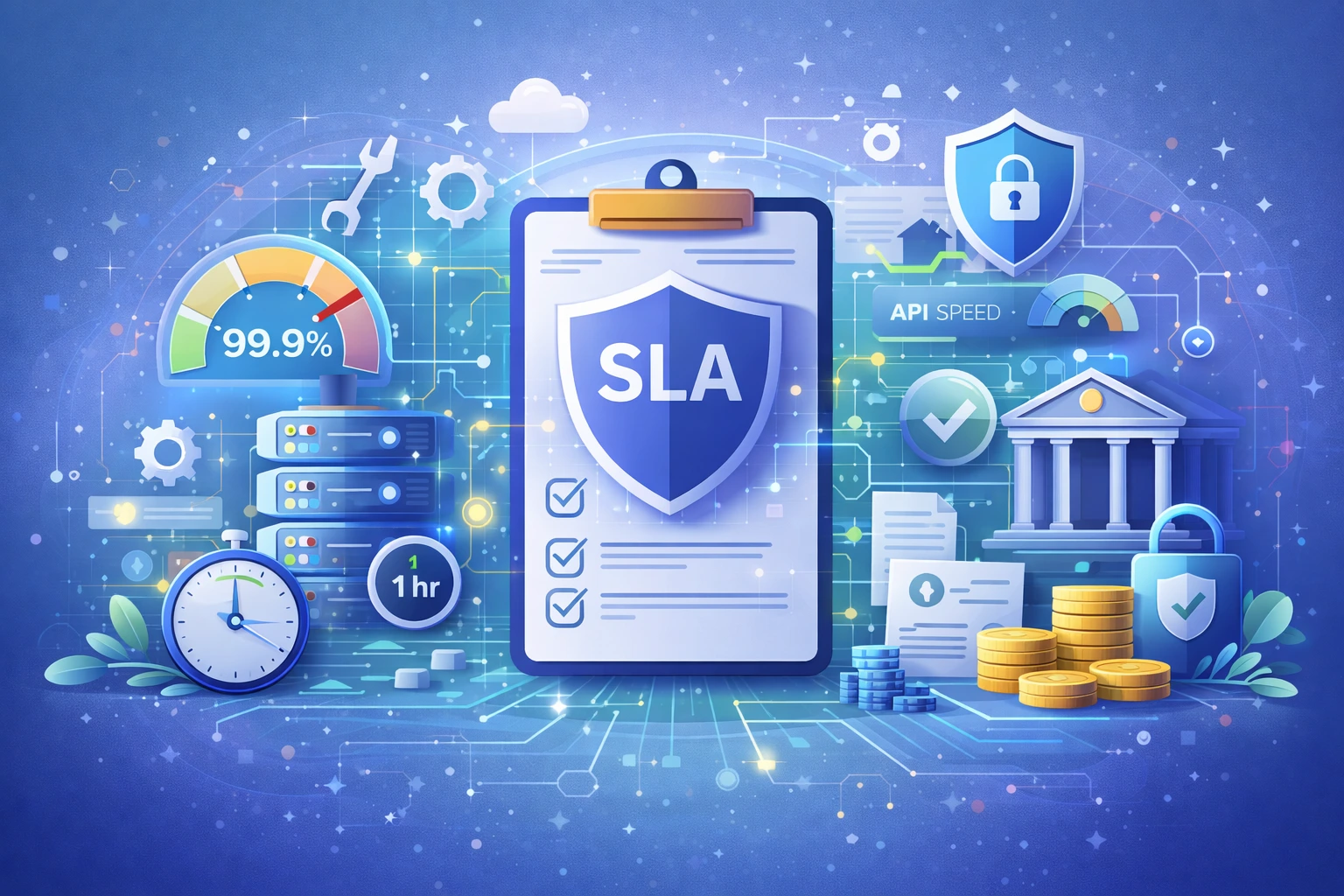
Service Level Agreements (SLAs) define the performance standards a provider commits to. In the context of FD infrastructure, SLAs ensure that every part of the deposit lifecycle—from onboarding to maturity—is seamless, secure, and reliable.
These agreements typically cover:
- System uptime
- API performance
- Transaction processing time
- Issue resolution timelines
- Data security and compliance
Without strong SLAs, even the best product can fail at execution.
Why FD Infrastructure SLAs Matter
FD products are trust-driven. Users expect zero delays, accurate transactions, and timely updates.
Weak SLAs can lead to:
- Failed transactions
- Delayed FD bookings
- Missed maturity actions
- Poor customer experience
On the other hand, strong FD Infrastructure SLAs ensure:
- Consistent performance
- Faster operations
- Higher customer satisfaction
- Better business outcomes
Key SLAs You Should Expect
Let’s dive into the most important FD Infrastructure SLAs every modern platform should offer.
1. High System Uptime (99.9% or Above)
Your FD offering should be available whenever your users need it.
A reliable partner ensures:
- Minimal downtime
- Redundant systems
- Continuous monitoring
This is especially critical during peak traffic periods or promotional campaigns.
2. Fast API Response Time
Speed is a competitive advantage.
Modern FD infrastructure should provide:
- Low-latency API responses
- Real-time data fetching
- Seamless integration with your app or website
Slow APIs can disrupt the entire user journey.
3. Quick FD Booking & Confirmation
Users expect instant gratification—even in financial products.
SLAs should guarantee:
- Fast FD creation
- Immediate confirmation
- Real-time status updates
Delays here can lead to drop-offs and lost revenue.
4. Reliable Maturity & Renewal Processing
The lifecycle doesn’t end at booking.
Your partner must ensure:
- Accurate maturity tracking
- Timely notifications
- Smooth renewal flows
This directly impacts retention and repeat investments.
5. Issue Resolution Turnaround Time (TAT)
Problems can occur—but how quickly they’re resolved defines the experience.
Look for SLAs that include:
- Defined response times
- Escalation mechanisms
- Dedicated support channels
A strong support system builds long-term trust.
6. Data Security & Compliance Assurance
Security is non-negotiable.
Modern FD platforms should commit to:
- Data encryption
- Secure APIs
- Regulatory compliance
This protects both your business and your users.
7. Scalability & Load Handling
As your platform grows, your infrastructure should grow with you.
SLAs should ensure:
- Stable performance under high load
- No degradation in speed
- Seamless scaling
This is crucial for long-term success.
How Finspring Delivers on FD Infrastructure SLAs
When it comes to meeting and exceeding FD Infrastructure SLAs, Finspring is designed with performance and reliability at its core.
Here’s how it stands out:
- API-first architecture for seamless integration
- Automated workflows to reduce delays and errors
- Real-time tracking and notifications
- Secure, compliant infrastructure
- Dedicated support and monitoring systems
Finspring doesn’t just meet SLA expectations—it builds systems that make them effortless.
Red Flags to Watch Out For
Not all providers are created equal. Here are signs of weak SLA frameworks:
- No clear uptime guarantees
- Undefined response times
- Manual processes behind the scenes
- Limited support availability
- Lack of transparency in performance metrics
Avoiding these pitfalls can save you from major operational headaches.
Choosing the Right Partner
Selecting an FD infrastructure partner is a long-term decision.
When evaluating options, ask:
- Are the SLAs clearly defined and measurable?
- Do they align with your business goals?
- Can the system handle future scale?
- Is support proactive or reactive?
The right partner will not just promise performance—they’ll prove it consistently.
Final Thoughts
In a digital-first financial world, infrastructure is your backbone—and SLAs are its strength.
Understanding and demanding strong FD Infrastructure SLAs ensures that your FD offerings are not only functional but exceptional.
With a platform like Finspring, you’re not just integrating a product—you’re building on a foundation designed for speed, security, and scale.