The financial landscape has shifted dramatically over the last decade. Fintech companies have redefined how financial services are delivered—faster onboarding, seamless user experiences, real-time transactions, and highly personalized offerings. For cooperative banks, which have traditionally relied on trust, relationships, and local presence, this shift presents both a challenge and an opportunity. To remain competitive, cooperative banks must adopt fintech solutions for cooperative banks—not by trying to become fintech companies themselves, but by leveraging the same infrastructure, speed, and scalability that fintechs use.
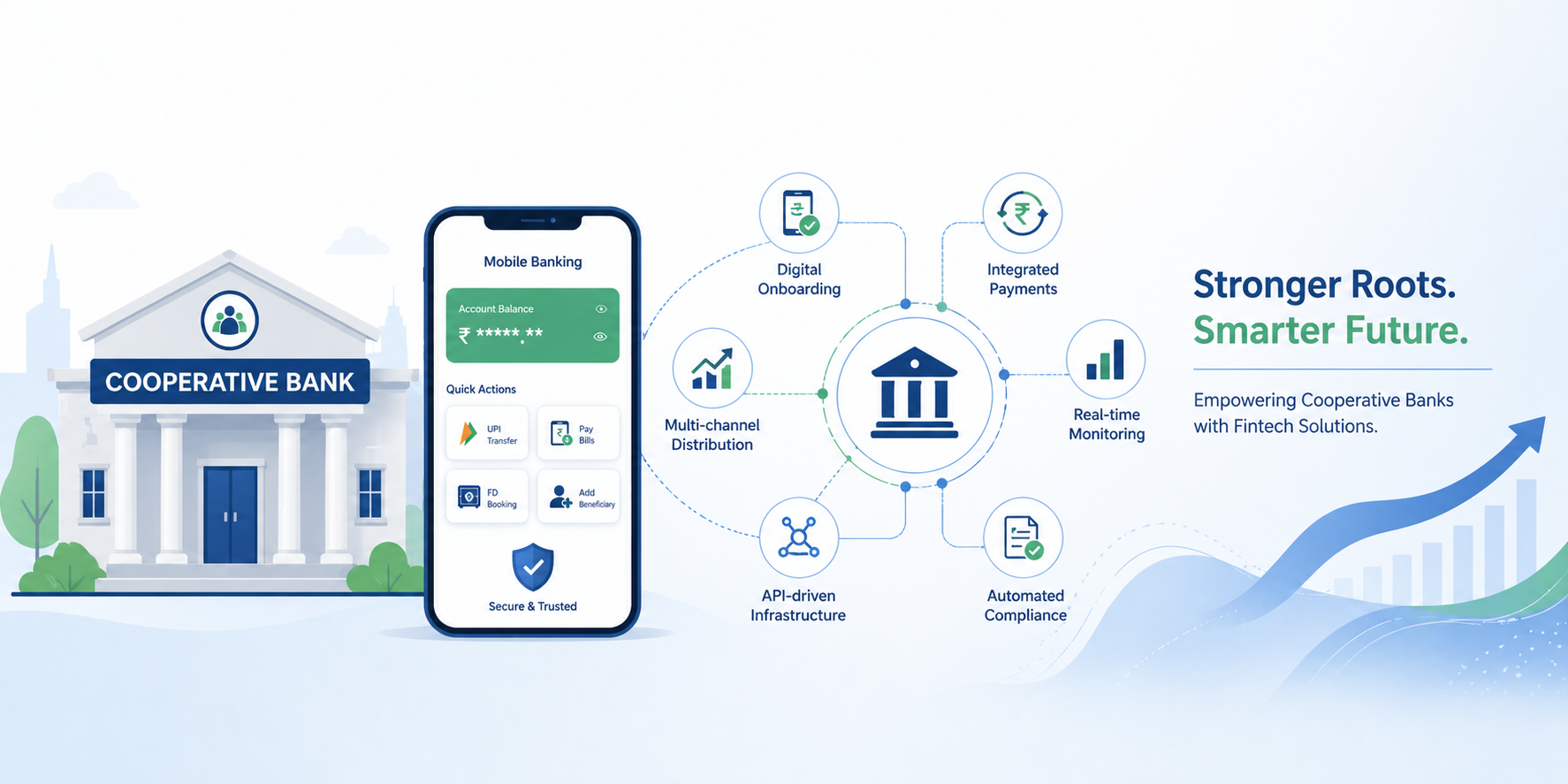
This article explores how cooperative banks can compete effectively, what fintech solutions they need, and how platforms like Finspring enable this transformation.
Why Fintechs Are Winning
Fintech companies have gained an advantage because they are built on modern systems designed for speed and scale. Their success is driven by several key factors:
1. Superior User Experience
Fintech platforms offer:
- Simple interfaces
- Fast onboarding
- Instant confirmations
This reduces friction and improves customer satisfaction.
2. API-Driven Infrastructure
Fintechs rely on:
- Modular systems
- API integrations
- Real-time processing
This allows them to launch and iterate quickly.
3. Data-Driven Decision Making
Fintechs use data to:
- Personalize offerings
- Optimize user journeys
- Improve conversions
4. Multi-Channel Distribution
Instead of relying on physical branches, fintechs operate across:
- Mobile apps
- Websites
- Partner platforms
Why Cooperative Banks Still Have an Advantage
Despite fintech growth, cooperative banks have strengths that fintechs cannot easily replicate:
1. Deep Customer Trust
Cooperative banks are trusted within their communities, especially in:
- Tier 2 and Tier 3 cities
- Rural markets
2. Strong Deposit Base
They have:
- Established customer relationships
- Stable deposit inflows
3. Regulatory Familiarity
Cooperative banks operate within regulatory frameworks and understand compliance requirements deeply.
4. Local Presence
Their physical presence allows them to:
- Build relationships
- Provide personalized service
The Real Problem: Infrastructure Gap
The challenge is not capability—it is infrastructure.
Cooperative banks often operate with:
- Legacy systems
- Manual processes
- Limited integration capabilities
This creates a gap between:
- What they can offer
- What customers expect
The Solution: Fintech Solutions for Cooperative Banks
To compete effectively, cooperative banks must adopt fintech solutions that enable:
- Digital onboarding
- Integrated payment systems
- API-driven product distribution
- Real-time monitoring
- Automated compliance
These solutions allow banks to combine their strengths with modern capabilities.
Key Areas Where Cooperative Banks Must Compete
1. Digital Onboarding
Fintechs onboard users in minutes. Cooperative banks must match this by implementing:
- Digital KYC
- Automated workflows
- Instant account activation
2. Payment Systems
Seamless payments are critical. Banks need:
- Integrated payment systems
- Real-time processing
- Automated reconciliation
3. Product Distribution
Fintechs embed financial products into user journeys. Cooperative banks must:
- Distribute products digitally
- Integrate with platforms
- Reach users beyond branches
4. Compliance Automation
Manual compliance slows growth. Banks need:
- Digital compliance tools
- Real-time monitoring
- Automated reporting
Traditional vs Fintech-Enabled Cooperative Banks
| Aspect | Traditional Model | Fintech-Enabled Model |
|---|---|---|
| Onboarding | Manual | Digital |
| Payments | Fragmented | Integrated |
| Distribution | Branch-based | Multi-channel |
| Compliance | Manual | Automated |
| Scalability | Limited | High |
The Role of API Infrastructure
API infrastructure is the backbone of fintech solutions. It allows cooperative banks to:
- Connect with fintech platforms
- Integrate new services quickly
- Scale operations efficiently
- Deliver real-time experiences
Instead of rebuilding systems, banks can use APIs to add capabilities incrementally.
How Finspring Helps Cooperative Banks Compete
Finspring provides API-first infrastructure for FD and deposit distribution, enabling cooperative banks to modernize one of their strongest product categories.
1. Digital FD Distribution
Finspring allows banks to:
- Offer FDs online
- Integrate with fintech platforms
- Reach new customer segments
2. Multi-Platform Access
Banks can distribute products across:
- Wealth apps
- Investment platforms
- Digital ecosystems
This expands reach without additional branches.
3. Embedded Compliance
Finspring integrates:
- KYC workflows
- Reporting systems
- Audit trails
ensuring compliance at scale.
4. Real-Time Infrastructure
Banks gain:
- Instant confirmations
- SLA tracking
- Continuous monitoring
This improves reliability and trust.
Example: Competing with Fintechs Using Finspring
| Stage | Traditional Approach | Fintech-Enabled Approach |
|---|---|---|
| Onboarding | Branch visit | Online onboarding |
| FD Booking | Manual | Instant digital booking |
| Payments | Separate systems | Integrated flow |
| Reporting | Manual | Automated |
Strategic Advantages of Adopting Fintech Solutions
1. Faster Time to Market
Banks can:
- Launch new products quickly
- Respond to market demand
2. Increased Customer Reach
Digital channels allow banks to:
- Serve more users
- Expand beyond local markets
3. Improved Efficiency
Automation reduces:
- Operational costs
- Errors
- Processing time
4. Higher Revenue Potential
By scaling distribution, banks can:
- Increase deposits
- Offer new products
- Improve engagement
Best Practices for Competing with Fintechs
1. Focus on Strengths
Leverage:
- Trust
- Customer relationships
- Local presence
2. Adopt API-First Infrastructure
Use platforms that:
- Simplify integration
- Enable scalability
- Reduce complexity
3. Prioritize User Experience
Ensure:
- Fast onboarding
- Seamless transactions
- Clear communication
4. Build Partnerships
Collaborate with:
- Fintech platforms
- Infrastructure providers
to expand capabilities.
The Future: Collaboration Over Competition
The future of financial services is not about banks vs fintechs—it is about collaboration.
Cooperative banks will:
- Provide trust and capital
- Fintechs will provide technology and distribution
Infrastructure platforms like Finspring act as the bridge between these worlds, enabling seamless collaboration.
Conclusion
Competing with fintechs requires more than incremental change—it requires a fundamental shift in how cooperative banks operate. By adopting fintech solutions for cooperative banks, institutions can modernize their systems, expand their reach, and deliver better customer experiences.
Finspring plays a critical role in this transformation by enabling digital FD distribution, automating compliance, and providing scalable infrastructure. This allows cooperative banks to combine their traditional strengths with modern capabilities.
Because in today’s financial ecosystem, success is not about who has the best products.
It is about who can deliver them fastest, most reliably, and at scale.