For wealth managers and financial advisors, fixed deposits remain a core product. They offer capital protection, predictable returns, and strong appeal across conservative and moderate investor segments. However, the way fixed deposits are distributed has changed significantly.
Today, wealth managers are moving away from bank-by-bank processes and adopting FD aggregator platforms to access multiple banks through a single interface. This shift is driven by the need for efficiency, competitiveness, and better client outcomes.
This article explains how wealth managers use FD aggregators, why single-platform multi-bank access matters, and how this model reshapes fixed deposit distribution at scale.
The Traditional Challenge Wealth Managers Faced
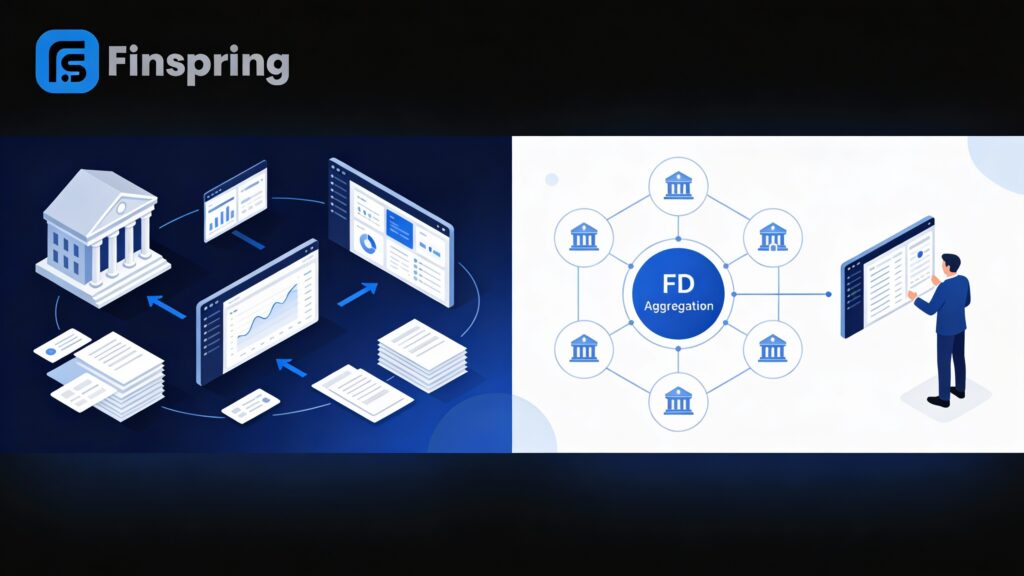
Historically, wealth managers worked directly with individual banks. While this model was functional, it introduced several structural limitations.
Key Problems With Bank-by-Bank FD Distribution
- Separate onboarding for each bank
- Multiple dashboards and reporting formats
- Manual comparison of fixed deposit interest rates
- Operational delays during peak deposit cycles
- Inconsistent documentation and compliance workflows
As client portfolios grew, this fragmented approach became inefficient and difficult to scale.
What Is an FD Aggregator Platform?
An FD aggregator is a neutral technology platform that connects multiple banks and multiple wealth managers through a single system.
Instead of logging into five different bank portals, wealth managers can:
- View fixed deposit products from several banks
- Compare tenures and rates in real time
- Place deposits digitally
- Track commissions and maturity status centrally
This fundamentally changes how fixed deposits are advised and executed.
Why Multi-Bank Access Matters to Wealth Managers
1. Better Fixed Deposit Selection for Clients
Clients no longer want generic recommendations. They want options.
With aggregator platforms, wealth managers can:
- Compare fixed deposit interest rates across banks
- Match tenures to specific client goals
- Avoid pushing a single bank’s product by default
This improves advisory quality and strengthens trust.
2. Faster Portfolio Construction
When managing multiple clients, speed matters.
FD aggregators reduce:
- Back-and-forth communication with banks
- Manual document follow-ups
- Delays caused by inconsistent processes
Wealth managers can build diversified fixed deposit portfolios in hours instead of days.
3. One Platform, One Workflow
One of the strongest advantages of FD aggregators is operational simplicity.
Instead of handling:
- Multiple bank account formats
- Different KYC rules
- Separate commission statements
Wealth managers operate through:
- A single onboarding flow
- Standardized compliance checks
- Unified reporting dashboards
How Wealth Managers Actually Use FD Aggregators
Below is a practical breakdown of how aggregators fit into a wealth manager’s daily workflow.
Step-by-Step Usage Flow
- Log into the aggregator platform
- View available fixed deposit products across banks
- Filter by tenure, amount, or rate
- Select the best option for the client
- Submit KYC and booking digitally
- Track confirmation, payout, and maturity centrally
This workflow is consistent regardless of the bank chosen.
Comparison: Traditional Model vs Aggregator Model
| Aspect | Traditional Bank Model | FD Aggregator Model |
|---|---|---|
| Bank access | One bank at a time | Multiple banks |
| Rate comparison | Manual | Real-time |
| Onboarding | Repeated | One-time |
| Reporting | Fragmented | Centralized |
| Scalability | Limited | High |
| Client experience | Inconsistent | Standardized |
Why Aggregators Improve Fixed Deposit Advisory Quality
Neutral Recommendations
FD aggregators remove institutional bias. Wealth managers are no longer forced to recommend a product simply because it belongs to a specific bank.
This allows:
- Transparent comparison of fixed deposit options
- Advice aligned with client risk and liquidity needs
- Stronger long-term relationships
Better Risk Distribution
Access to multiple banks allows wealth managers to:
- Spread deposits across institutions
- Avoid concentration risk
- Customize allocations for senior citizens, HNIs, or corporate clients
This flexibility is difficult to achieve through direct bank partnerships alone.
Impact on Wealth Manager Productivity
Time Saved Per Client
Using an FD aggregator can reduce:
- Documentation time
- Rate comparison effort
- Follow-up cycles
Over a year, this translates into hundreds of hours saved, allowing wealth managers to focus on client acquisition and advisory depth.
Improved Revenue Predictability
Aggregators typically offer:
- Transparent commission tracking
- Unified payout reports
- Fewer reconciliation disputes
This improves cash flow predictability for wealth managers and firms.
Why Clients Also Benefit
Clients may not interact with the aggregator directly, but they feel the impact.
Benefits include:
- Faster fixed deposit booking
- Access to better rates
- Clear documentation
- Reduced dependency on opening new bank account relationships
A smoother experience increases client retention.
Why Banks Support Aggregator-Led Access
From a banking perspective, FD aggregators:
- Expand distribution without branch dependency
- Enable access to independent wealth manager networks
- Reduce operational burden
- Allow banks to compete transparently on fixed deposit interest rates
This creates a win-win ecosystem.
How Finspring Supports Wealth Manager-Led FD Distribution
Finspring.ai is built to enable secure, compliant, and scalable fixed deposit aggregation.
For wealth managers, this means:
- Single-platform access to multiple banks
- Clean workflows designed for scale
- Transparent reporting and controls
For banks, it means distribution expansion without compromising governance or control.
The Bigger Shift in Fixed Deposit Distribution
The role of wealth managers is evolving. They are no longer just distributors. They are advisors, portfolio builders, and long-term partners.
FD aggregators support this evolution by:
- Removing friction
- Improving choice
- Enabling scale
As fixed deposits remain a foundational investment product, the platforms enabling their distribution will define who grows fastest.
Conclusion
Wealth managers use FD aggregators because they solve real problems. Single-platform, multi-bank access improves advisory quality, operational efficiency, and client trust.
In an environment where fixed deposit competition is driven by rates, speed, and experience, aggregators are no longer optional infrastructure. They are a strategic advantage.
Read how White Label is Different from Aggregator FD Distribution, here.