Cooperative banks have historically operated as independent entities, each managing its own systems, processes, and infrastructure. While this model supports autonomy, it also creates inefficiencies—especially in a digital-first world where speed, scalability, and integration define success. To bridge this gap, a new model is emerging: the shared technology platform for cooperative banks.
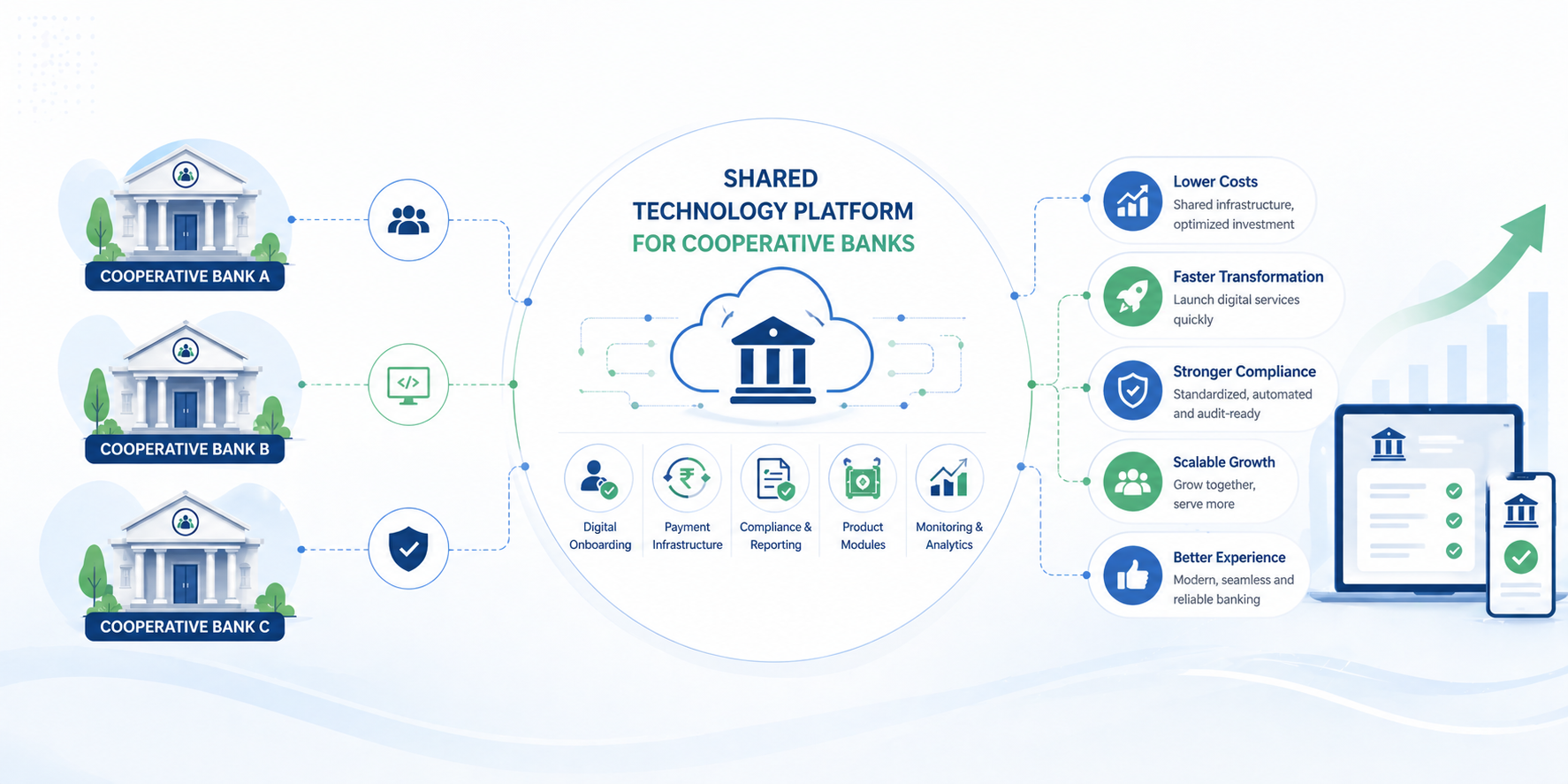
Instead of each bank building and maintaining its own infrastructure, shared platforms enable multiple institutions to leverage a common, standardized technology layer. This approach reduces costs, accelerates digital transformation, and enables cooperative banks to compete effectively with fintech companies and larger financial institutions.
In this article, we explore how shared technology platforms work, why they are critical for cooperative banks, and how infrastructure providers like Finspring enable this shift.
What is a Shared Technology Platform for Cooperative Banks?
A shared technology platform is a centralized infrastructure system used by multiple banks to deliver digital financial services. Instead of building separate systems for onboarding, payments, compliance, and product distribution, banks use a common platform that provides these capabilities through APIs and modular components.
This platform typically includes:
- Digital onboarding systems
- Payment infrastructure
- Compliance and reporting tools
- Product modules (such as FDs)
- Monitoring and analytics
By sharing this infrastructure, cooperative banks can operate on modern systems without individually investing in large-scale technology development.
Why Cooperative Banks Need Shared Platforms
1. High Cost of Individual Infrastructure
Building and maintaining modern banking systems requires:
- Significant investment
- Skilled technical teams
- Continuous upgrades
For many cooperative banks, this is not feasible.
2. Fragmented Systems
Independent systems often lead to:
- Inconsistent processes
- Integration challenges
- Operational inefficiencies
3. Increasing Digital Demand
Customers expect:
- Instant services
- Mobile access
- Seamless experiences
Meeting these expectations requires advanced infrastructure.
4. Regulatory Complexity
Compliance requirements are becoming more complex, requiring:
- Real-time reporting
- Audit-ready systems
- Automated workflows
Shared platforms simplify compliance by standardizing processes.
How Shared Technology Platforms Work
Shared platforms operate as centralized infrastructure layers that multiple banks can access and use. Each bank retains its identity and customer relationships while leveraging the platform for backend operations.
Key characteristics:
- API-first architecture for easy integration
- Modular components that can be customized
- Multi-tenant systems supporting multiple banks
- Centralized updates ensuring consistency
Traditional vs Shared Technology Models
| Aspect | Independent Systems | Shared Technology Platform |
|---|---|---|
| Cost | High | Reduced |
| Scalability | Limited | High |
| Integration | Complex | Simplified |
| Compliance | Manual | Automated |
| Innovation Speed | Slow | Fast |
Core Components of a Shared Technology Platform
1. Digital Onboarding Module
Provides:
- Online account creation
- KYC verification
- Automated workflows
2. Payment Infrastructure
Enables:
- Real-time transactions
- Integrated payment channels
- Automated reconciliation
3. Compliance and Reporting Tools
Includes:
- Audit trails
- Regulatory reporting
- Risk management systems
4. Product Modules
Supports:
- Fixed deposits (FDs)
- Savings products
- Lending solutions
5. Monitoring and Analytics
Tracks:
- System performance
- Transaction metrics
- User behavior
Benefits of Shared Technology Platforms
1. Cost Efficiency
By sharing infrastructure, banks can:
- Reduce development costs
- Lower maintenance expenses
- Optimize resource usage
2. Faster Digital Transformation
Shared platforms provide ready-to-use capabilities, allowing banks to:
- Launch digital services quickly
- Avoid long development cycles
3. Standardization
Uniform systems ensure:
- Consistent processes
- Easier integration
- Improved compliance
4. Scalability
Platforms can handle:
- Increased transaction volumes
- Growing customer bases
without requiring major changes.
5. Improved User Experience
Modern infrastructure enables:
- Faster transactions
- Seamless onboarding
- Reliable services
Challenges in Adopting Shared Platforms
1. Customization Concerns
Banks may worry about:
- Losing control over processes
- Limited flexibility
However, modern platforms offer modular customization.
2. Data Security
Shared systems must ensure:
- Data isolation
- Secure access
- Regulatory compliance
3. Change Management
Transitioning from legacy systems requires:
- Staff training
- Process adjustments
- Strategic planning
The Role of API Infrastructure
API infrastructure is the backbone of shared technology platforms. It enables:
- Seamless integration between modules
- Real-time data exchange
- Scalable system architecture
- Easy onboarding of new banks
This ensures that shared platforms remain flexible and adaptable.
How Finspring Enables Shared Technology Platforms
Finspring plays a key role in enabling shared technology platforms for cooperative banks by providing API-first infrastructure for FD and deposit distribution.
1. Shared FD Infrastructure
Finspring allows multiple banks to:
- Offer FDs digitally
- Access standardized workflows
- Scale distribution across platforms
2. Multi-Bank Integration
Through a single API, banks can:
- Connect with multiple platforms
- Expand distribution channels
- Reach new users
3. Embedded Compliance
Finspring integrates:
- KYC processes
- Reporting systems
- Audit trails
ensuring compliance across all participating banks.
4. Real-Time Monitoring
Banks can track:
- Transaction performance
- System health
- SLA metrics
This ensures consistent service quality.
Example: Shared Platform with Finspring
| Function | Traditional Approach | Shared Platform Approach |
|---|---|---|
| FD Distribution | Individual systems | Shared API infrastructure |
| Compliance | Manual processes | Automated workflows |
| Integration | Multiple setups | Single integration |
| Scaling | Limited | Seamless |
Strategic Impact for Cooperative Banks
Shared technology platforms enable cooperative banks to:
- Compete with fintech companies
- Expand beyond local markets
- Improve operational efficiency
- Deliver modern user experiences
This transforms them from:
- Isolated institutions
to - Connected ecosystem players
Best Practices for Implementation
1. Start with Core Services
Focus on:
- Onboarding
- Payments
- Deposits (FDs)
2. Choose API-First Platforms
Ensure that the platform:
- Supports modular integration
- Provides scalability
- Ensures compliance
3. Prioritize Security
Implement:
- Data encryption
- Access controls
- Regular audits
4. Train Teams
Ensure staff can:
- Use digital systems
- Manage workflows
- Support customers
The Future of Shared Banking Infrastructure
Shared technology platforms will continue to evolve with:
- AI-driven automation
- Real-time analytics
- Deeper ecosystem integrations
- Increased standardization
These advancements will make banking:
- More efficient
- More scalable
- More accessible
Conclusion
The shared technology platform for cooperative banks represents a fundamental shift in how banking infrastructure is built and operated. By moving from isolated systems to shared, API-driven platforms, cooperative banks can overcome resource limitations and accelerate digital transformation.
Finspring plays a critical role in this ecosystem by providing shared FD infrastructure, enabling banks to scale distribution, automate compliance, and deliver seamless financial experiences.
Because the future of cooperative banking is not about building everything independently.
It is about building together on systems that enable growth, efficiency, and innovation.