The wealth management industry is entering a new era. Traditional investment firms are no longer the only businesses offering wealth-building opportunities. Today, fintech companies, banks, insurance providers, payroll platforms, e-commerce businesses, and even consumer apps are embedding investment products directly into their digital experiences.
In 2026, wealth management is becoming more digital, personalized, and API-driven than ever before. Customers expect seamless access to investment opportunities without switching between multiple applications, while businesses are looking for faster ways to launch financial products without building complex financial infrastructure from scratch.
Here are the biggest wealth management trends shaping financial products in 2026.
1. Embedded Wealth Management Is Becoming Mainstream
Embedded finance has already transformed payments and lending. The next wave is embedded wealth management.
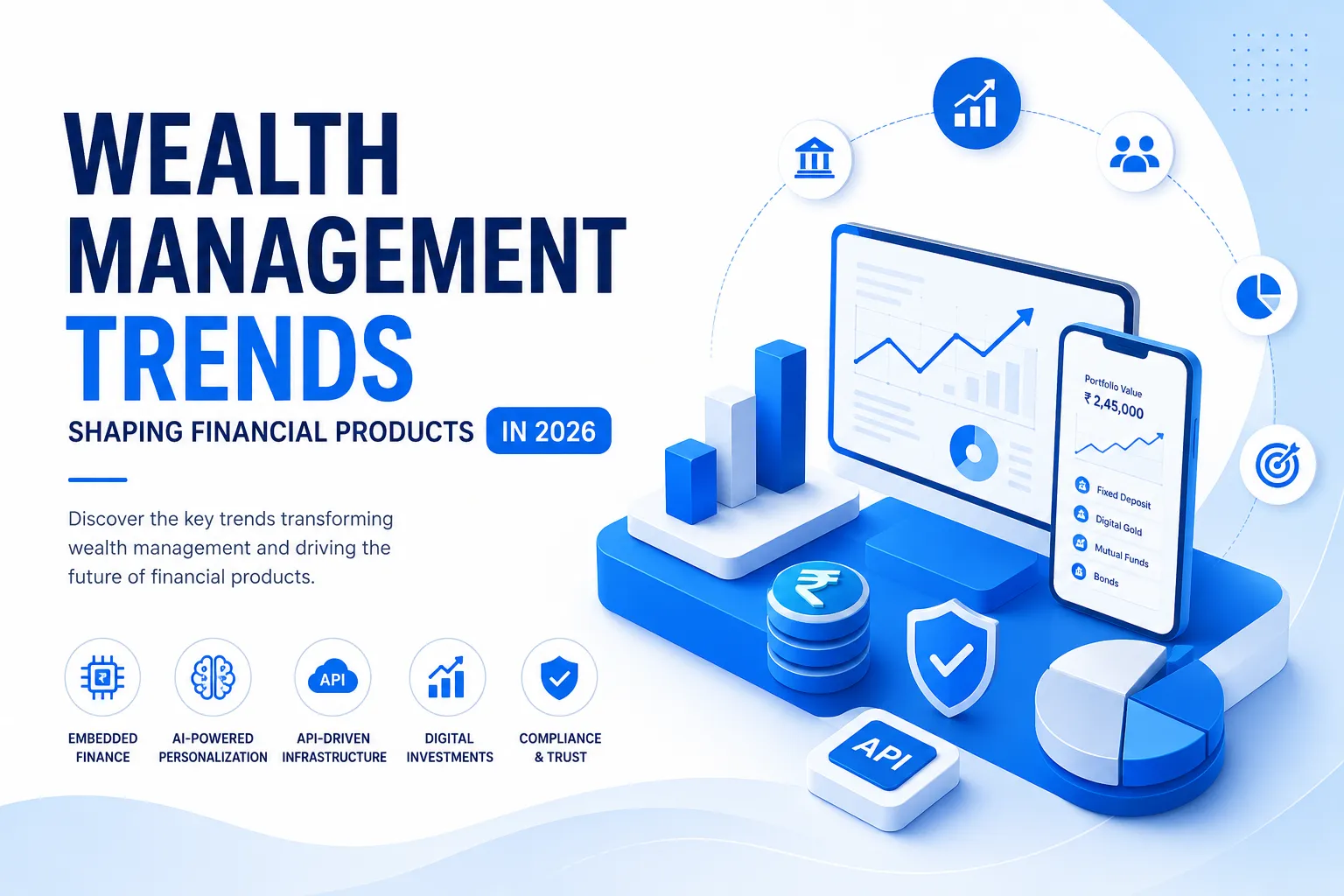
Rather than asking customers to download separate investment apps, businesses are integrating financial products directly into their existing platforms. Users can invest in fixed deposits, digital gold, mutual funds, or other investment products while using applications they already trust.
Examples include:
- Payroll platforms offering investment options after salary credits
- E-commerce platforms providing digital gold purchases during checkout
- Banking apps expanding beyond savings accounts
- Consumer finance apps offering diversified investment portfolios
This creates new revenue streams for businesses while improving customer engagement and retention.
2. Customers Want Everything in One Platform
Modern investors prefer convenience over complexity.
Instead of managing multiple investment accounts across different providers, users increasingly expect one application where they can:
- Save money
- Invest
- Track portfolios
- Compare returns
- Build long-term wealth
This shift is driving the demand for integrated wealth management platforms that combine multiple investment instruments into a unified digital experience.
Businesses that provide comprehensive financial ecosystems often enjoy higher customer lifetime value because users remain engaged within a single platform.
3. APIs Are Accelerating Financial Product Launches
Launching investment products traditionally required years of development, regulatory partnerships, and operational complexity.
Today, API-driven infrastructure has significantly reduced these barriers.
Businesses can integrate investment products such as:
- Fixed Deposits
- Digital Gold
- Mutual Funds
- Bonds
- Government-backed savings products
using secure APIs rather than building financial systems from scratch.
This dramatically reduces development time and allows companies to focus on customer experience instead of backend financial operations.
4. Personalization Through Artificial Intelligence
Artificial intelligence is changing how wealth management platforms interact with customers.
Instead of offering identical investment options to everyone, AI helps platforms personalize recommendations based on:
- Financial goals
- Risk appetite
- Income patterns
- Spending habits
- Investment history
Customers increasingly expect intelligent financial guidance rather than generic investment suggestions.
As AI models continue improving, wealth management products will become more proactive, helping users make smarter financial decisions throughout their investment journey.
5. Fixed Income Products Are Gaining Popularity Again
After years of market volatility, many investors are looking for more predictable returns.
Products such as Fixed Deposits and government-backed savings schemes are attracting renewed interest because they provide:
- Stable returns
- Lower investment risk
- Capital preservation
- Better financial planning
Businesses adding fixed-income investment products to their platforms can appeal to users seeking financial stability while diversifying their investment offerings.
6. Digital Gold Continues to Expand
Digital Gold has evolved from a niche investment product into a mainstream wealth-building option.
Its growing popularity comes from several advantages:
- Low entry amounts
- Instant online purchases
- High liquidity
- Secure storage
- Easy gifting
Many fintech companies are incorporating Digital Gold into savings products, rewards programs, and recurring investment plans.
As consumer awareness grows, Digital Gold is expected to remain an important component of digital wealth management strategies.
7. User Experience Is Becoming a Competitive Advantage
Financial products are no longer competing solely on returns.
Customers also evaluate:
- Ease of onboarding
- Investment journey
- Mobile experience
- Portfolio visualization
- Transaction speed
- Transparency
Businesses investing in intuitive interfaces and simplified financial experiences often achieve higher customer adoption rates than platforms offering complex investment workflows.
A frictionless user experience is becoming just as important as the financial product itself.
8. Regulatory Compliance Is Being Built into Infrastructure
Compliance has traditionally been one of the biggest obstacles to launching financial products.
Modern financial infrastructure providers now integrate regulatory processes into their platforms, including:
- Digital KYC
- Identity verification
- Audit trails
- Transaction monitoring
- Reporting frameworks
This enables businesses to launch compliant financial products while significantly reducing operational overhead.
As regulations continue evolving, infrastructure providers will play an increasingly important role in helping businesses remain compliant.
9. Financial Inclusion Is Driving Product Innovation
Millions of consumers are entering formal investment markets for the first time.
Businesses are responding by offering:
- Low minimum investments
- Simplified onboarding
- Mobile-first experiences
- Educational investment tools
- Goal-based investing
This democratization of investing is expanding the addressable market for wealth management products and encouraging innovation across the financial services industry.
10. Businesses Are Becoming Financial Platforms
One of the most significant trends in 2026 is that businesses outside traditional finance are entering wealth management.
Companies across industries are integrating financial products into their customer experiences, including:
- HR technology platforms
- Employee benefits providers
- E-commerce marketplaces
- Consumer super apps
- Travel platforms
- Loyalty and rewards applications
Instead of building financial infrastructure internally, many organizations are leveraging embedded finance solutions to launch investment offerings quickly and efficiently.
This shift enables businesses to increase engagement, generate additional revenue streams, and strengthen long-term customer relationships.
The Future of Wealth Management
The future of wealth management is no longer limited to banks and investment firms.
It is becoming embedded, digital, API-first, and customer-centric.
Businesses that embrace these trends can transform everyday applications into comprehensive financial ecosystems, allowing users to save, invest, and grow wealth without leaving the platforms they already use.
As embedded finance continues to mature, organizations that adopt modern financial infrastructure will be better positioned to launch innovative investment products, respond to changing customer expectations, and remain competitive in an increasingly digital economy.
Platforms like Finspring are enabling this transformation by providing the infrastructure businesses need to launch wealth management products such as Fixed Deposits, Digital Gold, and other investment solutions through a single API-powered platform. Instead of spending years building financial infrastructure, companies can focus on delivering exceptional customer experiences while bringing new financial products to market much faster.
FAQs
What are the biggest wealth management trends in 2026?
The major wealth management trends include embedded finance, AI-powered personalization, API-driven financial infrastructure, digital investment products, integrated wealth platforms, and increased adoption of fixed-income investment solutions.
Why is embedded wealth management becoming popular?
Embedded wealth management allows businesses to offer investment products directly within their existing applications, creating a seamless customer experience while generating new revenue opportunities.
How are APIs changing wealth management?
APIs enable businesses to integrate investment products like Fixed Deposits, Digital Gold, and Mutual Funds without building complex financial infrastructure, reducing development time and accelerating product launches.
What role does AI play in wealth management?
AI helps personalize investment recommendations, automate portfolio management, analyze customer behavior, and provide smarter financial guidance tailored to individual goals and risk preferences.
Why are businesses launching wealth management products?
Businesses are expanding into wealth management to increase customer engagement, improve retention, create additional revenue streams, and offer comprehensive financial experiences through embedded finance solutions.