Finspring Innovations Private Limited

Fixed Deposit

fd solutions real-time alerts sla tracking issues
Fixed Deposit

Monetizing FD Distribution: Revenue Models for Fintechs and Banks

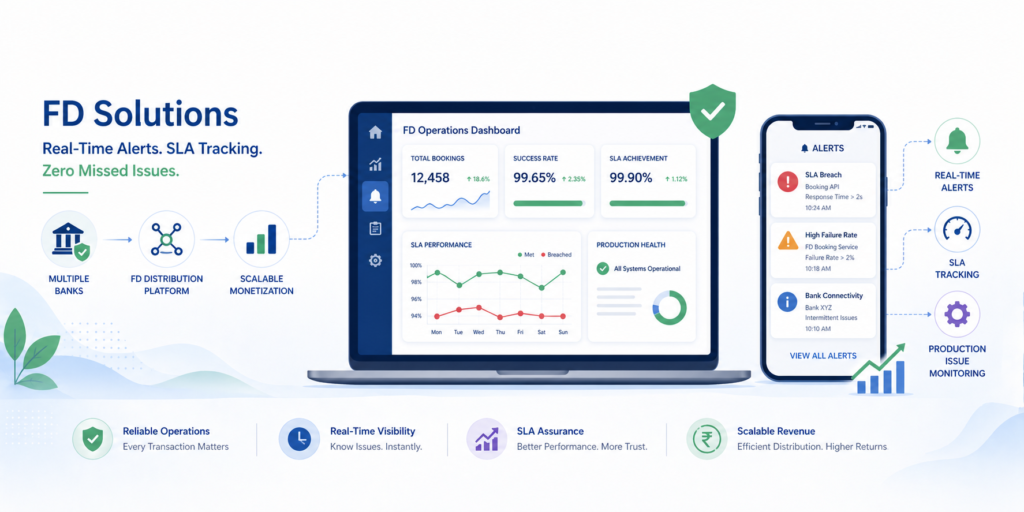
Fixed Deposits (FDs) are often viewed as low-excitement, low-engagement products. But behind that perception lies a powerful opportunity—FD distribution is one of the most predictable and scalable revenue streams in financial services today. As digital platforms expand and user acquisition costs rise, fintechs and banks are actively looking for stable monetization layers. FD distribution offers exactly that: consistent revenue, high trust, and long-term user value. This article explores how FD platforms generate revenue, the different monetization models available, FD solutions real-time alerts sla tracking issues, and how modern infrastructure makes scaling this revenue easier than ever. Why FD Distribution is a Strong Monetization Layer Unlike high-risk investment products, FDs are: Trust-driven Widely understood Low-friction to adopt High in user intent during uncertain markets This creates a unique advantage: 👉 You don’t need to convince users to buy FDs—you need to make them accessible That shift—from persuasion to access—makes FD distribution highly efficient from a monetization standpoint. The Core FD Distribution Model At its simplest, FD monetization works like this: A bank offers an FD product A platform distributes it to users The bank pays the platform for distribution This payment typically comes in the form of: Commissions Revenue share Referral fees The more efficiently a platform can distribute FDs, the more it can monetize. Key Revenue Models in FD Distribution 1. Commission-Based Model This is the most common model. Platforms earn a commission from banks for every FD booked through their interface. How it works: Bank sets commission structure (fixed or percentage-based) Platform earns per successful FD booking Revenue scales with volume Why it works: Simple to implement Directly tied to performance Predictable revenue stream 2. Revenue Share Model In this model, platforms earn a share of the interest spread or lifetime value of the FD. How it works: Bank shares a portion of earnings generated from the deposit Platform benefits over the lifecycle of the FD Why it works: Aligns incentives between bank and platform Encourages long-term user retention Creates recurring revenue potential 3. Platform Fee Model Some platforms charge users a small service fee for: Facilitating FD booking Providing better discovery or comparison Offering additional features Why it works: Direct monetization from users Less dependency on banks Limitation: Works only when strong user trust is already established 4. Cross-Sell & Upsell Monetization FDs often act as an entry product. Once users trust the platform, they are more likely to: Explore mutual funds Invest in equities Opt for premium services Why it works: FDs build trust Trust increases lifetime value (LTV) Higher-margin products can be layered on top 5. Float-Based Monetization (Advanced) In certain models, platforms can earn from: Temporary holding of funds Settlement timing advantages This is more complex and depends on: Regulatory permissions Operational setup Monetization for Banks: Why Distribution Matters FD distribution is not just valuable for fintechs—banks benefit significantly as well. Banks use FD distribution to: 1. Acquire Deposits at Scale Instead of relying only on branches, banks can: Access users across multiple platforms Expand reach without physical expansion 2. Optimize Cost of Acquisition Digital distribution often lowers: Marketing costs Operational overhead 3. Improve Product Visibility Banks can position their FD offerings across: Wealth apps Fintech platforms Digital ecosystems This increases: Discoverability Conversion rates The Role of Infrastructure in Monetization While the revenue models are clear, execution is where most platforms struggle. Monetizing FD distribution requires: Fast product launches Reliable booking flows Accurate tracking and reconciliation Real-time reporting Without strong infrastructure, monetization breaks down. Key Infrastructure Requirements for Monetization 1. Multi-Bank Integration Access to multiple FD issuers increases: Product variety User choice Conversion rates 2. Real-Time Tracking Platforms need visibility into: Bookings Commissions Performance metrics This ensures accurate revenue calculation. 3. Reliable Execution Failures in booking or confirmation directly impact: Revenue User trust 4. Scalable Operations As volume increases, systems must handle: Higher transaction loads More complex reporting 5. Compliance & Audit Readiness Revenue flows must be: Transparent Traceable Audit-friendly Challenges in Monetizing FD Distribution Despite its potential, platforms face several challenges: 1. Fragmented Bank Integrations Managing multiple integrations increases complexity. 2. Delayed Launch Timelines Slow go-to-market reduces revenue opportunity. 3. Operational Overhead Manual reconciliation and tracking reduce efficiency. 4. Limited Visibility Without real-time data, revenue tracking becomes unreliable. How Modern FD Platforms Solve This Modern FD infrastructure platforms simplify monetization by providing: Unified API integration for multiple banks Automated commission tracking Real-time dashboards for performance monitoring Built-in compliance workflows This allows platforms to: Launch faster Scale distribution Monetize more efficiently FDs as a Long-Term Revenue Strategy FD monetization is not about short-term gains. It is about: Building a stable revenue layer Increasing user trust Expanding product ecosystems Platforms that integrate FDs effectively can: Reduce dependency on volatile revenue streams Improve user retention Increase lifetime value The Finspring Advantage Finspring enables fintechs and banks to monetize FD distribution seamlessly through: Plug-and-play FD SDKs Multi-bank access via a single integration Real-time infrastructure for tracking and reliability Scalable systems designed for high-volume distribution This ensures that platforms can move from: 👉 Integration → Distribution → Monetizationwithout operational bottlenecks. Conclusion FD distribution is evolving from a simple product offering into a strategic revenue engine. With the right infrastructure, platforms can: Unlock consistent revenue Scale efficiently Build long-term user trust Provide FD solutions for real-time alerts & SLA tracking issues The opportunity is not just in offering FDs.It is in monetizing them effectively. Because in modern fintech,distribution is not just access—it is revenue.
deposit aggregators
Fixed Deposit

Deposit Aggregators in India: Market Overview, Key Players, and Emerging Trends

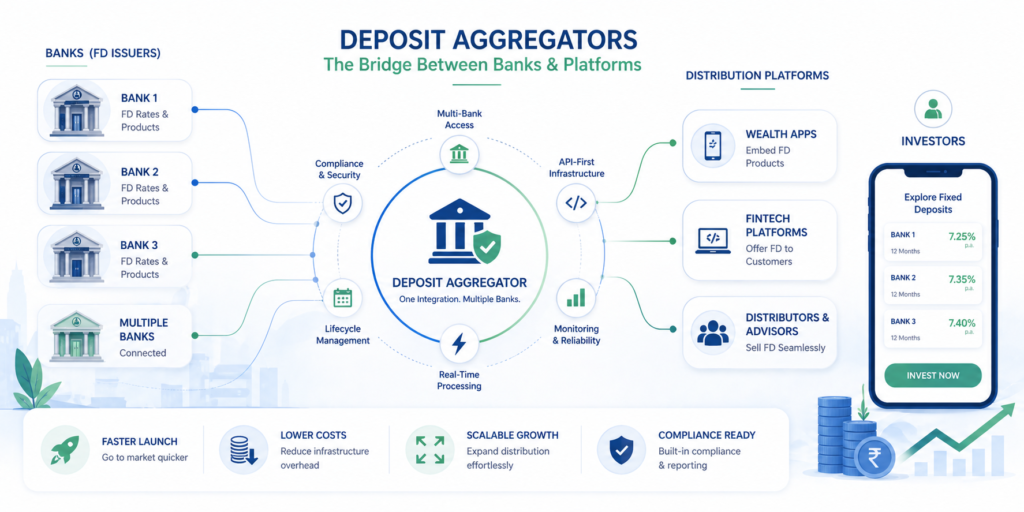
India’s financial ecosystem is undergoing a structural shift. As digital adoption accelerates and user expectations evolve, traditional banking distribution models are being redefined. At the center of this shift is the rise of deposit aggregators. Deposit aggregators are quietly becoming a critical layer in the financial infrastructure stack—enabling banks, fintechs, and wealth platforms to distribute fixed deposits (FDs) at scale without building everything from scratch. This article breaks down the deposit aggregator landscape in India, including how they work, key players, and the trends shaping their future. What is a Deposit Aggregator? A deposit aggregator is a platform or infrastructure provider that connects: Banks (FD issuers) Fintechs / wealth platforms (distributors) End users (investors) It enables fintech platforms to offer FDs from multiple banks through a single integration, without directly managing: Bank partnerships Compliance workflows Operational complexity In simple terms, a deposit aggregator acts as a bridge between supply (banks) and distribution (platforms). Why Deposit Aggregators Are Growing in India Several structural shifts are driving the growth of deposit aggregators: 1. Rising Demand for Stable Investment Options With increasing market volatility, users are actively allocating capital toward low-risk, predictable instruments like FDs. 2. Shift Toward Digital Distribution Users are no longer relying solely on bank branches. They prefer: Investment apps Wealth platforms Digital ecosystems This creates a need for embedded FD access within existing platforms. 3. Faster Go-To-Market Requirements Launching FD products traditionally involves: Bank integrations Compliance approvals Operational setup Deposit aggregators reduce this complexity, enabling platforms to launch faster. 4. API-First Financial Infrastructure Modern fintech is built on APIs. Deposit aggregators align perfectly with this shift by offering: Plug-and-play integrations Modular infrastructure Scalable distribution How Deposit Aggregators Work A typical deposit aggregator ecosystem operates through the following flow: Bank IntegrationThe aggregator integrates with multiple banks offering FD products. API Layer CreationIt standardizes FD offerings into a unified API layer. Platform IntegrationFintech or wealth platforms integrate once with the aggregator. User AccessEnd users can browse, compare, and book FDs directly within the platform. Lifecycle ManagementThe aggregator manages: Booking confirmations Status updates Maturity handling Reporting and reconciliation This removes the need for platforms to manage multiple bank integrations individually. Types of Deposit Aggregators in India The Indian market currently has different types of players operating in the deposit aggregation space: 1. Consumer-Focused FD Marketplaces These platforms focus on end-user discovery and comparison. They typically: Offer FD listings across banks Enable comparison of rates and tenures Provide direct booking interfaces However, they are often closed ecosystems and not designed for other platforms to integrate into. 2. Distribution Platforms for Agents & Advisors These platforms cater to: Financial advisors Distribution networks Offline-to-online transitions They provide tools for: Managing client portfolios Selling FD products Tracking commissions Their focus is more on distribution enablement than infrastructure. 3. API-First Deposit Infrastructure Providers This is the most important and emerging category. These platforms: Offer FD distribution via APIs, SDKs, or plugins Enable fintechs and banks to embed FD journeys Handle compliance, reporting, and lifecycle management This category represents the shift toward infrastructure-led aggregation, where the goal is not just listing FDs—but enabling them across ecosystems. Key Capabilities of Modern Deposit Aggregators As the market evolves, deposit aggregators are no longer just connectors. They are becoming full-stack infrastructure providers. Key capabilities include: 1. Multi-Bank Access Access to multiple FD issuers through a single integration. 2. Real-Time Processing Instant booking, confirmations, and status updates. 3. Compliance Handling Built-in workflows for: KYC Documentation Regulatory reporting 4. Lifecycle Management Handling renewals, withdrawals, and maturity events. 5. Monitoring & Reliability Tracking: SLAs Alerts Production issues This ensures consistent performance at scale. Challenges in the Deposit Aggregator Ecosystem Despite its growth, the space comes with challenges: 1. Regulatory Complexity FDs are regulated products, requiring strict compliance and reporting. 2. Bank Integration Variability Different banks have different systems, making standardization difficult. 3. Operational Dependencies Delays or failures at the bank level can impact user experience. 4. Trust & Transparency Users need clear, reliable communication when dealing with deposits. These challenges make infrastructure quality a key differentiator. Emerging Trends in Deposit Aggregation The deposit aggregator space in India is evolving rapidly. Here are the key trends shaping its future: 1. Shift from Marketplaces to Infrastructure Earlier, aggregation meant listing products. Now, it means: Enabling distribution Supporting integrations Powering ecosystems Infrastructure-led players are gaining more relevance than marketplaces. 2. Embedded Finance Adoption FDs are being embedded into: Wealth apps Payment platforms Super apps Users no longer “go” to FDs.FDs come to where users already are. 3. Real-Time Infrastructure Expectations Platforms now expect: Instant confirmations Real-time tracking Reliable uptime This is pushing aggregators to invest heavily in: Monitoring systems SLA tracking Production reliability 4. Focus on Lifecycle Management The focus is shifting from: Just booking FDsto Managing the entire FD lifecycle seamlessly This includes renewals, reporting, and user communication. 5. Compliance-First Architecture With increasing regulatory scrutiny, aggregators are moving toward: Built-in compliance systems Automated reporting Audit-ready infrastructure Compliance is becoming a core feature, not an afterthought. Why Deposit Aggregators Are Strategic for Platforms For fintechs, wealth platforms, and banks, deposit aggregators are no longer optional. They enable: Faster product launches Reduced operational overhead Access to multiple banks Scalable distribution More importantly, they allow platforms to: 👉 Respond quickly to changing user demand In volatile markets, this agility becomes a major advantage. The Role of Finspring in the Ecosystem Finspring operates in the API-first deposit infrastructure layer, enabling platforms to: Integrate FD products quickly Launch without complex backend builds Manage lifecycle and compliance seamlessly With plug-and-play SDKs and real-time infrastructure, Finspring helps platforms move from: 👉 Idea → Integration → Launchin significantly shorter timelines. Conclusion Deposit aggregators are redefining how fixed deposits are distributed in India. What started as a simple aggregation layer is now evolving into a core financial infrastructure category—powering: Faster launches Better user experiences Scalable distribution As the ecosystem matures, the winners will not be those who list the most products—but those who enable the fastest, most reliable access to them. Because in the

fintech solutions for cooperative banks
Fixed Deposit

Competing with Fintechs: A Growth Playbook for Cooperative Banks

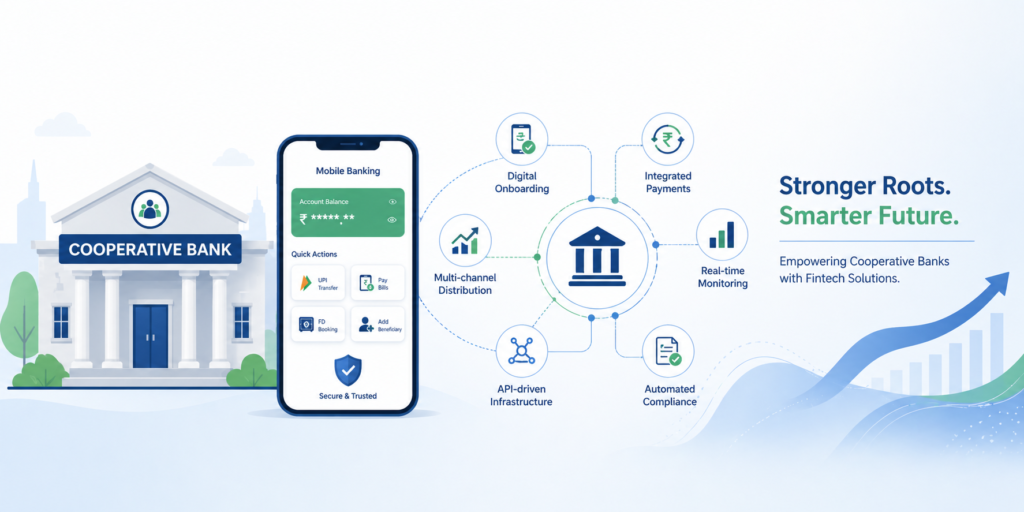
The financial landscape has shifted dramatically over the last decade. Fintech companies have redefined how financial services are delivered—faster onboarding, seamless user experiences, real-time transactions, and highly personalized offerings. For cooperative banks, which have traditionally relied on trust, relationships, and local presence, this shift presents both a challenge and an opportunity. To remain competitive, cooperative banks must adopt fintech solutions for cooperative banks—not by trying to become fintech companies themselves, but by leveraging the same infrastructure, speed, and scalability that fintechs use. This article explores how cooperative banks can compete effectively, what fintech solutions they need, and how platforms like Finspring enable this transformation. Why Fintechs Are Winning Fintech companies have gained an advantage because they are built on modern systems designed for speed and scale. Their success is driven by several key factors: 1. Superior User Experience Fintech platforms offer: Simple interfaces Fast onboarding Instant confirmations This reduces friction and improves customer satisfaction. 2. API-Driven Infrastructure Fintechs rely on: Modular systems API integrations Real-time processing This allows them to launch and iterate quickly. 3. Data-Driven Decision Making Fintechs use data to: Personalize offerings Optimize user journeys Improve conversions 4. Multi-Channel Distribution Instead of relying on physical branches, fintechs operate across: Mobile apps Websites Partner platforms Why Cooperative Banks Still Have an Advantage Despite fintech growth, cooperative banks have strengths that fintechs cannot easily replicate: 1. Deep Customer Trust Cooperative banks are trusted within their communities, especially in: Tier 2 and Tier 3 cities Rural markets 2. Strong Deposit Base They have: Established customer relationships Stable deposit inflows 3. Regulatory Familiarity Cooperative banks operate within regulatory frameworks and understand compliance requirements deeply. 4. Local Presence Their physical presence allows them to: Build relationships Provide personalized service The Real Problem: Infrastructure Gap The challenge is not capability—it is infrastructure. Cooperative banks often operate with: Legacy systems Manual processes Limited integration capabilities This creates a gap between: What they can offer What customers expect The Solution: Fintech Solutions for Cooperative Banks To compete effectively, cooperative banks must adopt fintech solutions that enable: Digital onboarding Integrated payment systems API-driven product distribution Real-time monitoring Automated compliance These solutions allow banks to combine their strengths with modern capabilities. Key Areas Where Cooperative Banks Must Compete 1. Digital Onboarding Fintechs onboard users in minutes. Cooperative banks must match this by implementing: Digital KYC Automated workflows Instant account activation 2. Payment Systems Seamless payments are critical. Banks need: Integrated payment systems Real-time processing Automated reconciliation 3. Product Distribution Fintechs embed financial products into user journeys. Cooperative banks must: Distribute products digitally Integrate with platforms Reach users beyond branches 4. Compliance Automation Manual compliance slows growth. Banks need: Digital compliance tools Real-time monitoring Automated reporting Traditional vs Fintech-Enabled Cooperative Banks Aspect Traditional Model Fintech-Enabled Model Onboarding Manual Digital Payments Fragmented Integrated Distribution Branch-based Multi-channel Compliance Manual Automated Scalability Limited High The Role of API Infrastructure API infrastructure is the backbone of fintech solutions. It allows cooperative banks to: Connect with fintech platforms Integrate new services quickly Scale operations efficiently Deliver real-time experiences Instead of rebuilding systems, banks can use APIs to add capabilities incrementally. How Finspring Helps Cooperative Banks Compete Finspring provides API-first infrastructure for FD and deposit distribution, enabling cooperative banks to modernize one of their strongest product categories. 1. Digital FD Distribution Finspring allows banks to: Offer FDs online Integrate with fintech platforms Reach new customer segments 2. Multi-Platform Access Banks can distribute products across: Wealth apps Investment platforms Digital ecosystems This expands reach without additional branches. 3. Embedded Compliance Finspring integrates: KYC workflows Reporting systems Audit trails ensuring compliance at scale. 4. Real-Time Infrastructure Banks gain: Instant confirmations SLA tracking Continuous monitoring This improves reliability and trust. Example: Competing with Fintechs Using Finspring Stage Traditional Approach Fintech-Enabled Approach Onboarding Branch visit Online onboarding FD Booking Manual Instant digital booking Payments Separate systems Integrated flow Reporting Manual Automated Strategic Advantages of Adopting Fintech Solutions 1. Faster Time to Market Banks can: Launch new products quickly Respond to market demand 2. Increased Customer Reach Digital channels allow banks to: Serve more users Expand beyond local markets 3. Improved Efficiency Automation reduces: Operational costs Errors Processing time 4. Higher Revenue Potential By scaling distribution, banks can: Increase deposits Offer new products Improve engagement Best Practices for Competing with Fintechs 1. Focus on Strengths Leverage: Trust Customer relationships Local presence 2. Adopt API-First Infrastructure Use platforms that: Simplify integration Enable scalability Reduce complexity 3. Prioritize User Experience Ensure: Fast onboarding Seamless transactions Clear communication 4. Build Partnerships Collaborate with: Fintech platforms Infrastructure providers to expand capabilities. The Future: Collaboration Over Competition The future of financial services is not about banks vs fintechs—it is about collaboration. Cooperative banks will: Provide trust and capital Fintechs will provide technology and distribution Infrastructure platforms like Finspring act as the bridge between these worlds, enabling seamless collaboration. Conclusion Competing with fintechs requires more than incremental change—it requires a fundamental shift in how cooperative banks operate. By adopting fintech solutions for cooperative banks, institutions can modernize their systems, expand their reach, and deliver better customer experiences. Finspring plays a critical role in this transformation by enabling digital FD distribution, automating compliance, and providing scalable infrastructure. This allows cooperative banks to combine their traditional strengths with modern capabilities. Because in today’s financial ecosystem, success is not about who has the best products.It is about who can deliver them fastest, most reliably, and at scale.

FD deployment process
Fixed Deposit

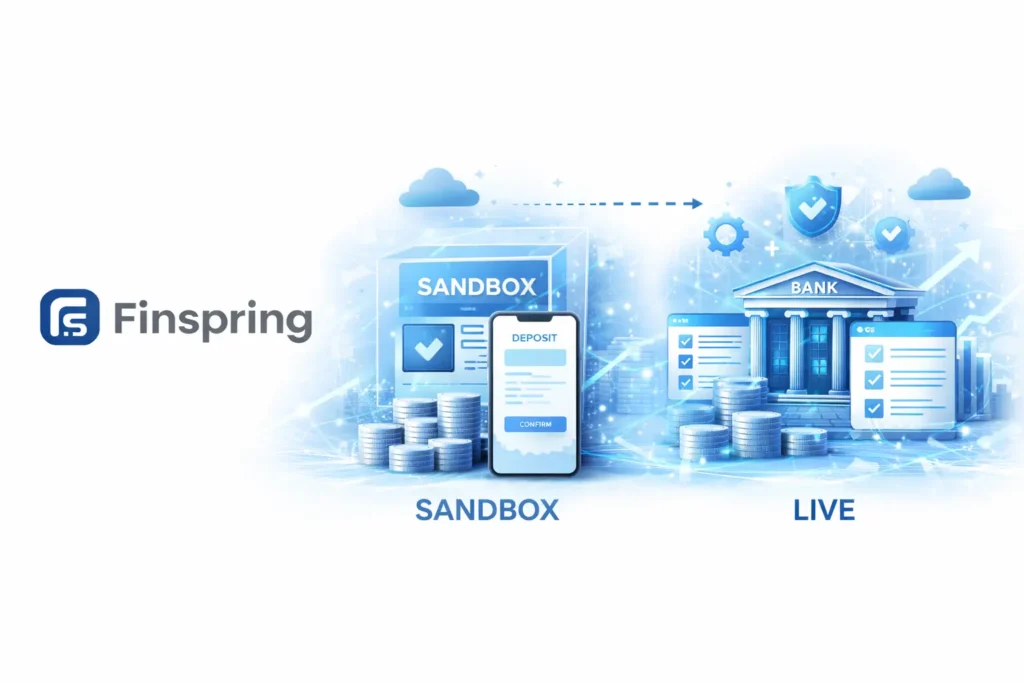
From Sandbox to Go-Live: Finspring’s FD Deployment Process

As financial institutions increasingly digitize their product offerings, launching fixed deposit (FD) products through modern platforms has become a strategic priority. Banks, NBFCs, fintech platforms, and wealth management apps want to provide seamless digital access to fixed deposits while maintaining compliance, operational reliability, and strong user experience. However, launching FD infrastructure is not simply about building product interfaces. Institutions must ensure that onboarding systems, payment workflows, lifecycle management engines, reporting infrastructure, and compliance frameworks all function correctly before the platform goes live. To simplify this journey, Finspring provides a structured FD deployment process that takes institutions from initial testing in a sandbox environment to full production launch. This approach allows development teams to integrate, test, and deploy FD functionality safely while minimizing operational risks. This article explores the stages involved in Finspring’s FD deployment process and how it enables financial platforms to launch deposit products efficiently. Why a Structured FD Deployment Process Matters Financial products require careful deployment because even small operational issues can lead to transaction failures, regulatory complications, or customer dissatisfaction. Launching FD functionality involves coordinating multiple systems, including: onboarding and KYC verification systems payment gateways and banking rails deposit booking workflows lifecycle management infrastructure compliance monitoring tools reporting and reconciliation systems Without a structured deployment process, institutions risk introducing errors into production environments. Finspring’s deployment framework ensures that these systems are tested thoroughly before the platform goes live. Step 1: Sandbox Environment Setup The first stage of Finspring’s FD deployment process begins in the sandbox environment. A sandbox is a secure testing environment that allows developers to experiment with infrastructure without affecting real financial transactions. In this environment, development teams can: explore the FD SDK and API capabilities test deposit booking workflows simulate onboarding and verification processes evaluate payment processing flows monitor lifecycle management events Because sandbox environments use simulated data, teams can safely test various scenarios without impacting real users or financial systems. This stage allows developers to understand how the infrastructure works before integrating it into production platforms. Step 2: API Integration and System Configuration Once development teams are familiar with the platform’s capabilities, the next step involves integrating the FD infrastructure into the institution’s existing technology stack. Finspring’s platform provides developer-friendly APIs that allow systems to connect with core deposit infrastructure. Typical integration tasks include: connecting applications to FD product discovery APIs integrating deposit booking endpoints configuring onboarding verification workflows linking payment gateways for transaction processing retrieving lifecycle and reporting data through APIs Because the infrastructure is API-driven, integration can be completed without building new backend systems. This significantly simplifies the FD deployment process compared to building infrastructure internally. Step 3: Customizing the User Experience While the backend infrastructure is managed through Finspring’s platform, financial institutions maintain full control over the user interface presented to customers. During this stage, development teams customize how FD journeys appear within their applications. Key customization areas include: deposit product listing interfaces onboarding and verification flows deposit booking forms portfolio dashboards and lifecycle views These components are designed to match the platform’s branding and user experience guidelines. Because the infrastructure is modular, institutions can create unique user experiences while relying on standardized backend systems. Step 4: End-to-End Workflow Testing Before moving to production, the platform must undergo thorough end-to-end testing. This stage ensures that every component of the FD lifecycle functions correctly across the system. Testing scenarios typically include: customer onboarding and identity verification deposit product selection payment confirmation workflows deposit booking validation lifecycle tracking events maturity processing simulations reporting and reconciliation workflows By testing the entire deposit journey, institutions can identify potential issues before real transactions occur. This stage is critical for maintaining system reliability once the platform goes live. Step 5: Compliance and Security Validation Financial infrastructure must meet strict regulatory and security standards before deployment. During this stage, compliance and security teams review system configurations to ensure that the platform meets regulatory requirements. Validation typically includes: verifying KYC and onboarding processes confirming transaction monitoring workflows reviewing audit trail logging systems testing secure API communication validating role-based access controls Ensuring compliance readiness is essential for financial institutions launching regulated products like fixed deposits. Finspring’s infrastructure includes built-in compliance capabilities that simplify this validation process. Step 6: Staging Environment Deployment After successful sandbox testing and compliance validation, the platform is deployed to a staging environment. The staging environment closely mirrors the production system but is still isolated from real users. This stage allows teams to: test real-world system performance validate system integrations with partner institutions evaluate transaction throughput monitor system behavior under simulated load conditions By testing the system under realistic conditions, institutions can ensure that the infrastructure will perform reliably once deployed. Step 7: Production Go-Live Once staging validation is complete, the platform moves to the final stage of the FD deployment process: production deployment. At this point, the infrastructure is connected to live financial systems, and customers can begin booking deposits through the platform. Production deployment involves: activating deposit booking workflows enabling payment processing synchronizing lifecycle tracking systems activating reporting and reconciliation infrastructure Finspring’s platform is designed to support high transaction volumes and ensure system reliability during production operations. Post-Launch Monitoring and Support Deployment does not end once the platform goes live. Continuous monitoring is essential for maintaining operational stability. Finspring provides monitoring tools that track system activity across the platform. Key monitoring areas include: transaction processing performance deposit booking activity payment confirmation workflows lifecycle event tracking system uptime metrics These insights allow institutions to detect potential issues early and maintain smooth operations. Benefits of Finspring’s Structured Deployment Process Following a structured FD deployment process provides several advantages for financial institutions. Faster Product Launch Standardized infrastructure and sandbox testing accelerate the integration process. Reduced Operational Risk Testing environments ensure that systems function correctly before production deployment. Simplified Compliance Validation Built-in compliance workflows help institutions meet regulatory requirements. Reliable System Performance Staging and monitoring tools ensure that the platform operates smoothly during high transaction volumes. The Role of Infrastructure in Modern Financial Deployments The financial services

FD infrastructure security
Fixed Deposit

Security Framework Behind Finspring’s FD Infrastructure

As financial services continue to digitize, security has become one of the most critical foundations of financial infrastructure. Platforms that manage fixed deposits (FDs) handle sensitive financial data, customer identities, and high-value transactions. For banks, NBFCs, fintech platforms, and wealth management applications, protecting this data is essential not only for customer trust but also for regulatory compliance. Digital fixed deposit systems must safeguard multiple layers of financial activity—from onboarding and transaction processing to lifecycle tracking and payout management. Without a strong security framework, financial institutions risk data breaches, transaction manipulation, system vulnerabilities, and regulatory violations. Finspring addresses these challenges through a robust FD infrastructure security framework designed to protect every stage of the deposit lifecycle. By integrating security protocols directly into its architecture, Finspring ensures that financial institutions can distribute and manage FD products safely while maintaining operational reliability and compliance. This article explores the security framework behind Finspring’s FD infrastructure and explains how the platform safeguards digital fixed deposit operations. Why Security Is Critical for FD Infrastructure Fixed deposits are long-term financial products that involve continuous system interaction over extended periods. From the moment a customer books a deposit to the final maturity payout, systems must maintain accurate financial records and protect transaction data. Digital FD platforms handle several sensitive processes, including: customer identity verification payment transaction processing deposit lifecycle management financial reporting and reconciliation maturity payout execution Each of these operations involves sensitive data that must be protected against unauthorized access, manipulation, or system failure. Because financial platforms are frequent targets for cyber threats, strong FD infrastructure security is essential for maintaining the integrity of deposit operations. Core Principles of Finspring’s Security Framework Finspring’s security architecture is built around several key principles designed to protect financial systems while maintaining operational efficiency. These principles include: data protection secure transaction processing controlled system access continuous monitoring regulatory compliance By embedding these principles directly into the platform infrastructure, Finspring ensures that security is integrated into every layer of the FD lifecycle. Secure Customer Onboarding and Identity Protection The first stage of FD operations involves customer onboarding and identity verification. Because financial institutions must verify the identity of users before allowing them to invest in deposit products, onboarding systems must be both secure and compliant. Finspring integrates secure onboarding processes that support identity verification workflows such as: Know Your Customer (KYC) validation document authentication identity verification checks customer profile protection These mechanisms ensure that only verified users can access FD products while protecting sensitive identity data from unauthorized access. Secure onboarding also helps institutions comply with regulatory requirements related to financial customer verification. Encrypted Data Transmission Financial systems constantly exchange data between multiple components, including customer applications, payment gateways, partner institutions, and internal infrastructure. To protect this data during transmission, Finspring uses encrypted communication protocols across its platform. Encryption ensures that sensitive information such as: customer details deposit records transaction confirmations payment data cannot be intercepted or manipulated while being transmitted between systems. This layer of protection forms one of the most important components of FD infrastructure security. Role-Based Access Control Not every system user should have access to all financial data or operational controls. Managing system access carefully is essential for preventing internal misuse or accidental data exposure. Finspring uses role-based access control (RBAC) to regulate how users interact with the platform. This approach ensures that: administrators have appropriate operational privileges customer service teams access only relevant user information developers and integration partners interact only with authorized APIs financial institutions maintain controlled operational oversight By restricting system access based on roles, Finspring minimizes the risk of unauthorized actions within the platform. Secure Transaction Processing Deposit booking and payment confirmation are among the most critical steps in the FD lifecycle. Any vulnerability in transaction processing could result in financial discrepancies or fraudulent activity. Finspring’s infrastructure includes secure transaction validation mechanisms designed to ensure the accuracy and authenticity of deposit transactions. Key safeguards include: deposit parameter validation payment confirmation verification transaction authentication workflows synchronized deposit record creation These mechanisms ensure that deposit transactions are processed correctly before they are recorded in the system. Audit Trails and Activity Logging Financial systems must maintain detailed records of operational activity to ensure transparency and accountability. Finspring integrates comprehensive audit trail systems that record every significant system action, including: deposit bookings transaction confirmations lifecycle updates user interactions with the platform Each activity is logged with timestamps and system identifiers, creating a transparent record of how deposit operations are executed. Audit trails help financial institutions investigate operational issues, verify financial records, and demonstrate regulatory compliance during audits. Secure Deposit Lifecycle Management Once a deposit is created, it enters a lifecycle that may last months or even years. Throughout this lifecycle, the platform must maintain accurate records while protecting financial data. Finspring’s lifecycle management system tracks deposit activity securely by monitoring events such as: interest accrual updates maturity tracking renewal workflows payout processing Each lifecycle event is recorded within secure system logs, ensuring that deposit data remains protected and verifiable. Infrastructure Monitoring and Threat Detection Cyber threats often emerge through unusual system behavior, such as abnormal transaction patterns or unexpected access attempts. Finspring integrates monitoring tools that continuously observe system activity across its infrastructure. Monitoring systems track metrics such as: API request patterns transaction processing anomalies unauthorized access attempts system performance indicators If suspicious activity is detected, alerts are generated so that engineering teams can investigate and respond quickly. Continuous monitoring helps protect the platform against potential security threats before they escalate. Data Integrity and Transaction Consistency Maintaining accurate financial records is essential for deposit management systems. Any inconsistencies in transaction data could disrupt financial reporting and customer trust. Finspring uses structured data management protocols that ensure transaction integrity throughout the platform. These protocols include: atomic transaction processing synchronized database updates reconciliation workflows transaction verification mechanisms These safeguards ensure that deposit records remain accurate and consistent across all system components. Security and Regulatory Compliance Financial technology platforms must operate within strict regulatory frameworks governing data protection, financial reporting,

FD integration
Fixed Deposit

Integrating FDs into Existing Wealth Journeys Without UX Disruption

In modern fintech ecosystems, adding new financial products is no longer just a technical exercise — it is a user experience decision. For wealth platforms, neobanks, and investment apps, integrating Fixed Deposits (FDs) presents a unique challenge: How do you introduce a traditionally static, bank-driven product into a fast, intuitive, and design-led wealth journey — without breaking the experience? Because here’s the reality: Users don’t compare your FD journey to bank branches.They compare it to: UPI apps Stock trading platforms Digital wallets Investment dashboards If the experience feels disconnected, slow, or inconsistent, users drop off. This is where Finspring’s embedded infrastructure layer becomes critical. The Core Problem: UX Fragmentation Most FD integrations fail not because of functionality — but because of experience fragmentation. Typical issues include: Redirecting users to external platforms Inconsistent UI across journeys Multiple login or authentication steps Delayed confirmations Lack of real-time visibility What Happens User clicks “Invest in FD” → Gets redirected → Confused → Drops off This breaks trust instantly. What Seamless FD Integration Should Look Like A well-integrated FD journey should feel: Native to the platform Consistent with existing design Fast and intuitive Fully digital end-to-end Ideal User Experience Discover FD within the same app Compare rates instantly Invest in a few clicks Receive real-time confirmation Track investment in dashboard No friction. No confusion. Why UX Matters in FD Distribution FDs are: Trust-driven products Medium-to-high ticket investments Long-term commitments Poor UX leads to: Lower conversion rates Increased support queries Reduced customer trust Strong UX leads to: Higher engagement Better retention Increased cross-sell success How Finspring Enables Seamless FD Integration Finspring acts as a backend orchestration layer that enables frontend continuity. It connects: Your platform (UI/UX layer) FD issuers (banks/NBFCs) Payment systems Compliance workflows Without exposing complexity to the user. 1. Fully Embedded, White-Labeled Experience Finspring allows FD journeys to be: Fully embedded within your app Completely branded as your product Free from external redirects What Users Experience Same UI Same design system Same interaction patterns What Happens Behind the Scenes APIs handle booking SDK manages workflows Infrastructure remains invisible 2. Consistent Design Across Wealth Journey Wealth platforms already have: Dashboards Investment flows Portfolio views Finspring ensures FD integration aligns with these. Example Existing Feature FD Integration Portfolio view FD appears as asset Investment flow FD follows same steps Dashboard FD shows maturity + returns This creates a unified financial experience. 3. Frictionless Onboarding and KYC One major source of UX disruption is repeated onboarding. Finspring integrates: CKYC / Video KYC PAN validation Auto-filled data Result No repeated forms Faster onboarding Lower drop-offs Users move seamlessly from discovery to investment. 4. Real-Time Status Tracking UX is not just about interaction — it’s about feedback. Finspring enables: Instant booking confirmation Real-time transaction status Live updates in dashboard Users Can See Payment status FD creation progress Receipt availability This eliminates uncertainty. 5. Integrated Payment Flow Payments are a critical part of UX. Finspring ensures: No external redirection Smooth payment processing Instant confirmation Supported Flow Select FD → Pay → Confirm → Done All within the same interface. 6. Lifecycle Integration Within Platform Most platforms fail after booking. Finspring ensures full lifecycle visibility: Renewals Premature withdrawals Closures Maturity tracking Example Dashboard View FD Status Maturity Action ₹50,000 Active 12 months Withdraw ₹1,00,000 Maturing 5 days Renew Users never leave your platform. 7. Personalized Wealth Experience Finspring enables FD integration to feel intelligent. Examples Suggest FDs based on idle balance Recommend laddering strategies Highlight upcoming maturities Offer reinvestment options This transforms FDs from: Static product → Dynamic wealth tool 8. Zero UX Disruption Across Devices Modern users switch between: Mobile apps Web platforms Finspring ensures: Consistent experience across devices Fast load times Optimized mobile flows Performance Benchmarks < 3-second load time Minimal steps to invest No heavy redirects 9. Backend Complexity, Frontend Simplicity Finspring handles: Compliance workflows Reconciliation Ledger updates Reporting But users only see: Simple steps Clear outcomes Smooth interactions This separation is key to great UX. 10. Scalable Integration Without UX Trade-Offs As platforms grow, they may: Add more issuers Launch new FD products Expand features Finspring ensures: No UX changes required Seamless scaling Consistent experience Strategic Impact for Wealth Platforms Seamless FD integration is not just about adding a product. It is about enhancing the entire wealth journey. Business Benefits Higher conversion rates Increased AUM (Assets Under Management) Better cross-sell opportunities Improved retention UX Benefits Reduced friction Higher engagement Stronger trust From Add-On Product to Native Experience Traditional FD integration feels like: An add-on A separate product A disconnected journey Finspring transforms it into: A native feature A seamless experience A core part of wealth management Final Thoughts In digital finance, users don’t think in terms of products. They think in terms of experiences. If adding FDs disrupts that experience, it fails — regardless of how good the product is. Finspring ensures that FDs: Fit naturally into your platform Enhance the user journey Deliver value without friction Because the future of financial products is not just digital. It is invisible, embedded, and experience-first.

digital fixed deposits-1
Fixed Deposit

What Customer Disclosures Are Mandatory for Digital Fixed Deposits?

As financial products increasingly move online, user expectations have evolved beyond convenience alone. Customers now expect: Instant onboarding, Transparent terms, Clear returns information, Simple investment journeys, Easy access to support. For businesses distributing digital Fixed Deposits (FDs)—including fintechs, wealth platforms, neo-banks, payroll apps, and embedded finance ecosystems—this creates an important responsibility: Ensuring customers receive all necessary disclosures before investing. Customer disclosures are not merely compliance checkboxes. They influence transparency, trust, and informed decision-making. Incomplete disclosures can create confusion, customer dissatisfaction, reputational risk, and regulatory challenges. This raises an important question: What customer disclosures are mandatory for digital fixed deposits? The answer depends on product structure, distribution model, jurisdiction, and partner institutions—but several disclosure categories consistently matter. This article explores the major disclosure areas businesses should consider when offering digital FD products. Why Customer Disclosures Matter in Digital Fixed Deposits Traditional bank branches often involved manual explanations. Relationship managers discussed: Interest rates Lock-in periods Withdrawal policies Documentation requirements Digital experiences remove those conversations. The interface itself becomes responsible for communicating product details. This means disclosures must be: ✓ Clear✓ Accessible✓ Understandable✓ Visible before consent✓ Consistently available afterward Good disclosure practices improve both compliance readiness and customer confidence. What Are Customer Disclosures in Deposit Products? Customer disclosures refer to information presented before a user invests or opens a deposit product. The objective: Allow users to make informed decisions. Disclosures typically include information about: Product features Returns Risks Restrictions Charges Policies Terms and conditions Key Customer Disclosures Commonly Required for Digital Fixed Deposits Below are major categories platforms should account for. 1. Interest Rate Disclosure Customers should clearly understand: Applicable interest rate Whether rates are fixed or variable Effective yield (if relevant) Senior citizen rates (where applicable) Hidden or unclear return information can create misunderstanding. Users should know: Exactly what return assumptions apply to their deposit. 2. Deposit Tenure Disclosure Digital FD interfaces should disclose: Minimum tenure Maximum tenure Available duration options Maturity timelines Tenure directly affects liquidity and returns. Customers need clarity before booking. 3. Minimum and Maximum Investment Limits Disclosures may include: Minimum investment amount Maximum deposit limits Eligibility conditions These constraints should appear early in the customer journey. 4. Premature Withdrawal Rules One of the most important disclosure areas: Can users withdraw before maturity? If yes: Disclose: Penalties Revised interest calculations Processing timelines Eligibility restrictions Customers often assume deposits remain fully liquid. Transparent communication prevents disputes. 5. Penalty Disclosure Potential penalties should be visible. Examples: Early withdrawal penalties Closure charges (where applicable) Processing deductions Unexpected deductions can reduce trust. 6. Maturity & Auto-Renewal Terms Platforms should disclose: What happens at maturity Whether deposits auto-renew Default maturity instructions Renewal options Users should understand future outcomes before investing. 7. Taxation Information Deposit earnings may have tax implications. Disclosures may include: Applicable deductions Reporting considerations Tax treatment references Users benefit from awareness even when detailed tax advice is outside scope. 8. Risk Disclosure Statements Fixed Deposits are generally viewed as low-risk products. However, “low-risk” does not mean “risk-free.” Relevant disclosures might clarify: Institution dependency Product limitations Conditions affecting returns Insurance or coverage considerations (if applicable) Risk transparency matters. 9. Issuing Institution Details Customers should know: Who actually provides the deposit product? Disclose: Partner institution Issuing bank information Product ownership This becomes especially important in embedded finance ecosystems. Users interacting with a fintech interface may otherwise assume the platform itself holds deposits. 10. Customer Consent Requirements Digital journeys increasingly rely on explicit customer consent. Consent may relate to: Terms acceptance Data processing Product conditions Communication permissions Consent collection should be: Traceable Timestamped Auditable 11. KYC & Verification Requirements Customers should understand: Documents required Verification process Reasons for additional checks Unexpected KYC interruptions increase drop-off rates. 12. Fees & Charges Disclosure If any charges apply, visibility matters. Possible disclosures: Service fees Processing costs Operational charges Even when products advertise “zero fees,” explicit communication improves transparency. 13. Complaint Resolution & Support Information Users should know: How do they seek help? Disclosures may include: Customer support channels Escalation pathways Grievance mechanisms Trust improves when support structures are visible. 14. Privacy & Data Usage Information Digital financial products process sensitive information. Customers increasingly expect transparency around: Data collection Storage Usage Sharing practices Privacy disclosures are becoming more important globally. Why Hidden Disclosures Hurt Conversion as Much as Compliance Some businesses treat disclosures as legal obligations alone. But unclear disclosure design can reduce conversion. Customers abandon journeys when they encounter: Unexpected restrictions Confusing terms Hidden policies Transparent communication can improve: ✓ Trust✓ Completion rates✓ Long-term retention✓ Brand credibility Compliance and user experience increasingly overlap. Best Practices for Presenting Digital FD Disclosures Providing disclosures is only part of the requirement. Presentation matters. Keep Language Simple Avoid excessive legal terminology. Users should understand products quickly. Surface Important Information Early Critical conditions should not remain buried inside long documents. Use Layered Disclosure Design Offer: Summary → Expandable detail → Full terms This balances clarity and completeness. Capture Explicit Consent Ensure acknowledgment is recorded where needed. Maintain Audit Trails Platforms should preserve evidence of: Disclosures shown Terms accepted Time of consent Audit readiness matters. Embedded Finance Makes Disclosure Responsibility More Complex In embedded finance ecosystems: A user may interact with: Consumer app → Infrastructure provider → Partner bank Responsibility becomes distributed. Questions emerge: Who displays disclosures? Who collects consent? Who maintains records? Clear operational ownership is increasingly important. Common Mistakes Platforms Make with Digital FD Disclosures Businesses frequently overlook: Hiding Important Conditions Users discover penalties after investing. Overloading Screens With Legal Text Too much information reduces comprehension. Assuming Bank Disclosures Alone Are Enough Distribution platforms may still have responsibilities. Failing to Update Terms Product conditions evolve. Outdated disclosures create risk. The Future of Digital Deposit Compliance: Transparency by Design Financial product experiences are becoming increasingly digital. This means disclosures will likely evolve from static legal documents toward: Interactive summaries Real-time notifications Personalized risk communication Dynamic consent management Transparency may become a competitive differentiator—not just a compliance requirement. Final Thoughts: What Customer Disclosures Are Mandatory for Digital Fixed Deposits? The exact requirements vary

embedded finance infrastructure
Fixed Deposit

How Do We Shorten Go-to-Market Time for New Deposit Products?

Launching new financial products has traditionally been a slow process. For fintechs, digital banks, wealth platforms, NBFCs, and consumer apps entering financial services, bringing deposit products to market often involves navigating fragmented banking partnerships, compliance workflows, infrastructure complexity, and lengthy engineering cycles.The challenge becomes larger when businesses want to offer multiple deposit products—including Fixed Deposits (FDs), savings-linked products, or bank-backed investment options—without building everything from scratch. The question many platforms are now asking is: How do we shorten go-to-market time for new deposit products while remaining scalable and compliant? The answer increasingly lies in embedded finance infrastructure, API-driven integrations, and modular financial product distribution models. In this article, we explore why traditional launches take time, what slows deployment, and how modern infrastructure can help businesses launch faster. Why Go-to-Market Speed Matters in Financial Products Speed is no longer simply an operational advantage. In financial services, faster launches can influence: Revenue generation timelines User acquisition opportunities Competitive positioning Investor confidence Product experimentation cycles Customer retention A platform taking 9–12 months to launch a deposit offering may lose market share to competitors deploying similar products in weeks. The ability to launch quickly—and iterate quickly—has become increasingly important. Why Deposit Products Traditionally Take So Long to Launch Many organizations underestimate the number of moving parts involved. Launching a deposit product may require: Bank Partnerships Each institution often has separate onboarding requirements, legal agreements, and operational processes. Compliance Workflows Financial products involve: KYC requirements Regulatory checks Audit readiness Documentation workflows Compliance delays frequently extend implementation timelines. Engineering Complexity Separate integrations for different banking partners often mean: Multiple APIs Custom workflows Different documentation standards Repeated maintenance Engineering teams spend substantial time building infrastructure rather than improving user experiences. Product Operations Teams must manage: Reporting Reconciliation Monitoring Support processes Operational readiness can become a bottleneck. User Experience Design Deposit journeys require trust. Designing onboarding, selection, booking, and tracking experiences adds additional layers of work. The Biggest Bottleneck: Rebuilding Infrastructure Every Time One recurring issue slows launches more than almost anything else: Businesses repeatedly build similar infrastructure from scratch. For every new product launch, teams often recreate: Integration layers Reporting systems Compliance workflows Partner connections Dashboard logic This dramatically increases launch cycles. Modern fintech ecosystems are moving toward infrastructure reuse rather than infrastructure rebuilding. How to Shorten Go-to-Market Time for Deposit Products Below are practical approaches increasingly adopted by high-growth financial platforms. 1. Use API-Based Financial Infrastructure Instead of integrating individually with multiple institutions, platforms can integrate through infrastructure providers offering unified access. This shifts the architecture from: Platform → Multiple Banks to: Platform → Infrastructure Layer → Multiple Banks Benefits include: Reduced development cycles Simplified maintenance Faster deployment Easier expansion A single integration approach can significantly reduce complexity. 2. Prioritize Modular Product Design Teams often attempt to build complete ecosystems before launch. This slows execution. A faster approach: Launch core functionality first: ✓ User onboarding✓ Product discovery✓ Deposit booking✓ Portfolio tracking Then expand. Incremental releases reduce time-to-market. 3. Standardize Compliance Processes Early Compliance delays often emerge late. Bringing legal and operational workflows into early product planning helps avoid bottlenecks. Questions to answer upfront: What KYC requirements apply? Which documents are mandatory? Which reporting obligations exist? How will audit trails be maintained? Early alignment saves months later. 4. Reduce Dependence on Custom Engineering Custom builds create flexibility but increase launch timelines. Businesses should evaluate: What must be proprietary?vs.What can use existing infrastructure? Internal resources can then focus on differentiation rather than commodity functionality. 5. Enable Multi-Bank Access Through One Integration User expectations increasingly favor choice. Offering products from multiple institutions often improves competitiveness. Building separate integrations for every partner bank increases deployment time exponentially. Unified access models simplify expansion. 6. Build Reusable Financial Components Reusable modules accelerate future launches. Examples: KYC workflows Dashboard systems Notification engines Reporting frameworks Payment processing layers Reusable systems reduce duplication. 7. Design for Scalability Before Growth Happens Fast launches lose value if infrastructure breaks under adoption. Questions worth asking: Can the product support: More users? More partner institutions? More products? Higher transaction volume? Scalable architecture prevents costly rebuilds later. 8. Align Product, Compliance, and Engineering Teams Earlier Many delays occur because teams operate sequentially: Engineering → Compliance → Operations → Launch A parallel approach shortens timelines. Cross-functional collaboration often removes weeks or months of friction. How Embedded Finance Infrastructure Is Changing Product Launch Timelines Embedded finance infrastructure has shifted expectations dramatically. Businesses no longer need to become full financial institutions to distribute financial products. Instead, infrastructure providers increasingly offer: APIs SDKs Compliance support Partner bank connectivity Operational tooling This changes financial products from standalone offerings into infrastructure components. The result: Shorter launch cycles. Example: Traditional vs Infrastructure-Driven Launch Timelines Traditional Approach Partnership negotiations → Engineering → Compliance → Testing → Deployment Potential timeline: Several months or longer. Infrastructure-Led Approach Single integration → Configuration → Testing → Deployment Potential timeline: Significantly reduced depending on implementation complexity. The difference compounds over multiple product launches. Why Faster Go-to-Market Creates Competitive Advantage Shorter deployment timelines can produce benefits beyond speed. Earlier Revenue Opportunities Financial products may contribute monetization sooner. Faster Product Validation Businesses learn quicker: Do users want this product? What converts? Where are friction points? Better Market Responsiveness Economic conditions change. Interest rates shift. Consumer preferences evolve. Speed improves adaptability. Improved Investor Confidence Execution capability matters. Organizations launching efficiently often appear operationally stronger. Who Should Focus Most on Reducing Deposit Product Launch Time? Fast deployment can be particularly valuable for: Fintech Companies Launching savings and investment features rapidly. Neo-Banks Expanding offerings without rebuilding infrastructure. Wealth Platforms Introducing new deposit categories efficiently. Payroll & Employee Benefit Platforms Embedding financial wellness products. Consumer Platforms Monetizing existing user ecosystems. The Future of Deposit Product Distribution Financial services are increasingly moving toward a model where infrastructure becomes invisible. Users care less about: “How many integrations power this product?” and more about: “Can I access financial products easily?” Businesses able to launch quickly while maintaining reliability may hold a significant advantage. Deposit products are becoming part of broader embedded

FD audit
Fixed Deposit

How Finspring Supports Audit-Ready Documentation

In digital financial infrastructure, audit readiness is not a periodic requirement — it is a continuous operational state. For institutions offering Fixed Deposits (FDs) through digital platforms, audit expectations extend far beyond basic transaction records. Regulators and internal audit teams require complete traceability, structured documentation, reconciliation clarity, and compliance-aligned reporting across the entire FD audit lifecycle. The challenge is that most legacy or fragmented systems treat audit documentation as a downstream activity — something compiled manually when needed. Finspring changes that paradigm. It embeds audit-ready documentation directly into the infrastructure layer, ensuring that every transaction, event, and system interaction is automatically recorded, structured, and retrievable. Why Audit-Ready Documentation Matters Audit failures in financial systems rarely occur due to a single large issue. They happen because of: Missing transaction logs Inconsistent reconciliation records Untraceable customer actions Lack of version control Incomplete compliance documentation For digital FD platforms, this risk multiplies due to: High transaction volumes Multiple integration layers (SDKs, APIs, aggregators) Real-time processing expectations Audit readiness, therefore, requires system-level discipline, not manual oversight. Finspring’s Approach: Documentation by Design Finspring operates as an orchestration layer that ensures all FD-related activities are: Logged in real time Structured in standardized formats Stored securely and immutably Easily retrievable for audits Instead of reconstructing events after the fact, institutions can rely on pre-built audit trails generated automatically during operations. 1. End-to-End Transaction Traceability Every FD transaction — from initiation to closure — is fully traceable within Finspring. This includes: Customer onboarding and consent capture Rate selection and tenure confirmation Payment initiation and confirmation FD booking and reference generation Lifecycle events (renewals, withdrawals, closures) What This Means in Practice Stage Captured Data Audit Benefit Booking Rate, tenure, timestamp Verifiable customer agreement Payment Payment ID, status Reconciliation accuracy Lifecycle Event logs, actions Complete traceability Closure Final payout, timestamp Financial accuracy This structured traceability allows audit teams to reconstruct any transaction end-to-end without ambiguity. 2. Immutable Audit Logs One of the core requirements for audit readiness is log integrity. Finspring ensures that: All logs are time-stamped Records are immutable (cannot be altered retroactively) Each event is tied to a unique transaction ID Key Log Types Captured User activity logs System-generated events API request and response logs Payment and settlement confirmations Exception and failure logs This creates a single source of truth for all FD-related activity. 3. Standardized Data Structures for Reporting Audit complexity increases when data is inconsistent across systems. Finspring eliminates this by enforcing standardized data schemas across: Booking records Interest calculations Tax (TDS) entries Settlement reports Customer lifecycle data Example Data Standardization Data Type Standardized Fields FD Booking Amount, tenure, rate, timestamp Interest Rate type, compounding method Tax PAN, TDS rate, deduction amount Settlement Payment ID, status, timestamp This consistency enables: Faster audit validation Reduced manual reconciliation Easier regulatory reporting 4. Real-Time Reconciliation Documentation Reconciliation is one of the most critical audit checkpoints. Finspring automatically documents reconciliation across: Platform records Payment gateways Partner bank/NBFC systems Internal ledgers Reconciliation Coverage Transaction-level matching End-of-day batch reconciliation Exception tracking Settlement status logs Reconciliation Layer What Is Verified Payment vs Booking Funds vs FD creation Platform vs Partner Data alignment Ledger vs Reporting Financial accuracy All mismatches are: Logged Flagged Tracked until resolution This ensures that no discrepancy goes undocumented. 5. Version Control and Historical Accuracy Interest rates, compliance disclosures, and API logic evolve over time. Finspring maintains version-controlled records of: Rate tables Product configurations API updates Compliance disclosures Why This Matters During audits, institutions must prove: What rate was shown to the customer at booking What terms were agreed upon What logic was applied at that time Finspring allows reconstruction of historical conditions exactly as they existed. 6. TDS and Tax Documentation Tax reporting is a major audit requirement in FD systems. Finspring ensures: Accurate TDS calculation PAN validation records Interest income tracking Annual certificate generation Tax Documentation Coverage TDS threshold checks Deduction calculations Adjustment logs (for premature withdrawals) Reporting-ready outputs This reduces: Customer disputes Compliance risk Manual finance workload 7. Exception and Incident Documentation Audit teams don’t just review successful transactions — they focus heavily on failures. Finspring captures detailed logs for: API failures Payment mismatches Booking delays Settlement issues Each exception includes: Timestamp Root cause (if identified) Resolution workflow Final status This creates a transparent failure-handling framework, which strengthens audit confidence. 8. Role-Based Access and Data Governance Logs Audit readiness also includes who accessed what data and when. Finspring implements: Role-based access control (RBAC) Admin activity tracking Data modification logs Access Control Logging Activity Captured Details Data access User ID, timestamp Data modification Before vs after values Export actions File, user, time This ensures: Data security compliance Internal accountability Reduced misuse risk 9. Exportable Audit Reports Finspring provides pre-structured, export-ready reports for: Internal audits Regulatory submissions Financial reporting Report Types Transaction summaries Reconciliation reports Tax reports Lifecycle event logs Exception logs These reports are: Standardized Downloadable Ready for submission This eliminates the need for manual data compilation. Strategic Impact of Audit-Ready Infrastructure With Finspring, audit readiness becomes a built-in capability rather than a reactive process. Key Benefits Reduced Audit Preparation TimeNo manual data gathering required Improved Compliance ConfidenceStructured, traceable records Lower Operational RiskFewer discrepancies and errors Scalable Documentation SystemsWorks seamlessly at high transaction volumes From Documentation Burden to Infrastructure Advantage Traditional systems treat audit documentation as a burden. Finspring transforms it into an advantage. By embedding: Real-time logging Standardized data structures Automated reconciliation Immutable records It ensures that institutions are always audit-ready — not just during review cycles. Final Thoughts In financial services, trust is built on transparency. And transparency is built on documentation. Finspring enables institutions to move from fragmented, manual audit processes to structured, automated, and always-on audit readiness. Because in a digital FD ecosystem, it’s not enough for transactions to be accurate. They must also be provable, traceable, and compliant — at any point in time.

FD status tracking
Fixed Deposit

Real-Time FD Status Tracking for Better User Experience

In today’s digital financial ecosystem, speed alone is no longer enough. Customers don’t just want fast transactions — they want visibility, certainty, and control. This is especially true for Fixed Deposits (FDs), where trust and clarity are critical. Unlike UPI payments or wallet transfers, FD transactions involve higher ticket sizes, longer tenures, and lifecycle dependencies. Any ambiguity in transaction status can quickly lead to anxiety, support queries, and loss of trust. This is where real-time FD status tracking becomes a defining factor in customer experience. Platforms that offer clear, real-time visibility into FD status not only improve user satisfaction but also reduce operational friction and strengthen long-term engagement. The Problem with Traditional FD Status Visibility Historically, FD systems were not designed for real-time transparency. Customers often faced: Delayed booking confirmations No visibility into payment status Unclear transaction states Manual follow-ups for updates Dependency on customer support A common scenario looked like this: Payment deducted → No confirmation → Customer confusion → Support escalation These gaps were acceptable in branch-driven models. They are unacceptable in digital platforms. What Real-Time FD Status Tracking Means Real-time FD status tracking refers to the ability for users (and systems) to: View the exact state of their FD transaction instantly Track progress across each stage of the journey Receive updates without manual intervention This includes visibility into: Stage Status Example Payment Initiated / Success / Failed Booking Processing / Confirmed FD Creation Generated / Pending Lifecycle Active / Renewed / Closed Withdrawal Requested / Processed Instead of ambiguity, users experience continuous clarity. Why Real-Time Tracking Is Critical for User Experience 1. Eliminates Uncertainty Financial transactions trigger emotional responses — especially when money is debited but not confirmed. Real-time tracking ensures that users always know: What has happened What is happening What will happen next This reduces anxiety instantly. 2. Reduces Support Dependency A large percentage of support tickets in digital FD platforms come from status-related queries: “Has my FD been created?” “Why is my payment not confirmed?” “When will I receive my receipt?” With real-time tracking: Users self-serve information Support load decreases Resolution times improve 3. Builds Trust Through Transparency Trust is the foundation of FD products. When platforms show: Real-time updates Clear transaction stages Accurate timelines They signal reliability and control. Trust is no longer built only through brand — it is built through system behavior. 4. Improves Conversion Rates Drop-offs often occur when users don’t receive instant confirmation. If the system feels slow or uncertain: Users abandon the journey Repeat transactions increase (double payments risk) Real-time tracking improves: Booking completion rates Payment confidence Overall user experience How Finspring Enables Real-Time FD Status Tracking Finspring acts as an orchestration layer that connects: Frontend platforms Payment systems Core banking infrastructure Reconciliation engines This enables end-to-end status visibility across all systems. 1. Event-Driven Architecture Finspring operates on an event-driven model. Every action triggers a system event: Payment initiated Payment confirmed FD booked FD reference generated Receipt issued Each event updates the system in real time. This ensures: Instant status updates No dependency on batch processing Continuous synchronization 2. Unified Status Layer One of the biggest challenges in FD systems is fragmented status information. Different systems hold different data: Payment gateway → payment status Bank system → FD creation Platform → user interface Finspring unifies all of this into a single status layer. Example System Raw Status Unified Status Payment Gateway Success Payment Confirmed Bank API FD Created FD Booked Ledger Entry Posted Completed Users see a clean, simplified version — not system complexity. 3. Real-Time Dashboard Integration Finspring enables platforms to display: Active FDs Pending transactions Failed attempts Lifecycle events All in real time. Users can: Track their investments View transaction history Monitor maturity timelines This transforms the FD experience into a dynamic portfolio view, not a static product. 4. Intelligent Status States Instead of vague labels like “Processing,” Finspring enables granular status states such as: Payment Received Booking in Progress Awaiting Bank Confirmation FD Successfully Created Receipt Generated This level of detail improves clarity and reduces confusion. 5. Automated Notifications Real-time tracking is incomplete without communication. Finspring triggers: SMS updates Email confirmations In-app notifications At each stage of the journey. Notification Flow Example Payment success → Instant notification FD booking → Confirmation alert Receipt generation → Download link Maturity → Reminder alerts Users are always informed — without needing to check manually. 6. Exception Handling Visibility Not all transactions succeed. When failures occur, Finspring ensures: Clear failure status Reason visibility (where applicable) Retry options Refund tracking Example Failure States Scenario Status Payment success, FD failed Reconciliation in Progress API timeout Retrying Booking error Failed – Refund Initiated This prevents ambiguity and improves user confidence even during failures. 7. Real-Time Reconciliation Updates One of the most critical aspects of FD tracking is reconciliation. Finspring ensures that: Payment and booking statuses are aligned Mismatches are detected instantly Status is updated post-resolution This eliminates “ghost transactions” — where money is debited but status is unclear. Strategic Impact on Digital FD Platforms Real-time status tracking is not just a UX feature — it is a strategic capability. Business Benefits Lower support costs Higher user retention Improved conversion rates Reduced transaction disputes Stronger brand trust Operational Benefits Better system visibility Faster issue resolution Reduced reconciliation complexity From Static Updates to Live Financial Visibility Traditional FD systems were: Batch-driven Opaque Manual Modern systems powered by Finspring are: Real-time Transparent Automated This shift is essential in a world where users expect the same experience from FDs as they do from instant payments. Final Thoughts In digital finance, uncertainty is friction. And friction leads to drop-offs, support load, and trust erosion. Real-time FD status tracking removes that friction. It gives users: Control Clarity Confidence And it gives institutions: Efficiency Scalability Trust advantage Finspring enables this transformation by turning fragmented systems into a unified, real-time experience layer. Because in today’s financial ecosystem, it’s not enough for transactions to happen. Users need to see them happen — instantly, clearly, and reliably.

Scroll to Top
Good move, automating your backend!