Finspring

Fixed Deposit

Digital FD Launch
Fixed Deposit

What Does a Successful Digital FD Launch Look Like in the First 90 Days?

Launching a digital fixed deposit (FD) product is no longer just about adding another financial offering—it’s about creating a complete user journey that drives adoption, trust, and long-term engagement. The first 90 days are especially powerful. This is where momentum is built, user behavior is shaped, and revenue potential begins to unlock. With platforms like Finspring, fintechs can accelerate this journey and avoid common pitfalls. In this article, we’ll break down what a successful Digital FD Launch looks like across the first 90 days—and how to make it work strategically. Why the First 90 Days Matter The initial phase of your Digital FD Launch sets the foundation for everything that follows. In these 90 days, you: Validate product-market fit Build early user trust Optimize conversion funnels Establish operational workflows A strong start can lead to compounding growth. A weak one can stall adoption completely. Phase 1: Days 0–30 — Setup, Integration & Soft Launch This phase is all about preparation and controlled rollout. 1. Infrastructure Integration The first step is integrating your FD offering into your platform. With Finspring, this typically involves: API/SDK integration Partner bank/NBFC setup Compliance workflows (KYC, verification) The goal is to create a seamless backend without heavy development effort. 2. UX & Journey Optimization Before going live, ensure your user journey is frictionless. Focus on: Simple onboarding flows Clear FD options (tenure, returns, benefits) Minimal steps to complete booking A smooth experience directly impacts conversions. 3. Internal Testing & QA Run controlled tests to identify issues early. Check: Transaction flows Notification systems Dashboard accuracy Fixing issues now prevents larger problems later. 4. Soft Launch to a Limited Audience Instead of a full rollout, start small. Release to a select user group Gather feedback Monitor performance This helps refine the product before scaling. Phase 2: Days 30–60 — Growth, Adoption & Optimization Once the foundation is set, the focus shifts to driving adoption. 1. Marketing & Awareness Campaigns Promote your FD offering through: In-app banners Email campaigns Push notifications Content marketing Highlight: Safety and trust Competitive returns Ease of use Positioning matters here. 2. Conversion Funnel Optimization Track how users move through the journey. Key metrics: Click-to-book rate Drop-off points Completion time Use these insights to: Reduce friction Simplify steps Improve messaging 3. Personalization & Targeting Not all users behave the same. Segment users based on: Transaction history Wallet balance Engagement levels Then tailor: Offers Notifications Recommendations This increases conversion and retention. 4. Performance Monitoring Closely track system performance. Ensure: Fast API response times Minimal transaction failures High uptime With Finspring, real-time monitoring helps maintain reliability as usage grows. Phase 3: Days 60–90 — Scale, Retention & Revenue Expansion This is where your Digital FD Launch starts maturing into a scalable revenue engine. 1. Scale User Acquisition Now that your system is stable, expand aggressively. Increase marketing spend Run targeted campaigns Leverage partnerships Focus on high-intent users. 2. Drive Renewals & Repeat Investments Retention becomes key. Implement: Maturity notifications Renewal incentives Easy reinvestment options This creates a compounding growth loop. 3. Expand Product Offerings Introduce variety to keep users engaged. Multiple FD tenures Different interest rates Partner-specific options More choice leads to higher engagement. 4. Strengthen Analytics & Insights Use data to refine your strategy. Track: Lifetime value (LTV) Renewal rates Revenue per user These insights guide long-term growth. Key Metrics for a Successful Digital FD Launch To evaluate your Digital FD Launch, focus on: User acquisition rate Conversion rate Average FD ticket size Renewal percentage System uptime and performance These metrics indicate both product success and operational strength. Common Mistakes to Avoid Even strong launches can fail due to avoidable errors: Overcomplicated user journeys Slow or unreliable systems Lack of user education Weak follow-up on renewals Ignoring data insights Avoiding these pitfalls can significantly improve outcomes. How Finspring Accelerates Your FD Launch A successful Digital FD Launch depends heavily on infrastructure. Finspring enables: Fast integration and go-live Automated workflows across the FD lifecycle Real-time tracking and analytics Scalable systems for growth Seamless user experiences This allows fintechs to focus on growth rather than backend complexity. What Success Looks Like After 90 Days By the end of the first 90 days, a successful Digital FD Launch should achieve: A stable and scalable system Consistent user acquisition Strong conversion rates Active renewal cycles Predictable revenue streams At this stage, your FD offering becomes a core part of your business. Final Thoughts The first 90 days of a Digital FD Launch are not just about launching—they’re about building momentum. With the right strategy, execution, and infrastructure, fintechs can turn FDs into a powerful growth and retention engine. Platforms like Finspring make this journey faster, smoother, and more scalable. If you’re planning to launch a digital FD product, focus on: Seamless user experience Strong performance Data-driven optimization Because in fintech, the first 90 days don’t just define your launch—they define your trajectory.


FD SDK Overhead Reduction
Fixed Deposit

How Does a Plug-and-Play FD SDK Reduce Operational Overhead for Banks and NBFCs?

In today’s digital-first financial ecosystem, banks and NBFCs are under pressure to do more with less—launch faster, scale efficiently, and reduce operational complexity without compromising compliance or user experience. Fixed deposits (FDs), while traditionally stable and reliable, often come with heavy backend processes when digitized. From onboarding to maturity tracking, the operational load can quickly become overwhelming. This is where a plug-and-play FD SDK changes the game. With platforms like Finspring, banks and NBFCs can streamline operations, automate workflows, and significantly reduce costs. In this article, we’ll explore how an FD SDK Overhead Reduction strategy works—and why it’s becoming essential. What is a Plug-and-Play FD SDK? A plug-and-play FD SDK is a ready-to-integrate software solution that allows banks and NBFCs to offer fixed deposit products digitally without building infrastructure from scratch. It provides: Pre-built APIs and SDKs Automated workflows Seamless integrations End-to-end lifecycle management Instead of developing systems internally, institutions can simply “plug in” and go live. Why Operational Overhead is a Challenge Traditional FD systems are often: Manual and process-heavy Dependent on multiple teams Fragmented across systems This leads to: High operational costs Slower execution Increased risk of errors Limited scalability Reducing this overhead is critical for efficiency and growth. How a Plug-and-Play FD SDK Reduces Operational Overhead Let’s break down how an FD SDK Overhead Reduction approach transforms operations. 1. Eliminates the Need for In-House Development Building FD infrastructure internally requires: Engineering resources Time and investment Continuous maintenance With Finspring, institutions can: Skip development cycles Reduce dependency on large tech teams Go live faster This significantly lowers upfront and ongoing costs. 2. Automates End-to-End Workflows Manual processes are one of the biggest sources of operational overhead. A plug-and-play FD SDK automates: User onboarding and KYC FD booking and confirmations Maturity tracking and renewals Notifications and alerts Automation reduces human intervention and improves efficiency. 3. Centralizes Operations Instead of managing multiple systems, a single SDK provides a unified platform. This allows: Better visibility into operations Simplified management Faster decision-making A centralized approach reduces complexity and overhead. 4. Reduces Error Rates Manual processes increase the risk of: Incorrect data entry Missed notifications Transaction failures Automation ensures: Accuracy Consistency Reliability Fewer errors mean fewer resources spent on corrections. 5. Streamlines Compliance Compliance is a major operational burden for banks and NBFCs. A plug-and-play FD SDK includes: Built-in KYC workflows Regulatory checks Audit-ready systems This reduces the need for manual compliance management. 6. Enables Faster Issue Resolution With integrated systems, identifying and resolving issues becomes easier. Institutions can: Monitor transactions in real time Receive alerts for anomalies Resolve issues quickly This reduces downtime and operational strain. 7. Scales Without Increasing Costs Traditional systems require more resources as you grow. A scalable FD SDK ensures: Increased capacity without additional manpower Consistent performance at scale Efficient handling of higher volumes This keeps operational costs under control. Benefits of FD SDK Overhead Reduction Understanding FD SDK Overhead Reduction becomes powerful when you look at the outcomes. 1. Lower Operational Costs Automation and reduced manual work cut expenses significantly. 2. Faster Time-to-Market Launch FD products quickly without long development cycles. 3. Improved Efficiency Streamlined processes lead to better productivity. 4. Enhanced Customer Experience Faster, error-free operations improve user satisfaction. 5. Scalable Growth Expand without increasing operational burden. Why Banks & NBFCs Are Adopting This Model The shift toward plug-and-play infrastructure is driven by: Increasing competition in fintech Need for digital transformation Pressure to reduce costs Demand for better user experiences By adopting solutions like Finspring, institutions can stay competitive while maintaining operational efficiency. Real-World Impact Banks and NBFCs using plug-and-play FD SDKs typically see: Reduced manual workload Faster processing times Higher accuracy in operations Improved scalability This directly translates into better business performance. The Future of Operational Efficiency in Finance The future of financial services lies in: Automation Integration Scalability Institutions that reduce operational overhead will: Move faster Innovate better Serve customers more effectively A plug-and-play FD SDK is a key enabler of this transformation. Final Thoughts Operational overhead is one of the biggest barriers to growth for banks and NBFCs. By adopting an FD SDK Overhead Reduction approach, institutions can simplify processes, reduce costs, and scale efficiently. With Finspring, this transformation becomes seamless—turning complex operations into streamlined, automated systems. If you’re looking to: Reduce operational burden Improve efficiency Scale without friction Then a plug-and-play FD SDK is not just a solution—it’s a strategic advantage.

Finspring
Fixed Deposit

How Finspring Automates Maturity & Renewal Notifications

In today’s fast-evolving financial ecosystem, operational efficiency is no longer a luxury—it’s a necessity. Financial institutions, fintech platforms, and wealth management companies are under constant pressure to deliver seamless user experiences while managing complex backend processes. One such critical yet often overlooked function is managing maturity and renewal notifications for fixed deposits (FDs) and similar financial instruments. This is where Finspring steps in with a powerful, automated solution. In this article, we’ll explore How Finspring Automates Maturity & Renewal Notifications, why it matters, and how it can transform your financial product offerings. Why Maturity & Renewal Notifications Matter Maturity and renewal notifications are crucial touchpoints in the lifecycle of fixed deposits and other time-bound financial products. Missing these notifications can lead to: Loss of customer trust Reduced renewal rates Idle funds or missed reinvestment opportunities Increased manual workload for operations teams Traditionally, these notifications are handled through fragmented systems—manual reminders, CRM tools, or basic email alerts. This leads to inconsistencies, delays, and poor customer experience. Automating this process is not just about efficiency—it’s about creating a reliable, scalable, and user-centric financial ecosystem. The Problem with Manual Systems Before diving into the solution, let’s understand the challenges businesses face without automation: 1. Fragmented Data Sources Customer data, FD details, and maturity timelines often exist across multiple systems. This makes it difficult to trigger timely notifications. 2. Human Error Manual tracking increases the risk of missed or incorrect notifications, especially as the customer base grows. 3. Lack of Personalization Generic reminders fail to engage users or encourage renewals effectively. 4. Operational Overhead Teams spend significant time managing reminders instead of focusing on growth and strategy. How Finspring Solves This Now, let’s break down How Finspring Automates Maturity & Renewal Notifications in a way that is both efficient and scalable. 1. Centralized Data Infrastructure Finspring integrates seamlessly with your platform using APIs or SDKs, bringing all FD-related data into a unified system. This includes: Deposit start date Maturity date Interest details Customer contact information With everything centralized, the system can track maturity timelines in real-time without manual intervention. 2. Automated Trigger-Based Notifications Finspring uses intelligent triggers to send notifications at key intervals, such as: Pre-maturity alerts (e.g., 7 days before maturity) On-maturity notifications Post-maturity follow-ups for renewal These triggers ensure that users are always informed at the right time, increasing engagement and renewal rates. 3. Multi-Channel Communication One of the standout features is the ability to send notifications across multiple channels: Email SMS In-app notifications This omnichannel approach ensures higher visibility and better user response. 4. Personalization at Scale Finspring enables personalized messaging based on user data and behavior. For example: “Your ₹50,000 FD is maturing in 3 days. Renew now to continue earning at 7.5% interest.” Tailored renewal suggestions based on past investments This level of personalization significantly improves conversion rates. 5. Seamless Renewal Flows Notifications are not just reminders—they are action-driven. Finspring integrates renewal options directly within the notification flow, allowing users to: Renew with one click Modify tenure or amount Explore alternative investment options This reduces friction and makes the entire process user-friendly. 6. Dashboard & Analytics Finspring provides a centralized dashboard where businesses can: Track notification delivery rates Monitor user engagement Analyze renewal conversions These insights help optimize strategies and improve overall performance. Benefits of Automating Maturity & Renewal Notifications Understanding How Finspring Automates Maturity & Renewal Notifications is incomplete without looking at the tangible benefits. 1. Increased Renewal Rates Timely and personalized reminders encourage users to reinvest, boosting revenue. 2. Enhanced Customer Experience Users feel informed and in control, leading to higher satisfaction and trust. 3. Reduced Operational Costs Automation eliminates the need for manual tracking and follow-ups. 4. Scalability Whether you have 100 users or 1 million, the system scales effortlessly. 5. Compliance & Accuracy Automated systems reduce errors and ensure consistent communication. Use Cases Across Businesses Finspring’s automation capabilities are not limited to a specific type of organization. Here’s how different players can benefit: Fintech Platforms Offer FD products seamlessly without building backend infrastructure from scratch. Banks & NBFCs Modernize legacy systems and improve customer engagement. Wealth Management Platforms Provide value-added services with automated investment tracking and renewal prompts. Digital Investment Apps Enhance user retention by simplifying the investment lifecycle. A Real Shift Toward Intelligent Finance Automation is no longer optional—it’s foundational. With increasing competition in the fintech space, businesses that leverage automation gain a clear edge. By understanding How Finspring Automates Maturity & Renewal Notifications, you’re not just optimizing a process—you’re upgrading your entire financial product experience. Final Thoughts Maturity and renewal notifications may seem like a small part of the financial journey, but they hold immense power in driving user engagement, trust, and revenue. Finspring transforms this traditionally manual, error-prone process into a seamless, automated system that works at scale. If you’re looking to: Improve renewal rates Enhance customer experience Reduce operational burden Then adopting an automated solution like Finspring is not just a smart move—it’s a strategic necessity.

Digital FD
Fixed Deposit

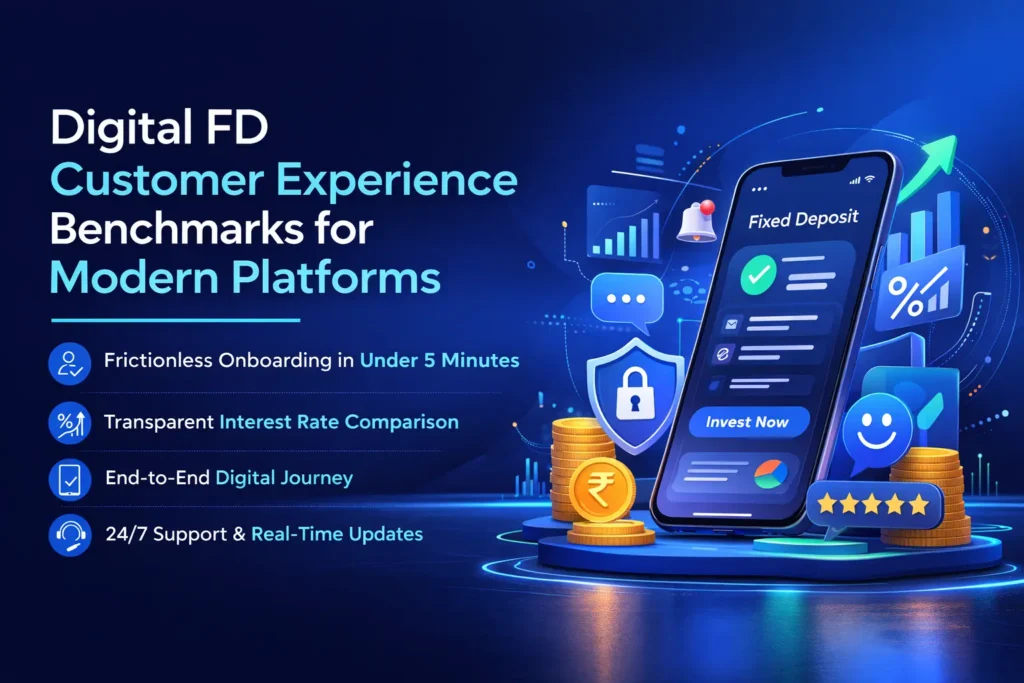
What Customer Experience Benchmarks Should Digital FD Platforms Meet Today?

The digital transformation of financial services has fundamentally reshaped how customers interact with savings and investment products. Fixed Deposits (Digital FD), once considered a purely branch-driven offering, are now being discovered, booked, renewed, and managed entirely online. But simply offering digital Fixed Deposits is no longer enough. Today, customer expectations are defined by fintech apps, UPI payments, neobanks, and instant lending platforms. If a digital FD platform fails to match those standards, customers drop off within seconds. The benchmark has shifted from “digitized” to “delightful.” So what customer experience (CX) benchmarks should digital FD platforms meet today? Let’s break it down. 1. Frictionless Onboarding in Under 5 Minutes Modern users expect seamless onboarding. A digital FD platform should: Enable paperless KYC (CKYC / Video KYC integration) Auto-fetch PAN and Aadhaar details securely Pre-fill forms wherever possible Minimize manual inputs Offer instant eligibility validation The industry benchmark today is sub-5-minute onboarding for existing KYC-verified users. If users are forced to upload multiple documents, re-enter basic details, or face unclear validation errors, drop-offs spike dramatically. A strong platform must aim for: < 2% KYC failure rate < 10% form abandonment rate Real-time validation feedback Speed is no longer a luxury — it’s a baseline expectation. 2. Transparent Interest Rate Comparison Customers want clarity, not complexity. Digital FD platforms should display: Interest rates across tenures Senior citizen rates Compounded vs simple interest Maturity amount preview Premature withdrawal penalties Best-in-class platforms provide interactive calculators and dynamic rate tables. For example, platforms inspired by UX-first fintech ecosystems like Razorpay and Paytm have trained users to expect transparency and instant previews. Benchmark expectation: Real-time maturity calculator Side-by-side comparison of partner banks/NBFCs No hidden penalty disclosures buried in PDFs Customers must feel informed before they click “Invest.” 3. End-to-End Digital Journey (Zero Offline Dependency) A true digital FD platform should offer: Booking Modification Nomination updates Renewal Premature withdrawal Closure Interest certificate download All without requiring branch visits. Even today, many platforms digitize booking but redirect users to offline processes for closure or documentation. That breaks trust. The benchmark is 100% digital lifecycle management. If digital FD platforms cannot manage renewals, auto-rollovers, and closure seamlessly, operational friction translates directly into customer dissatisfaction. 4. Instant Confirmation & Real-Time Updates Once a user invests, they expect immediate acknowledgment. The platform should provide: Instant booking confirmation Unique FD reference number Digital FD receipt SMS + email confirmation In-app transaction status tracker Customers now compare this experience to UPI or wallet transactions that confirm within seconds. Any delay without transparency increases anxiety and support tickets. Benchmark expectation: Booking confirmation within 30 seconds Status updates visible in dashboard No manual reconciliation required 5. Strong Data Security & Compliance Communication Trust is the backbone of Fixed Deposits. Customers want assurance that their money and data are safe. Digital FD platforms must clearly communicate: RBI compliance alignment Partner bank/NBFC credibility Encryption standards Data privacy practices Leading financial institutions like Reserve Bank of India have set strict compliance frameworks for regulated entities. Benchmark today: Visible SSL encryption Two-factor authentication Masked account details Clear disclosure of regulated partner institution Transparent grievance redressal mechanism Security must not just exist — it must be visible. 6. Personalized Dashboard Experience A modern digital FD platform must act like a portfolio management dashboard. Users should see: Active FDs Upcoming maturities Accrued interest Historical transactions Tax certificates Nominee details Advanced benchmarks include: Maturity alerts 7–30 days prior Auto-renewal recommendations Laddering suggestions Reinvestment nudges Personalization increases retention and cross-sell opportunities. Platforms inspired by consumer-first fintech players like Groww and Zerodha have conditioned users to expect clean dashboards and real-time insights. A cluttered or static dashboard no longer meets expectations. 7. Clear Communication During Lifecycle Events Lifecycle management is where most digital FD platforms fail. Benchmarks include: Proactive maturity reminders Renewal rate updates Premature withdrawal impact preview Clear penalty breakdown Real-time payout timelines Customers should never wonder: “Has my FD matured?” “When will I receive funds?” “What rate applies after renewal?” Best practice benchmark: Automated notifications at T-30, T-7, T-1 days Renewal confirmation with updated rate Withdrawal processing timeline displayed upfront Communication reduces support dependency and builds confidence. 8. 24/7 Support with Resolution SLAs Customer support expectations have evolved dramatically. Digital FD platforms must offer: In-app chat AI chatbot for FAQs Escalation to human agents Defined turnaround time (TAT) Benchmark standards today: First response within 2 minutes (chat) Resolution within 24–48 hours Clear ticket tracking system Dedicated escalation matrix The absence of visible support erodes trust instantly in financial products. Even a strong backend cannot compensate for weak support communication. 9. Mobile-First Performance Standards Most users access digital FDs via smartphones. Performance benchmarks include: Page load time under 3 seconds Minimal redirects No heavy PDF downloads during journey Thumb-friendly UI Minimal scroll dependency Google research consistently shows that a delay beyond 3 seconds significantly increases drop-offs. A digital FD platform must feel as smooth as a payment app. 10. Transparent Pricing & Zero Hidden Charges Although Fixed Deposits are simple products, hidden fees or unclear payout structures damage credibility. Platforms must: Disclose partner spreads (if applicable) Show exact payout structure Clarify tax deduction at source (TDS) Display net maturity amount after taxes Financial clarity is a CX benchmark. Surprises equal churn. 11. Seamless Integration with Ecosystem Products Digital FD platforms embedded inside: NBFC apps Neobanks Wealth management apps Super apps Must offer plug-and-play journeys. The benchmark here includes: SDK/API reliability above 99.9% uptime Zero broken journeys Unified branding Smooth redirection without session loss If a platform offers FDs via third-party integration, the experience must feel native — not bolted on. 12. Analytics-Driven Experience Optimization Modern CX benchmarks rely on data. Digital FD platforms should track: Drop-off rate at each step Average booking time Renewal conversion rate Customer support tickets per 1000 bookings NPS (Net Promoter Score) A healthy digital FD benchmark includes: 70% renewal rate < 5% support dependency High repeat investment rate Continuous UX optimization separates average platforms from industry leaders. The New Standard for Digital FD Platforms The question is no

White-label FD
Fixed Deposit

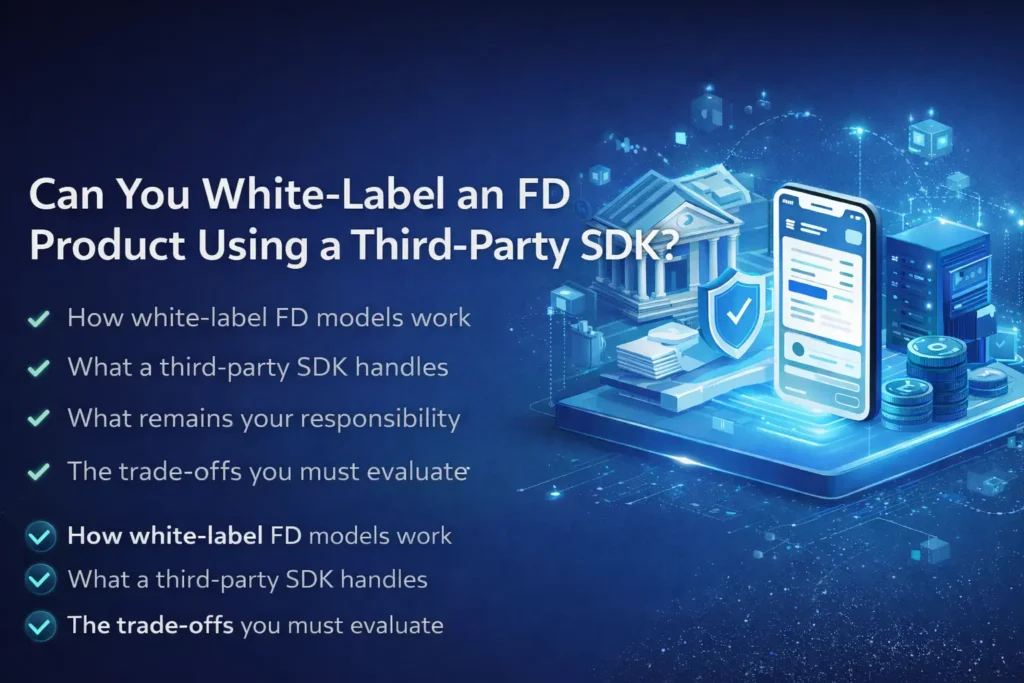
Can We White-Label an FD Product While Using a Third-Party SDK?

Short answer: Yes — and in most modern digital finance models, that’s exactly how it’s done. But the real question isn’t whether you can.It’s how much control, compliance ownership, and revenue leverage you retain while doing it. If you’re a bank, NBFC, fintech, wealth platform, or super app evaluating Fixed Deposit (FD) infrastructure, this guide explains: How white-label FD models work What a third-party SDK actually handles What remains your responsibility The trade-offs you must evaluate Let’s break it down properly. What Does “White-Label FD” Actually Mean? A white-label FD product means: The FD is issued by a regulated bank/NBFC The infrastructure may be powered by a third-party SDK The customer sees your brand, not the infrastructure provider From the customer’s perspective: It looks like your FD product. Behind the scenes: APIs, compliance logic, booking systems, and reporting may be powered externally. What Is a Third-Party FD SDK? An FD SDK (Software Development Kit) is a pre-built infrastructure layer that provides: FD rate configuration Booking APIs KYC & AML orchestration Payment integrations Certificate generation Reconciliation & reporting Instead of building everything from scratch or deeply integrating into core banking systems like: Finacle TCS BaNCS Flexcube You integrate via standardized APIs. That dramatically reduces deployment time. How White-Label + SDK Model Works Let’s map the structure. Layer 1: Issuer Layer Regulated bank or NBFC Holds deposits Manages compliance & balance sheet Layer 2: Infrastructure Layer (SDK Provider) Provides APIs Handles orchestration Ensures compliance workflows Generates FD accounts Layer 3: Distribution Layer (You) Own the customer interface Control branding Manage acquisition Own user experience Customers interact with your app or website, but the deposit sits with the issuing institution. What Can Be Fully White-Labeled? Most modern FD SDK providers allow branding customization across: FD rate display Booking interface Nominee flow Confirmation screens Email & SMS templates FD certificates (co-branded or fully branded) Some providers even allow: Custom UI embedding Native mobile SDK integration White-labeled web modules To customers, it feels like your proprietary product. What You Still Don’t Control Here’s where founders must think strategically. When using a third-party SDK: You typically do NOT control: Core deposit ledger Interest computation engine Regulatory reporting backend Settlement banking rails Risk categorization rules (fully) You rely on the infrastructure provider’s robustness. This is the main trade-off. Regulatory Responsibility in White-Label FD This is critical. Even if infrastructure is third-party: The issuing bank/NBFC carries regulatory responsibility You may carry distribution responsibility KYC and AML flows must align with RBI guidelines White-label does NOT mean regulatory outsourcing. Your agreements must clearly define: Data ownership Customer grievance redressal Liability in case of disputes Audit access This is where legal clarity matters. Revenue Model in White-Label FD Setup Common monetization structures include: 1. Revenue Share Model You earn commission per FD booking. 2. Spread-Based Model Margin between issuer rate and customer rate. 3. Fixed Fee Per Account Flat payout for every deposit booked. 4. Platform Fee Model Infrastructure provider charges you per API usage. Understanding the margin stack is crucial before committing. Benefits of White-Label + SDK Model 1. Speed to Market Launch in 2–6 weeks instead of 6–9 months. 2. Lower Engineering Cost No deep CBS integration required. 3. Scalable Infrastructure Handles spikes during festive campaigns. 4. Reduced Compliance Friction Pre-built KYC, CKYC, AML logic. 5. Focus on Distribution You concentrate on growth, not plumbing. For digital-first platforms, this is often ideal. Risks to Evaluate Before Choosing This Model Let’s be strategic. 1. Vendor Lock-In Switching providers later can be complex. 2. Limited Customization Interest slab experimentation may be restricted. 3. Dependency Risk Downtime or API failure affects your brand. 4. Margin Compression Revenue share models reduce long-term profit potential. 5. Data Ownership Concerns Ensure customer data portability. White-label works best when agreements are clear and infrastructure is stable. Who Should Use White-Label FD SDK? Ideal for: Fintech platforms adding fixed-income products Wealth apps expanding into deposits Super apps monetizing idle balances NBFCs launching digital FDs quickly Neo-banks without deposit license Not ideal if: You want deep core banking customization You plan to build proprietary FD ledger infra You need complex treasury-level configurations Deployment Timeline in White-Label Model Stage Typical Duration Agreement & Compliance Setup 1–2 weeks API/SDK Integration 1–3 weeks Branding Customization 1–2 weeks UAT & Go-Live 1–2 weeks Total: 2–8 weeks Compare that with traditional CBS build: 4–9 months. Strategic Question: Build or Orchestrate? This is not just a technical decision. It’s a business architecture decision. Ask yourself: Is FD core to my balance sheet strategy? Or is FD a distribution-led product? Do I want infrastructure ownership? Or capital-light scalability? White-label + SDK is essentially an orchestration model. You own the experience.The issuer owns the balance sheet.The SDK provider owns the plumbing. The Future: Embedded Finance & Modular Banking Digital finance is moving toward modular infrastructure. Instead of owning everything, platforms orchestrate: Lending APIs Insurance APIs FD APIs Wealth APIs White-label FD is part of this larger embedded finance shift. Speed and distribution advantage often outweigh infrastructure ownership. Final Answer Yes, you can absolutely white-label an FD product while using a third-party SDK. In fact, this is now one of the most efficient ways to: Launch quickly Stay compliant Minimize engineering overhead Scale deposit distribution However, success depends on: Clear regulatory alignment Strong SLA agreements Transparent revenue structures Reliable API performance Defined data ownership White-labeling an FD is not about outsourcing responsibility. It’s about strategically choosing where to build — and where to leverage. And in modern digital finance, leverage often wins.

Digital FD API architecture
Fixed Deposit

What APIs Are Critical for a Seamless FD Customer Journey?

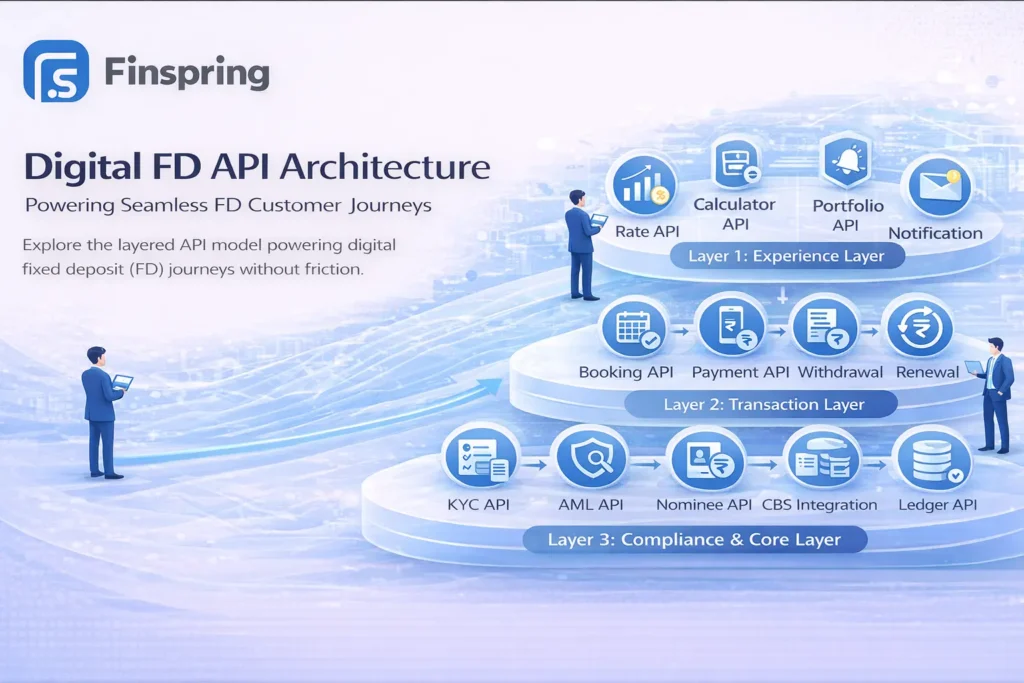
In digital banking, launching a Fixed Deposit (FD) product is no longer just about interest rates. The real differentiator lies in the customer journey—how smooth, fast, and trustworthy the experience feels from discovery to maturity. Behind every seamless FD booking flow sits a well-orchestrated API architecture. If you’re a bank, NBFC, or fintech building digital FD infrastructure, this guide breaks down the Digital FD API architecture required to deliver a frictionless end-to-end FD customer journey. Understanding the FD Customer Journey and Digital FD API architecture Before diving into APIs, let’s map the ideal digital FD journey: Customer checks FD rates Selects tenure & payout type Completes KYC (if required) Adds nominee details Makes payment Receives FD confirmation & certificate Tracks FD status Manages renewal or closure Each of these steps relies on backend APIs working invisibly but flawlessly. Let’s break them down. 1. Rate Discovery API (Interest Rate & Tenure API) This is the first touchpoint. What It Does: Fetches current FD interest rates Displays tenure slabs Calculates maturity amount Handles senior citizen rates Supports special rate campaigns Why It’s Critical: Customers compare rates instantly. Real-time API response builds trust and prevents mismatch errors. Without this API, rate displays become static and error-prone. 2. Customer KYC & Identity Verification API A seamless FD experience depends on quick identity verification. Includes: Aadhaar-based eKYC API PAN verification API CKYC fetch API AML screening API OTP authentication These integrations often connect with identity rails and compliance frameworks. For financial institutions in India, KYC APIs must comply with RBI guidelines. 3. Core FD Booking API This is the heart of the system. Functions: Create FD account Map tenure & rate Lock interest rate at booking time Generate unique FD number Trigger backend ledger entries Store payout preferences This API integrates with Core Banking Systems (CBS) such as: Finacle TCS BaNCS Flexcube Without a robust booking API, reconciliation errors and booking mismatches become common. 4. Payment & Funds Transfer API FD booking must connect seamlessly to payment infrastructure. Required Integrations: UPI collect API Net banking gateway API Debit mandate API (for auto-debit) Escrow settlement API This ensures: Instant fund confirmation Reduced drop-offs Automatic booking trigger upon successful payment A broken payment API is the fastest way to lose customer trust. 5. Nominee & Compliance Data API Adding nominee details is mandatory for FDs. This API Handles: Nominee creation Nominee validation Relationship tagging Minor nominee handling with guardian logic It also ensures: FATCA compliance fields Form 15G/15H logic TDS applicability Compliance APIs prevent regulatory risk and manual follow-ups. 6. FD Certificate Generation API Once booked, customers expect instant confirmation. API Functions: Generate digital FD certificate (PDF) Add digital signature Include FD number, tenure, rate Timestamp booking Send via email/SMS This improves transparency and reduces customer support queries. 7. FD Portfolio & Tracking API After booking, customers want visibility. Features: View active FDs Check maturity value View interest accrued Download certificates Track maturity date This API enhances post-booking experience and boosts retention. 8. Premature Withdrawal & Closure API Customers may request early closure. This API Manages: Penalty logic Revised interest calculation Tax adjustments Fund refund trigger Closure confirmation A seamless withdrawal API improves brand credibility. 9. Auto-Renewal & Maturity Management API At maturity, customers should have options: Auto-renew principal + interest Renew principal only Credit to savings account Partial withdrawal This API triggers notifications and renewal workflows. Miss this, and you lose repeat deposits. 10. Notification & Communication API Customer trust depends on timely communication. Integrated Systems: SMS API Email API WhatsApp API In-app push notification API Notifications should trigger for: Booking confirmation Payment success Maturity reminder Renewal alert TDS deduction Communication APIs close the experience loop. 11. Reconciliation & Ledger API Behind the scenes, institutions need: Transaction reconciliation API Settlement confirmation API Ledger update API Reporting API This ensures accounting accuracy and audit readiness. Without reconciliation APIs, operations teams face manual overhead. 12. Analytics & Reporting API Data is strategic. Critical metrics include: FD conversion rates Drop-off points Average tenure selection Ticket size Renewal rates Analytics APIs help optimize the customer journey continuously. Digital FD API architecture: Layered Model A seamless FD journey requires layered API orchestration: Layer 1: Experience Layer Rate API Calculator API Portfolio API Notification API Layer 2: Transaction Layer Booking API Payment API Withdrawal API Renewal API Layer 3: Compliance & Core Layer KYC API AML API Nominee API CBS integration API Ledger API When these layers communicate cleanly, customers experience zero friction. Digital FD API architecture Best Practices for FD Products To truly make APIs seamless: 1. Use RESTful Architecture Standardized endpoints reduce integration time. 2. Provide Sandbox Environments Partners should test before go-live. 3. Enable Idempotency Prevents duplicate FD creation during payment retries. 4. Real-Time Webhooks Trigger booking only after confirmed payment. 5. Strong Encryption & Tokenization Protect sensitive financial data. What Breaks the FD Customer Journey? Even with APIs, friction occurs when: Rate API not synced with CBS Payment confirmation delays Nominee validation errors Manual certificate generation Reconciliation mismatch A seamless experience is not about having APIs—it’s about orchestrating them intelligently. Final Checklist: Digital FD API architecture for Seamless FD Journey API Type Criticality Level Interest Rate API Essential KYC & PAN API Essential FD Booking API Core Payment API Core Nominee API Mandatory Certificate API High Portfolio API High Closure API High Renewal API Strategic Notification API Experience-Defining Reconciliation API Operationally Critical Conclusion A seamless FD customer journey is not built on one API. It’s built on a tightly integrated ecosystem of identity, booking, payment, compliance, and communication APIs working together in real time. The institutions that succeed in digital FD deployment don’t just offer attractive interest rates. They offer zero friction. And that frictionless experience is powered entirely by well-designed, intelligently orchestrated APIs.

How to handle KYC and AML in digital FD
Fixed Deposit

How Do We Handle KYC, CKYC, and AML Flows in a Digital FD Setup?

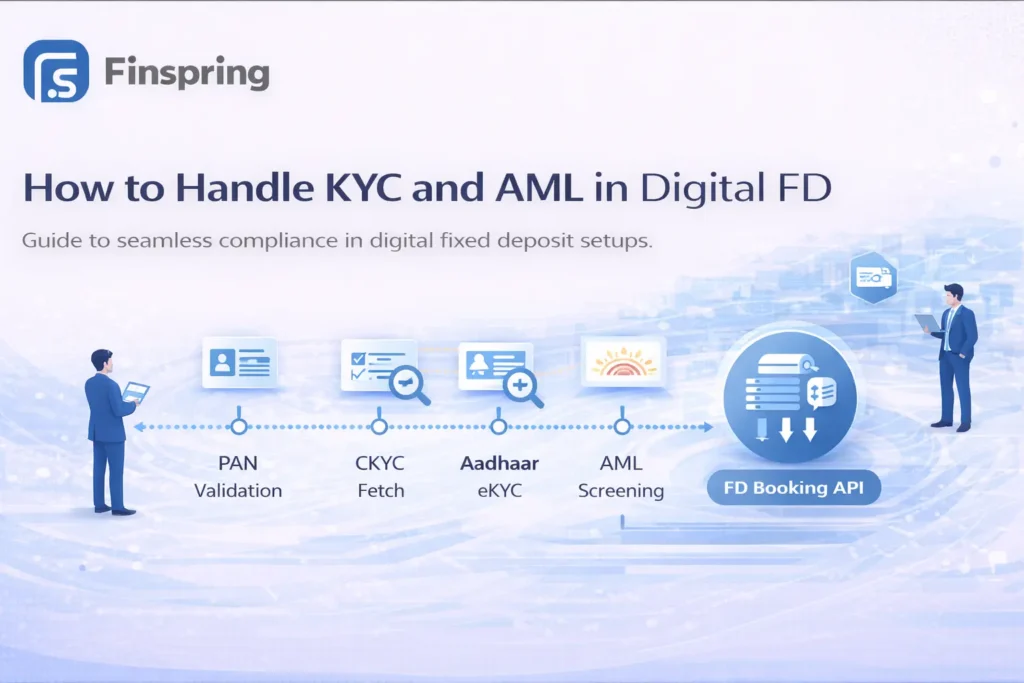
In a fully digital Fixed Deposit (FD) journey, compliance is not a back-office function—it is a real-time experience layer. Customers expect to book an FD in minutes. Regulators expect airtight compliance. Institutions must deliver both. So How to handle KYC and AML in digital FD? This guide breaks down the architecture, process flows, regulatory checkpoints, and best practices to build a compliant, seamless system. Why KYC, CKYC, and AML Matter in FD Products FDs are regulated financial instruments. Even though they’re considered low-risk products, they fall under strict guidelines defined by the Reserve Bank of India (RBI) and Prevention of Money Laundering Act (PMLA). In a digital FD system, you must ensure: Customer identity verification Central registry checks Anti-money laundering screening Record-keeping and audit readiness If not handled properly, institutions face regulatory penalties and operational risk. Let’s break each component down. 1. KYC in a Digital FD Setup KYC (Know Your Customer) verifies the identity of a depositor before allowing financial transactions. What Digital KYC Typically Includes PAN verification Aadhaar-based eKYC OTP authentication Video KYC (if required) Address validation Face match & liveness detection Types of KYC Flows in FD Booking A. Existing Customer Flow If the customer already has a savings account or prior relationship: Fetch KYC status from Core Banking System Validate KYC completeness Skip redundant steps Proceed directly to FD booking This reduces friction dramatically. Core banking systems often used include: Finacle TCS BaNCS Flexcube B. New-to-Institution Customer Flow If the customer is new: PAN API verification Aadhaar eKYC API CKYC search AML screening Risk categorization Customer ID creation Only after this is complete should the FD Booking API activate. 2. CKYC Handling in Digital FD Infrastructure CKYC (Central Know Your Customer) allows institutions to fetch pre-verified KYC records. Instead of collecting documents again, you: Search CKYC registry using PAN/Aadhaar Retrieve KYC identifier (KIN) Validate data match Store CKYC reference ID This reduces onboarding time significantly. Best Practice: CKYC First Strategy Before initiating fresh KYC, always: Run CKYC search API If found → fetch and validate If not found → trigger fresh KYC This prevents duplicate registry entries and speeds up onboarding. 3. AML Flow in a Digital FD Setup AML (Anti-Money Laundering) ensures funds are not linked to illegal activity. In digital FD systems, AML checks must happen in real-time or near-real-time. AML Screening Typically Includes: Sanctions list screening Politically Exposed Person (PEP) check Watchlist database scan Adverse media search Risk scoring If flagged: Mark as high-risk Trigger manual review workflow Temporarily restrict booking Automation is critical here. Ideal KYC-AML Flow Architecture for FD Let’s visualize the proper flow. Step 1: Customer Initiates FD Booking → Enter PAN & mobile number Step 2: PAN Validation API → Verify format & identity Step 3: CKYC Search API → If KIN exists → fetch→ If not → initiate fresh KYC Step 4: Aadhaar eKYC / Video KYC → Validate identity Step 5: AML Screening API → Sanctions, PEP, risk scoring Step 6: Risk Categorization → Low risk → proceed→ High risk → manual review Step 7: Customer ID Creation → Generate unique CIF Step 8: Activate FD Booking API All of this should ideally happen within minutes. Handling Edge Cases 1. Name Mismatch Between PAN & CKYC Trigger validation screen Allow document upload Send for manual review 2. High-Risk AML Flag Escalate internally Temporarily restrict transaction Maintain audit logs 3. Incomplete CKYC Record Prompt additional fields Trigger re-verification Edge-case management defines operational strength. Regulatory Considerations in India Digital FD platforms must comply with: RBI KYC Master Directions PMLA guidelines Data localization rules Secure audit trail storage Minimum 5-year record retention Every API call must be logged. How to handle KYC and AML in digital FD Here’s how modern digital FD platforms balance speed and regulation: 1. Progressive KYC Model Collect only mandatory fields upfront.Defer non-critical fields post-booking if allowed. 2. Reusable KYC Tokens For returning customers, store KYC verification tokens securely to avoid repeat verification. 3. Real-Time Webhooks Trigger AML check instantly post-KYC rather than batch processing. 4. API Orchestration Layer Instead of sequential long waits, run: CKYC search AML screening PAN verification Simultaneously when possible. Security & Data Protection Requirements KYC and AML flows involve sensitive data. Ensure: End-to-end encryption Tokenized storage Role-based access control Encrypted document vault Secure API gateways Data breach in KYC systems is catastrophic for brand trust. Timeline: How to handle KYC and AML in digital FD? In an optimized FD setup: PAN verification → Seconds CKYC fetch → 30–60 seconds Aadhaar eKYC → 1–2 minutes AML screening → Real-time API Full onboarding → Under 5 minutes If your KYC takes 15–20 minutes, friction is too high. Manual vs Fully Automated Model Model Speed Risk Scalability Manual review heavy Slow Low automation risk Poor Hybrid (auto + review) Moderate Balanced Good Fully automated Fast Requires strong API reliability Excellent Most institutions adopt a hybrid approach for risk mitigation. Common Mistakes in Digital FD Compliance Setup Running AML after fund receipt Not checking CKYC before fresh KYC Poor audit logging No retry mechanism for failed APIs Manual certificate issuance before compliance clearance These create regulatory and operational vulnerabilities. The Strategic Perspective: How to handle KYC and AML in digital FD In digital FD ecosystems, compliance is not a cost center. It is an infrastructure moat. Institutions that design intelligent KYC, CKYC, and AML API orchestration achieve: Faster onboarding Lower drop-offs Stronger regulatory standing Scalable FD growth Final Answer Handling KYC, CKYC, and AML in a digital FD setup requires: Real-time PAN and Aadhaar verification CKYC-first retrieval logic Automated AML screening Risk scoring and escalation workflows Secure data storage and audit logging Seamless integration with FD booking APIs When built correctly, the entire compliance flow can complete within 3–5 minutes—without compromising regulatory standards. The goal isn’t just compliance. It’s compliant speed. And in digital FD deployment, speed defines competitive advantage.

FD product deployment timeline
Fixed Deposit

How Long Does End-to-End FD Product Deployment Typically Take?

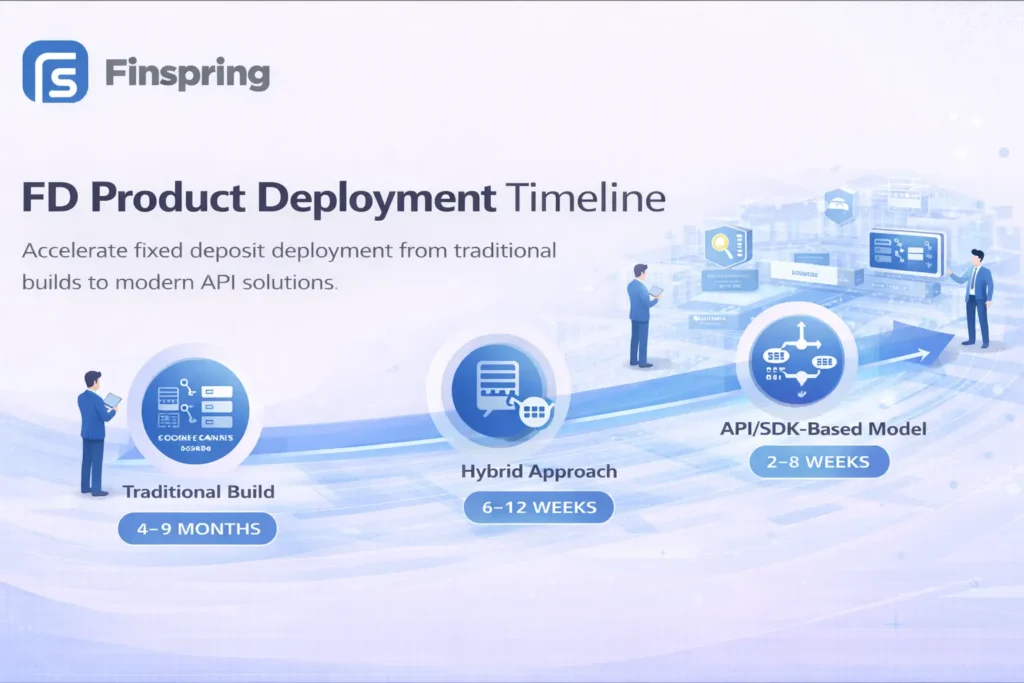
In today’s competitive digital banking landscape, speed-to-market is no longer optional. For banks, NBFCs, and fintech platforms, launching a Fixed Deposit (FD) product quickly can unlock new revenue streams, improve customer retention, and strengthen digital presence. But one question consistently arises in boardrooms and product meetings: How long does end-to-end FD product deployment timeline actually take? The answer depends on your infrastructure, regulatory readiness, and integration approach. In this detailed guide, we break down timelines, phases, bottlenecks, and how modern plug-and-play FD infrastructure can dramatically accelerate deployment. What Is “End-to-End FD Product Deployment”? End-to-end FD deployment refers to the complete process of launching a Fixed Deposit product digitally—from planning and compliance setup to API integration, user experience design, and go-live execution. This includes: Regulatory alignment Core banking integration KYC and onboarding flows Payment gateway integration Partner bank or NBFC onboarding UI/UX implementation Testing and compliance checks Live deployment and monitoring Let’s explore how long this typically takes. Traditional FD Product Deployment Timeline (4–9 Months) Historically, deploying an FD product required deep backend integrations and multiple stakeholders. Below is a breakdown of a conventional timeline. 1. Regulatory & Compliance Planning (4–6 Weeks) Banks and NBFCs must align with RBI guidelines, internal compliance teams, and risk frameworks. Documentation, approval cycles, and legal sign-offs often create early delays. Key activities: FD product structuring Interest rate configuration TDS rules AML/KYC alignment Legal documentation drafting 2. Core Banking System Integration (6–10 Weeks) Integration with Core Banking Systems (CBS) such as: Finacle TCS BaNCS Flexcube This phase often becomes the biggest bottleneck. Legacy systems require custom APIs, data mapping, and multiple testing cycles. 3. Partner & Payment Infrastructure Setup (3–6 Weeks) To enable digital FD booking: Payment gateway integration UPI/net banking rails Escrow or settlement account setup Partner bank configuration (if marketplace model) Delays often arise due to dependency on third-party approvals. 4. Frontend Development & User Journey Design (4–8 Weeks) This includes: FD calculator Tenure selection UI Interest payout options Nominee addition Auto-renewal features FD certificate generation Each UX element must be tested across web and mobile. 5. Testing, UAT & Compliance Audit (3–5 Weeks) Before go-live: User Acceptance Testing (UAT) Security audits Load testing RBI compliance verification Internal sign-offs Total Traditional Timeline: 4 to 9 months For institutions dependent on legacy banking systems, the process can extend beyond 9 months. Modern API-Based FD Deployment Timeline (2–8 Weeks) With the rise of FD infrastructure providers offering SDKs and APIs, the timeline has significantly reduced. Instead of building everything from scratch, institutions can plug into ready-made FD rails. Here’s what changes: 1. Pre-Built Compliance Framework (1 Week) Regulatory templates, TDS logic, KYC flows, and reporting are already structured. Minimal documentation effort. 2. API/SDK Integration (1–3 Weeks) Modern FD platforms provide: REST APIs Plug-and-play SDKs Sandbox environments Clear API documentation Instead of CBS-level integration complexity, you connect via standardized endpoints. 3. White-Labeled UI or Embedded Widget (1–2 Weeks) Instead of custom designing: Use pre-built FD booking modules Embed directly within app Customize branding This drastically cuts frontend development time. 4. Testing & Go-Live (1–2 Weeks) Since infrastructure is pre-validated: Reduced compliance friction Faster UAT cycles Faster partner approvals Total API-Based Timeline: 2 to 8 weeks That’s up to 80% faster compared to traditional deployment. Key Factors That Influence FD Deployment Timeline Not every organization experiences the same timeline. Here are the biggest variables: 1. Legacy vs Modern Core Infrastructure If your core banking system lacks API readiness, integration time increases significantly. 2. Regulatory Preparedness Clear documentation and proactive compliance teams reduce weeks of delay. 3. Internal Decision-Making Speed Board approvals and risk committee reviews often slow down deployment. 4. Marketplace vs Single-Issuer Model If you’re aggregating multiple banks/NBFCs, additional partner onboarding adds time. 5. Customization Requirements Highly customized interest slabs, premature withdrawal logic, or auto-sweep features require additional development. Breakdown: Realistic FD product deployment timeline Scenarios Scenario 1: Traditional Bank Launching Digital FD Heavy CBS integration Manual reconciliation Custom UI Internal compliance cycle Timeline: 6–9 months Scenario 2: NBFC Using FD SDK Provider API integration Pre-built compliance Embedded booking flow Timeline: 3–6 weeks Scenario 3: Fintech Marketplace Adding FD as Investment Option Partner onboarding White-labeled integration Minimal backend changes Timeline: 2–4 weeks Why Deployment Speed Matters In digital finance, opportunity cost is real. Delays can mean: Missed festive deposit inflows Competitors capturing rate-sensitive customers Loss of digital trust positioning Slower revenue realization FDs may be considered a “stable” product—but deployment speed determines strategic advantage. Cost vs Time Trade-Off Traditional Build: Higher upfront engineering cost Longer time to revenue Heavy dependency on CBS vendor API-Based Model: Faster monetization Lower integration cost Reduced operational complexity While traditional models offer deep customization, most modern institutions prioritize speed, scalability, and modular architecture. The Future of FD product deployment timeline The evolution of digital banking is shifting from product ownership to infrastructure orchestration. Institutions no longer need to reinvent FD rails. Instead, they can: Focus on distribution Improve customer acquisition Enhance cross-sell Offer FD as a stable yield product in volatile markets The deployment timeline is no longer a technical limitation—it’s a strategic choice. Final Answer: So How Long Does FD product deployment timeline Take? Deployment Model Typical Timeline Traditional CBS Integration 4–9 months Hybrid Approach 6–12 weeks API/SDK-Based Model 2–8 weeks If your goal is rapid go-live with minimal technical complexity, modern FD infrastructure can reduce deployment time from months to weeks. The real question isn’t how long it takes. It’s whether you want to build infrastructure — or leverage it. FAQ: FD Product Deployment Timeline 1. What is the fastest way to launch an FD product? Using an API-based FD SDK provider can reduce deployment to 2–4 weeks. 2. Why does traditional FD deployment take so long? Legacy core banking integration and compliance approvals create extended timelines. 3. Can fintech platforms offer FDs without a banking license? Yes, via regulated partner banks or NBFCs under marketplace models. 4. Is regulatory approval the biggest bottleneck? In traditional setups, yes. In API-based models, much of the compliance framework is pre-built. Conclusion

RBI compliance for digital fixed deposits
Fixed Deposit

How Do We Ensure RBI Compliance When Launching Digital Fixed Deposits?

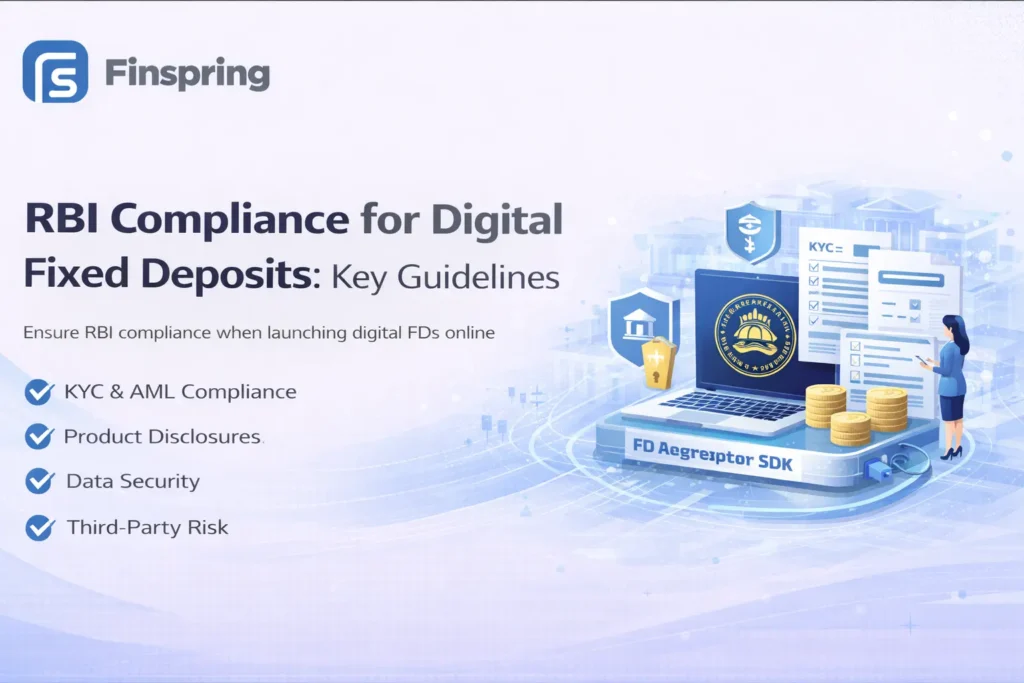
As banks and financial platforms expand digital distribution, Fixed Deposits (FDs) are increasingly being launched through online journeys, aggregator platforms, and embedded SDK integrations. However, digitising FD distribution does not dilute regulatory responsibility. The Reserve Bank of India (RBI) continues to hold the issuing bank fully accountable for compliance, governance, reporting, and depositor protection — regardless of channel. Ensuring RBI compliance for digital fixed deposits requires structured preparation across legal, operational, technical, and governance layers. This article outlines the key compliance pillars institutions must address before going live. 1. Confirm Regulatory Positioning and Issuer Responsibility The first and most important principle is clarity of accountability. Under RBI regulations: The bank remains the issuer of the FD The bank retains full regulatory responsibility Distribution channels do not assume issuer liability When launching digital FDs — whether through a proprietary platform or third-party partner — institutions must ensure: Issuer identity is clearly disclosed Customer funds flow directly to the bank FD receipts and confirmations originate from the bank Reporting obligations remain bank-controlled Digital distribution changes interface, not accountability. 2. Align KYC and AML Processes With RBI Guidelines RBI compliance for digital fixed deposits begins with proper customer onboarding. Institutions must ensure that digital KYC processes: Follow RBI’s KYC Master Directions Incorporate valid identity verification (CKYC, video KYC, or approved alternatives) Enforce AML screening protocols Maintain audit trails of document verification If onboarding is facilitated through a third-party platform or SDK: The workflow must be bank-approved The bank must validate compliance logic Data storage must align with regulatory retention requirements Digital efficiency cannot compromise KYC rigour. 3. Maintain Proper Product Disclosures RBI places strong emphasis on transparency in deposit products. Before launching digital FDs, institutions must verify that: Interest rates are accurately displayed Tenure options are clearly defined Premature withdrawal conditions are disclosed Penalty clauses are transparent Maturity instructions are clearly communicated All disclosures should be visible before booking confirmation — not buried in fine print. Digital journeys must preserve the clarity traditionally offered in physical branches. 4. Ensure Interest Calculation Accuracy Fixed Deposits are sensitive to interest calculation errors. Digital systems must be validated to ensure: Interest rates are applied correctly per tenure Compounding frequency is accurate Tax deduction at source (TDS) is calculated properly Senior citizen rate benefits are correctly applied Testing should include scenario-based validation before launch. Any discrepancy in calculation can create regulatory and reputational exposure. 5. Embed Robust Data Security Controls RBI compliance for digital fixed deposits extends to data protection. Institutions must ensure that digital FD systems: Encrypt customer data in transit and at rest Enforce access control policies Maintain immutable audit logs Comply with data localisation requirements Protect against unauthorised access If third-party infrastructure is involved, vendor risk assessment and security certification review are mandatory. Data governance must be demonstrable during audits. 6. Establish Audit and Reporting Readiness Regulatory compliance is not only about booking FDs. It includes reporting and audit traceability. Before launch, institutions must confirm: Transaction-level logs are maintained Deposit balances reconcile accurately Reports align with RBI submission formats Aggregator-driven deposits are traceable Exception handling processes are documented Digital scale increases transaction velocity. Reporting systems must be equally scalable. Audit readiness must be designed, not retrofitted. 7. Align Treasury and ALM Controls Digital deposit mobilisation affects liquidity management and asset-liability matching. RBI compliance for digital fixed deposits intersects with treasury oversight in areas such as: Liquidity Coverage Ratio (LCR) Net Stable Funding Ratio (NSFR) Tenure concentration risk Rate governance Before launch, treasury teams must: Approve rate publication workflows Set inflow caps if required Define campaign boundaries Monitor deposit mix Digital channels increase speed. Governance mechanisms must keep pace. 8. Formalise Internal Approval Processes RBI compliance for digital fixed deposits requires internal governance approval before go-live. Typical internal sign-offs include: Compliance department clearance Legal review of customer agreements Risk committee approval Information security clearance Product committee sign-off Board-level awareness may be required depending on materiality. Digital launches should be documented formally to demonstrate regulatory discipline. 9. Monitor Third-Party Risk (If Applicable) If digital FDs are distributed through aggregators or SDK partners, RBI’s outsourcing and third-party risk principles apply. Institutions must: Conduct vendor due diligence Review security certifications Define contractual accountability Establish incident notification protocols Retain audit rights Third-party involvement does not transfer regulatory responsibility. Clear governance reduces supervisory risk. 10. Implement Continuous Monitoring Compliance is not a one-time event at launch. Post-launch monitoring should include: Periodic KYC audits Interest calculation reconciliation Complaint tracking and resolution review Security vulnerability assessments Policy updates aligned with RBI circulars Digital infrastructure must adapt as regulatory expectations evolve. Ongoing oversight demonstrates maturity. 11. Customer Communication and Grievance Redressal RBI expects structured grievance redressal mechanisms. Digital FD platforms must: Provide clear contact channels Display grievance escalation procedures Ensure timely response to complaints Maintain complaint logs Customers must know they are dealing with a regulated bank and understand how issues are resolved. Trust is a RBI compliance for digital fixed deposits requirement, not just a brand value. Closing Thoughts Ensuring RBI compliance for digital fixed deposits requires discipline across multiple layers: Regulatory accountability KYC and AML alignment Transparent disclosures Accurate interest computation Data security governance Reporting and audit readiness Treasury coordination Third-party risk oversight Digital transformation does not relax regulatory standards. It amplifies the need for structured infrastructure. Banks and fintech platforms that embed compliance into system architecture — rather than layering it manually — scale more confidently and withstand regulatory scrutiny more effectively. In a digital-first deposit environment, RBI compliance is not a constraint. It is the foundation upon which sustainable growth is built.

FD Aggregator SDK Cost
Fixed Deposit

What Is the Cost Structure of Launching FDs Using an FD Aggregator SDK?

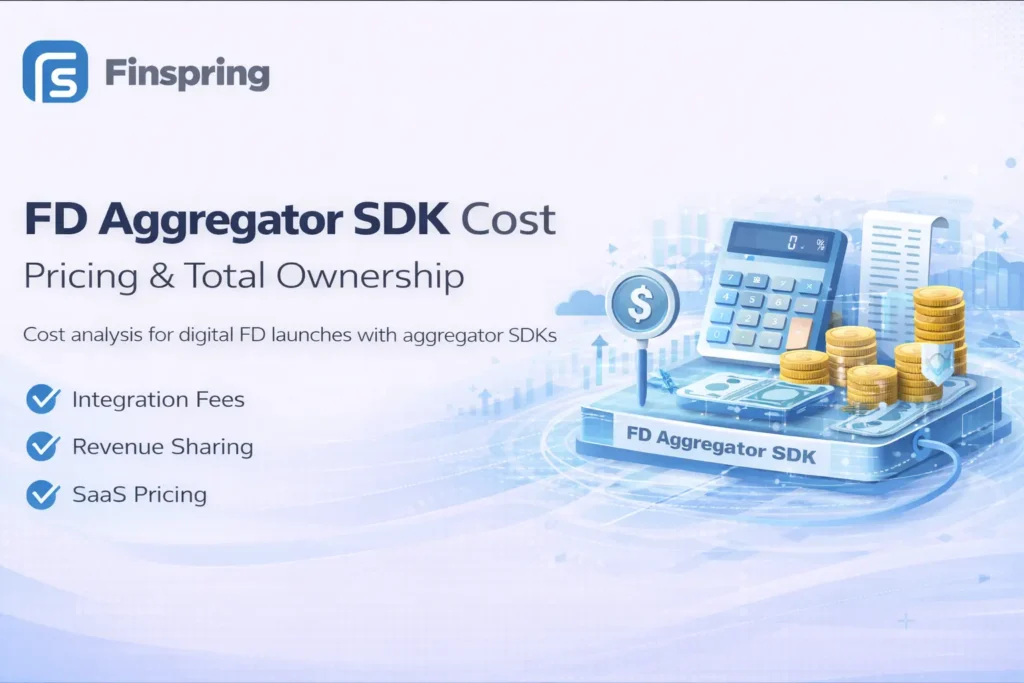
As digital distribution reshapes deposit markets, more banks, fintech platforms, and wealth management firms are exploring Fixed Deposit (FD) launches through aggregator SDKs rather than building infrastructure in-house. One of the first questions decision-makers ask is straightforward: How much do FD aggregator SDK cost? The answer is more nuanced than a single fee line item. The cost structure typically spans integration, compliance alignment, platform usage, revenue sharing, and ongoing operational considerations. This article breaks down the typical cost components and explains how institutions should evaluate total cost of ownership rather than just upfront pricing. 1. One-Time Integration FD aggregator SDK cost The first layer of cost is technical integration. Most FD aggregator SDKs require: API integration into the institution’s website or app Front-end embedding of booking workflows Configuration of rate display Testing and user acceptance validation Some SDK providers charge a one-time setup or onboarding fee to cover: Technical support Sandbox access Initial configuration Compliance alignment workshops Compared to building full FD infrastructure internally, integration costs are usually modest. However, institutions should clarify whether setup fees are fixed or variable based on customization needs. Key consideration: Integration costs are typically a fraction of in-house development expenditure. 2. Platform Access or SaaS Fees Some FD aggregator SDK providers operate on a Software-as-a-Service (SaaS) model. This may include: Monthly or annual platform access fees Tiered pricing based on volume Minimum usage commitments These fees generally cover: Ongoing system maintenance API uptime and monitoring Compliance updates Product enhancements Reporting tools Institutions should evaluate whether the fee structure scales proportionately with growth or introduces fixed overhead regardless of volume. For cost-sensitive markets, predictable and scalable fee models are critical. 3. Revenue Share or Commission-Based Model Many FD aggregator SDKs operate primarily on a revenue-sharing structure. Under this model: The bank pays distribution commission The aggregator receives a share of that commission The platform integrating the SDK may receive a share as well This aligns incentives because costs scale with actual FD bookings rather than being fixed upfront. Key elements to review: Commission percentage Whether revenue share applies to fresh bookings only Whether renewals are included Whether tenure length affects economics Revenue share models often reduce upfront financial risk while tying cost to performance. 4. Compliance and Legal Review FD aggregator SDK cost Although infrastructure reduces engineering burden, compliance review remains mandatory. Before launch, institutions may incur: Legal contract drafting and negotiation expenses Vendor risk assessment reviews Information security audits Internal compliance approval cycles These are not direct FD aggregator SDK cost but are real costs in the launch process. Institutions should factor internal compliance resource allocation into the total cost structure. The advantage of established SDK providers is that much of the regulatory workflow is pre-aligned, reducing repeated compliance interpretation work. 5. Security and Audit FD aggregator SDK cost Even when using a third-party SDK, institutions remain accountable for: Data protection Regulatory reporting Audit readiness Some costs may include: Third-party security audit verification Periodic penetration testing Audit review of integration processes However, mature FD aggregator SDKs typically maintain: Encryption standards Audit logging Role-based access control Recognized security certifications This reduces duplication of infrastructure-level security investment. 6. Operational Cost Savings When evaluating cost structure, it is essential to account for avoided costs. Using an FD aggregator SDK eliminates the need to: Hire dedicated backend engineers for deposit systems Maintain in-house API orchestration Build reporting engines from scratch Develop maturity tracking logic Design renewal workflows The opportunity cost of building in-house infrastructure can include: Engineering salaries DevOps resources Ongoing maintenance Compliance testing cycles Upgrade management The SDK model shifts these from capital expenditure to operational expenditure. 7. Time-to-Market Value Time also has cost. Building in-house FD infrastructure can take: 6 to 12 months Multiple internal approval cycles Vendor coordination Using an FD aggregator SDK can significantly compress timelines. Earlier launch enables: Faster deposit mobilisation Earlier revenue realisation Competitive positioning The cost structure must therefore include time-to-market value, not just direct expenses. Delayed launches often carry hidden financial consequences. 8. Scalability FD aggregator SDK cost Implications An often-overlooked cost element is scalability. In-house builds often incur: Performance scaling costs Infrastructure expansion Server capacity upgrades Additional compliance adaptations FD aggregator SDKs typically operate on scalable infrastructure models. This means: Higher transaction volume does not proportionally increase internal technology costs Expansion across banks is simpler Multi-asset addition does not require architectural rebuild Institutions should assess whether the cost model supports long-term growth rather than short-term savings. 9. Multi-Bank and Multi-Asset Expansion Costs If an institution intends to: Add more banks Expand into Recurring Deposits Introduce Bonds or other instruments The cost advantage of an SDK becomes clearer. Without modular infrastructure, each new product may trigger: Fresh integrations New compliance reviews Additional development cycles With an aggregator SDK, expansion often leverages existing integration frameworks. This significantly lowers incremental cost per product. 10. Hidden FD aggregator SDK cost Risks to Watch While SDK models reduce build costs, institutions should watch for: Unclear revenue share terms High minimum commitments Hidden customization fees Long lock-in periods Renewal commission disputes Transparency in commercial agreements is critical. Cost structure should align incentives without introducing dependency risk. Build vs SDK: Comparative Cost Perspective In-house build: High upfront engineering investment Long development timeline Ongoing maintenance cost Internal compliance and security overhead Higher fixed cost structure FD aggregator SDK cost: Lower upfront cost Revenue-linked variable cost Faster go-live Reduced engineering overhead Infrastructure maintenance handled externally For most mid-sized fintech and wealth platforms, the SDK model is capital-efficient. Closing Thoughts The cost structure of launching FDs using an FD aggregator SDK typically includes: One-time integration fees SaaS or access charges (if applicable) Revenue share on bookings Internal compliance review costs Security oversight alignment However, cost should not be evaluated in isolation. Institutions must compare: Total cost of ownership Opportunity cost of delay Engineering overhead avoided Scalability flexibility gained In regulated financial infrastructure, efficiency is not achieved by minimizing fees alone. It is achieved by optimizing capital allocation, reducing complexity, and accelerating responsible growth. For many institutions, launching FDs

Scroll to Top
Good move, automating your backend!