Finspring

Fixed Deposit

Launch FDs without in-house tech team
Fixed Deposit

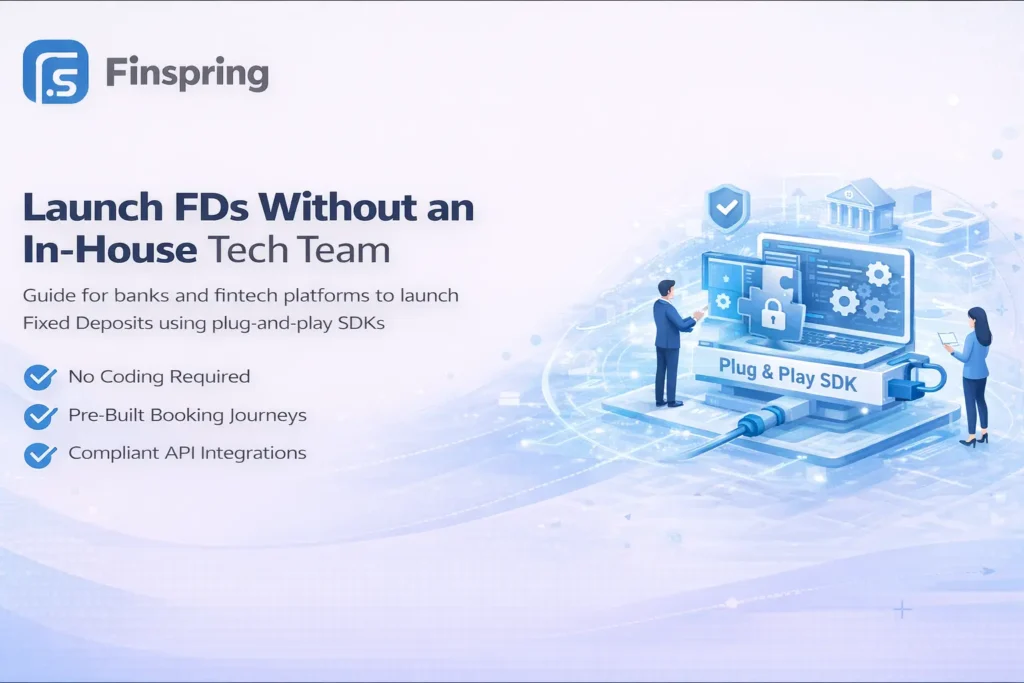
Can We Launch FDs Without Building an In-House Tech Team From Scratch?

For banks, fintech platforms, and wealth management firms, Fixed Deposits (FDs) remain one of the most stable and trusted investment products. As digital distribution expands, many institutions want to offer FDs online, integrate booking journeys into their platforms, and manage renewals and reporting digitally. However, a common concern arises early in the process: Do we need to build a full in-house technology team before launching FDs digitally? The short answer is no. But the full answer depends on how the institution approaches infrastructure, compliance, and long-term scalability. This article explains how institutions can Launch FDs without in-house tech team from scratch, and what must still remain internally governed. Why Institutions Assume They Need an In-House Tech Team Launching FDs digitally appears complex for several reasons: Bank integrations require APIs and workflow orchestration KYC and AML processes must be embedded digitally Reporting must align with regulatory formats Payment flows need to be secure Lifecycle management (maturity, renewal, closure) must be automated Historically, these requirements meant assembling internal engineering teams to: Build integrations Maintain secure servers Create dashboards Manage state transitions Handle reconciliation logic For many institutions, especially mid-sized platforms, this becomes expensive and time-consuming. But modern infrastructure models offer an alternative. The Shift: Infrastructure-Led Launch Instead of Build-From-Scratch Today, plug-and-play FD SDKs and modular investment infrastructure platforms allow institutions to: Integrate once Reuse pre-built compliance workflows Access bank-ready APIs Launch through configuration instead of coding & Launch FDs without in-house tech team This does not eliminate governance. It reduces engineering overhead. Instead of building core FD infrastructure internally, institutions connect to systems designed specifically for regulated deposit distribution. This changes the launch model from engineering-heavy to infrastructure-led. What You Do Not Need to Build Internally When using a compliant FD SDK partner, institutions typically do not need to build: Bank Integration LogicPre-built connectors handle issuer system communication. Digital Booking WorkflowsStandardised booking flows already align with bank-approved processes. KYC Validation LogicOnboarding workflows can be embedded through API-led flows. Renewal and Maturity Tracking SystemsLifecycle logic can be handled by the infrastructure layer. Reporting EnginesTransaction-level data pipelines are already structured for regulatory alignment. Security Architecture From ScratchEncryption, audit logging, and access control frameworks are built into the SDK. This significantly reduces the need for a large internal engineering team. What You Still Need Internally: Launch FDs without in-house tech team Avoiding a build-from-scratch model does not mean outsourcing responsibility. Institutions must retain internal ownership of: Compliance oversightTreasury alignmentProduct approval governanceVendor risk managementCustomer communication standards An FD SDK partner provides infrastructure. The institution retains accountability. The internal team becomes supervisory and strategic rather than execution-heavy. How Small Can the Internal Team Be? For most platforms, launching FDs via infrastructure partners typically requires: A product owner A compliance liaison A technical integration lead (not a full engineering team) A treasury or finance alignment contact The technical effort often involves: Front-end integration (if embedding into existing app/website) API key management Configuration of rate visibility Testing and UAT validation This can often be completed by a lean technical resource rather than a dedicated department. The difference is between integration and construction. Cost Implications: Build vs Integrate Building in-house requires: Hiring backend engineers Hiring DevOps resources Security audits Ongoing maintenance Upgrade management Compliance coordination This cost compounds annually. Integrating with an FD SDK shifts the model to: Platform fee or revenue share Lower upfront cost Faster time-to-market Reduced maintenance burden For cost-sensitive markets, this difference is material. Launch FDs without in-house tech team: Speed to Market Comparison Building internally: 6–12 months typical timeline Multiple approval cycles Infrastructure testing and audit cycles Infrastructure-led launch: Weeks to a few months Pre-approved compliance workflows Reduced vendor coordination Speed matters in competitive deposit markets. Delays often result in lost distribution momentum. Compliance Is Not Optional A common misconception is that using third-party infrastructure reduces compliance work. It does not. Regulators evaluate: The bank’s accountability The clarity of issuer attribution KYC alignment Data security Audit readiness Using an FD SDK can streamline compliance execution. But compliance design and oversight must remain internal. Institutions that separate governance from engineering complexity achieve better outcomes. When In-House Build Makes Sense There are scenarios where building internally may be justified: Very large institutions with custom legacy systems Highly unique product structures Strategic decision to own every integration layer Internal technology capability already established However, for most mid-sized fintechs, wealth platforms, and new entrants, building full FD infrastructure internally is disproportionate to the value gained. The opportunity cost is high. Risks of Building Without Specialised Experience FD lifecycle management includes nuances such as: Interest calculation variations Early withdrawal rules Nominee processing Reinvestment workflows Reporting precision Teams unfamiliar with deposit infrastructure often underestimate complexity. Mistakes in financial calculation logic or reporting alignment can create long-term issues. Specialised infrastructure providers reduce this risk by standardising regulated workflows. Strategic Perspective: Focus on Differentiation Institutions should ask: What differentiates us? Is it: Infrastructure engineering? Or distribution, advisory, customer experience, and growth? For most platforms, differentiation lies in customer acquisition and engagement, not deposit orchestration. Outsourcing infrastructure allows internal teams to focus on strategic priorities. Long-Term Scalability Modern FD SDKs are often built with multi-asset expansion in mind. This means: After FDs, adding Recurring Deposits Adding Bonds Adding Mutual Funds …without rebuilding the architecture. Building in-house for one product may create rigidity for future expansion. Infrastructure-led approaches support scalable growth. Closing Thoughts Yes, institutions can launch FDs without building an in-house tech team from scratch. The key is understanding the distinction between: Owning governanceandBuilding infrastructure Plug-and-play FD SDKs allow institutions to: Launch FDs without in-house tech team Reduce engineering burden Accelerate launch timelines Maintain regulatory compliance Scale without heavy capital expenditure However, accountability remains internal. Compliance oversight, treasury alignment, and strategic control cannot be outsourced. In a regulated digital deposit environment, the smartest approach is not always to build more. It is to build selectively, integrate intelligently, and govern rigorously. For many modern platforms, that balance enables faster growth with lower structural risk.
FD SDK security
Fixed Deposit

What Data Security Standards Should an FD SDK Partner Comply With?

As banks and fintech platforms accelerate digital Fixed Deposit (FD) distribution, plug-and-play FD SDKs are becoming central to product launches. These SDKs connect issuer systems with digital interfaces, enabling booking, tracking, reporting, and lifecycle management. However, an FD SDK partner does not simply process transactions. It handles sensitive financial data, customer identity information, and regulated workflows. Before selecting an FD SDK partner, institutions must assess whether the provider meets stringent data FD SDK security standards. In regulated finance, data governance is not a feature. It is foundational. This article outlines the core data security standards and controls that any FD SDK partner should comply with before integration. 1. Data Encryption Standards (At Rest and In Transit) Encryption is the first non-negotiable requirement. An FD SDK partner must: Encrypt all data in transit using strong TLS protocols (TLS 1.2 or higher) Encrypt sensitive data at rest using industry-grade standards (such as AES-256) Enforce secure API communication channels Protect internal service-to-service communication Customer information, including identity documents, PAN details, bank account numbers, and transaction data, must never move in plaintext. Encryption should be enforced system-wide, not selectively. 2. Compliance With Recognised FD SDK security Frameworks An FD SDK partner should demonstrate compliance with recognised information security standards such as: ISO/IEC 27001 (Information Security Management Systems) SOC 2 Type II (Security, availability, processing integrity) PCI DSS (if payment card data is involved) These certifications indicate that the organisation follows documented, audited security controls. While certifications alone are not sufficient, absence of recognised frameworks is a red flag. 3. Data Localisation and Regulatory Alignment In jurisdictions like India, financial data often falls under data localisation and regulatory oversight requirements. An FD SDK partner must clarify: Where customer data is physically stored Whether primary and backup servers are located within permitted jurisdictions Whether cross-border data transfers are restricted Whether storage aligns with RBI or local regulatory guidelines Banks remain responsible for compliance with data localisation laws. The SDK provider must support these requirements structurally. 4. Role-Based Access Control (RBAC) Access to sensitive financial data must be tightly controlled. An FD SDK partner should implement: Role-based access control (RBAC) Least-privilege access policies Multi-factor authentication (MFA) for administrative access Strict separation of production and non-production environments Access should be logged, monitored, and regularly reviewed. No single employee should have unrestricted access to customer data. 5. Secure API Architecture FD SDKs are integration-heavy systems. APIs become the backbone of communication between banks, platforms, and end-user systems. FD SDK security checks must include: API authentication via OAuth or secure token mechanisms Rate limiting to prevent abuse Input validation to prevent injection attacks Protection against replay attacks Proper session management Poor API governance creates exposure points that attackers exploit. SDK architecture must assume hostile environments and design accordingly. 6. Audit Trails and Logging In regulated environments, traceability is as important as prevention. An FD SDK partner must maintain: Immutable audit logs Timestamped transaction trails Activity logging for all administrative actions Secure storage of logs Log retention aligned with regulatory requirements Audit logs should not be editable and must be exportable upon request. During audits, the ability to reconstruct transaction flows is critical. 7. Data Minimisation and Segmentation A compliant FD SDK should collect only necessary data. Key principles include: Collecting only data required for FD processing Avoiding unnecessary data replication Segregating customer data by issuer Ensuring tenant-level isolation in multi-tenant systems Data segmentation prevents cross-client exposure and reduces systemic risk. Multi-bank platforms must enforce strict logical separation between institutions. 8. Incident Response and Breach Management Protocols No system is immune to risk. What matters is readiness. An FD SDK partner should have: A documented incident response plan Defined breach notification timelines Clear escalation paths Dedicated FD SDK security response teams Regular simulation exercises Contracts should define notification windows in case of security incidents. Delays in breach reporting can create regulatory exposure for banks. 9. Regular FD SDK security Testing and Vulnerability Management Security must be proactive. An FD SDK partner should conduct: Regular penetration testing Vulnerability scanning Secure code reviews Dependency management checks Infrastructure configuration audits Security testing should not be one-time during onboarding. It must be ongoing. Institutions should request periodic reports summarising findings and remediation. 10. Business Continuity and Data Backup Standards Data security is not only about protection from attacks. It includes resilience. The FD SDK partner must demonstrate: Redundant infrastructure Disaster recovery plans Recovery time objectives (RTO) Recovery point objectives (RPO) Automated data backups Business continuity planning ensures deposit operations remain uninterrupted during outages. Downtime in FD booking or servicing directly impacts trust. 11. Secure Development Lifecycle (SDLC) Security should be integrated into product development. An FD SDK partner must follow: Secure coding standards Code review policies Access controls for source code repositories Environment segregation Change management protocols Rapid feature releases without structured change management increase exposure risk. Financial SDK providers must balance agility with discipline. 12. Contractual FD SDK security Clauses Technical standards must be reinforced contractually. Agreements should define: Data ownership (bank remains owner) Liability caps for data breaches Security audit rights Regulatory cooperation clauses Termination and data return procedures Contracts ensure enforcement beyond policy statements. Why FD SDK security Standards Matter More in FD Infrastructure Fixed Deposits represent trust-based financial products. Unlike trading systems or payments, FDs often involve long tenures and lifecycle tracking. FD SDK security lapses can lead to: Identity theft Regulatory penalties Reputational damage Loss of depositor confidence An FD SDK partner becomes part of the bank’s risk perimeter. The standards applied must reflect that reality. Closing Thoughts Selecting an FD SDK partner is not merely a technology decision. It is a risk governance decision. Before integration, institutions must ensure that the partner complies with: Strong encryption standards Recognised security certifications Data localisation requirements Strict access controls Secure API frameworks Audit logging protocols Ongoing vulnerability management Business continuity planning Security cannot be layered after go-live. It must be foundational. In digital deposit infrastructure, the safest systems are not those that promise security. They are those that demonstrate it through

FD Distribution Compliance
Fixed Deposit

What Compliance Checks Should We Complete Before Offering FDs via a Third-Party Platform?

As banks and financial institutions expand digital distribution, third-party platforms and aggregators have become a strategic channel for Fixed Deposit (FD) growth. These platforms increase reach, improve speed to market, and enhance deposit mobilisation efficiency. However, offering FDs through a third-party platform does not dilute regulatory responsibility. The issuing bank remains fully accountable for compliance, customer protection, reporting, and governance. Before launching FD distribution via any third-party platform, institutions must complete a structured set of FD Distribution Compliance Checks. These checks are not procedural formalities. They define whether the partnership strengthens or weakens the bank’s regulatory posture. This guide outlines the core compliance areas that must be reviewed before going live. 1. Clear Role Definition and Regulatory Positioning The first FD Distribution Compliance check is structural clarity. The institution must formally define: The bank as the FD issuer The third-party platform as distributor or technology facilitator Customer relationship ownership Liability boundaries Contracts must clearly state that: The bank retains regulatory responsibility The platform does not act as issuer or custodian All product terms originate from the bank Ambiguity in role definition is one of the most common sources of regulatory friction. Regulators evaluate accountability, not interface design. 2. Third-Party Due Diligence Before onboarding any platform, the bank must conduct structured due diligence. This includes reviewing: Corporate structure and ownership Regulatory standing and licenses Past compliance track record Data security certifications Financial stability Many regulators require documented third-party risk assessment frameworks. The platform must pass vendor risk standards equivalent to other critical technology providers. The goal is not to evaluate marketing strength. It is to assess governance maturity. 3. KYC and AML Workflow Alignment Know Your Customer (KYC) and Anti-Money Laundering (AML) controls remain the bank’s responsibility, even when facilitated digitally. Before launch, the institution must verify: Who collects customer data How identity verification is conducted Whether onboarding flows match regulatory requirements Whether document storage complies with retention rules Whether AML screening is embedded in the process If the platform facilitates onboarding, workflows must be bank-approved and standardised. The platform must not interpret compliance independently. Uniformity across platforms prevents regulatory inconsistency. 4. Product Representation and Disclosure Review Fixed Deposits are highly trust-driven products. Misrepresentation, even unintentional, can create reputational and regulatory exposure. The bank must review: How FD rates are displayed Whether tenure and payout options are described accurately Whether mandatory disclosures appear prominently Whether product names match internal definitions How premature withdrawal terms are communicated The platform must use bank-approved product content. Creative reinterpretation of regulated products is unacceptable. Compliance in presentation is as critical as compliance in process. 5. Data Governance and Security Controls When offering FDs via a third-party platform, data flows expand. This introduces new risk vectors. FD Distribution Compliance teams must verify: Where customer data is stored Whether data is encrypted in transit and at rest Who has access permissions How data segregation is maintained Whether audit logs are immutable Whether the platform complies with data localisation laws The bank must ensure it remains the system of record for FD data. Third-party platforms should not become the authoritative data repository unless formally governed. Data accountability cannot be outsourced. 6. Reporting and Audit Readiness Regulators audit banks, not aggregators. Before launch, institutions must confirm: Transaction-level data can be extracted on demand Reports are aligned with regulatory formats Aggregator activity is traceable Reconciliation processes are defined Exception handling logs are maintained Reporting must not depend on manual compilation across systems. Automated reporting pipelines reduce compliance risk and operational burden. Audit readiness should be built into the integration from day one. 7. Treasury and Liquidity Oversight Alignment While treasury functions are operationally separate from compliance, deposit mobilisation affects regulatory ratios and liquidity management. Before launching through a third-party platform, compliance and treasury must jointly evaluate: Deposit inflow caps Tenure concentration controls Liquidity coverage impact Rate governance mechanisms Campaign-level risk thresholds Unrestricted inflow via digital channels can distort asset-liability management if not governed. Compliance oversight includes ensuring structural controls are in place. 8. Communication and Customer Support Protocols FD Distribution Compliance extends beyond booking. It includes customer lifecycle management. The bank must define: Who sends FD confirmation Who handles complaints How maturity notifications are issued How renewal terms are communicated How disputes are escalated Critical communications should originate from the issuing bank, even if delivered through the platform interface. Clear attribution protects both brand and regulatory standing. 9. Business Continuity and Exit Planning Third-party dependency creates continuity risk. Before launch, institutions must document: Incident response protocols Downtime contingencies Data backup procedures Exit clauses in contracts Migration plans if the partnership ends Regulators increasingly scrutinise third-party concentration risk. A structured exit plan demonstrates governance maturity. Compliance includes planning for disruption. 10. Board and Internal Approval Governance Finally, offering FDs via a third-party platform requires formal internal approval. This typically includes: Risk committee sign-off Compliance approval Legal review Information security clearance Treasury alignment Board-level awareness, where required Digital distribution should not be treated as a minor channel change. It alters operational exposure and must be governed accordingly. Embedding FD Distribution Compliance Into Infrastructure The most effective institutions do not treat compliance as a checklist completed before launch. They embed compliance into system architecture. This includes: Rule-based validations Controlled rate publishing Permissioned access layers Centralised reporting engines Uniform onboarding logic When compliance is infrastructural rather than procedural, scalability improves. Closing Thoughts Offering Fixed Deposits via a third-party platform does not inherently increase regulatory risk. What increases risk is weak preparation, unclear accountability, and fragmented systems. Before launch, institutions must complete structured compliance checks across: Governance KYC and AML Data protection Reporting Treasury controls Vendor risk Customer communication When these elements are addressed at the infrastructure level, third-party distribution becomes a controlled extension of the bank’s deposit strategy rather than a compliance liability. In a digital-first deposit environment, the question is not whether to use third-party platforms. The question is whether compliance has been designed into the partnership from the start. Banks that approach this systematically can scale confidently. Those that treat compliance

Aggregator-led FD Distribution
Fixed Deposit

How Aggregator-Led FD Distribution Helps Banks Grow Term Deposits

A Strategic Shift in Deposit Mobilisation for Modern Banks Term deposits, including Fixed Deposits (FDs), remain a foundational pillar of bank balance sheets. They provide predictable, low-risk funding and support long-term lending and treasury strategies. However, traditional branch-centric deposit mobilisation models are increasingly constrained by rising operational costs, limited geographic reach, and changing customer behaviour. Aggregator-led FD distribution has emerged as a powerful alternative. By partnering with digital aggregator platforms, banks are unlocking new customer segments, accelerating deposit growth, and improving cost efficiency—without expanding their physical footprint. This article examines how aggregator-led FD distribution works, why it is becoming critical for term deposit growth, and how banks can operationalise it effectively using modern API and AI-driven infrastructure. Aggregator-led FD distribution refers to a model where banks distribute their term deposit products through third-party digital platforms that aggregate offerings from multiple financial institutions. These platforms typically provide: Importantly, the deposit itself continues to sit with the regulated bank. Aggregators function as distribution and acquisition channels, not deposit holders. While branches and direct relationship managers remain relevant, they face structural limitations when used as the primary growth engine. Key Constraints of Branch-Led Deposit Growth As customer acquisition increasingly shifts online, banks need scalable distribution layers that operate beyond physical infrastructure. 1. Expanded Reach Across Digital Customer Segments Aggregators bring banks into high-intent digital environments where customers are already researching savings and investment products. These include: Instead of waiting for customers to visit branches, banks meet them at the point of intent. Aggregator partnerships typically operate on performance-linked commercial models such as cost-per-lead or revenue sharing. Channel Cost Structure Scalability Branch Network Fixed + Variable Low Direct Digital Ads Variable, rising CPCs Medium Aggregator Platforms Performance-based High This allows banks to: Aggregator channels enable banks to launch and iterate deposit campaigns rapidly. Banks can: This agility is particularly valuable in competitive interest-rate environments. Banks typically adopt one or more of the following models. Common Aggregator Engagement Models Model Description Best Used For Lead-Based Payment per verified lead Market testing, pilot programs Revenue Share Commission on successful deposits Long-term scale partnerships Embedded Distribution FD journeys embedded via APIs High-volume, seamless acquisition Each model offers different levels of control, scale, and operational complexity. API infrastructure is the backbone of aggregator-led distribution. APIs enable: Without robust APIs, aggregator partnerships become manual, error-prone, and difficult to scale. While aggregators expand reach, AI ensures efficiency and profitability. Key AI-Driven Capabilities AI Capability Impact on Term Deposits Lead Scoring Focuses on high-intent customers Channel Analytics Identifies top-performing aggregators Offer Personalisation Matches tenure and amount to customer profile Drop-off Analysis Reduces onboarding abandonment Renewal Intelligence Improves rollover and retention rates AI allows banks to move from volume-driven acquisition to quality-driven deposit growth. Aggregator-led distribution is often perceived as volume-focused. In practice, when combined with intelligent controls, it can improve deposit quality. Banks can optimise for: This ensures that growth strengthens the liability profile rather than diluting it. Scaling FD distribution through aggregators requires strong governance. Key Risks and Mitigation Strategies Risk Area Mitigation Lead Quality AI-based validation and scoring Data Privacy Consent-based data flows, encrypted APIs Rate Accuracy Real-time rate synchronisation Regulatory Oversight Centralised monitoring dashboards With the right infrastructure, banks retain full control over compliance while benefiting from external distribution. Aggregator-led FD distribution is no longer a tactical experiment. It is becoming a core component of deposit growth strategy. Banks adopting this approach gain: As competition for deposits intensifies, these advantages compound over time. To fully realise the benefits of aggregator-led distribution, banks need orchestration and intelligence layers. Platforms like Finspring.ai help banks: This ensures that growth remains controlled, efficient, and sustainable. Aggregator-led FD distribution is redefining how banks grow term deposits in a digital-first world. Banks that succeed will: In an environment where deposits are increasingly competitive, aggregator-led distribution—supported by intelligent infrastructure—offers banks a clear path to scalable, profitable term deposit growth.

internal approvals for digital FD launch
Fixed Deposit

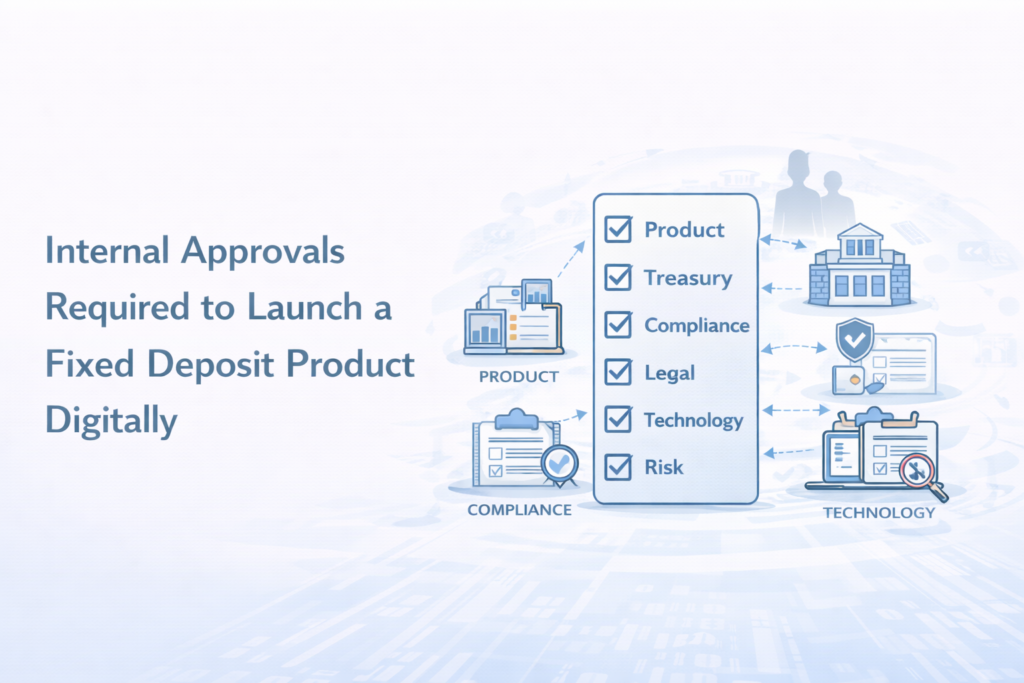
What Internal Approvals Are Required Before Launching a Fixed Deposit Product Digitally?

As Fixed Deposits move increasingly into digital channels, banks and financial platforms are discovering that demand is rarely the constraint. The real gating factor is internal readiness. Launching a Fixed Deposit product digitally is not a single approval exercise. It is a coordinated governance process that spans product design, compliance, treasury, technology, operations, and risk. Understanding these internal approvals for digital FD launch—not only to avoid delays, but to design a launch process that is predictable, auditable, and scalable. This article breaks down the key internal approvals typically required before launching an FD product digitally, and why each exists. Why Digital FD Launches Require Structured Internal Approvals Fixed Deposits may be a familiar product, but digital distribution changes the risk surface. Unlike branch-led distribution, digital FD launches introduce: Faster inflow velocity Wider and more immediate customer reach Automated onboarding and servicing Platform-level dependency instead of relationship-led control Regulators expect banks to demonstrate that these changes are governed systematically, not managed informally. Internal approvals ensure that speed does not come at the cost of accountability. 1. Product Approval: Defining What Is Being Offered The first layer of approval sits with the product team, often in coordination with business leadership. This approval typically covers: FD tenures and minimum deposit amounts Interest rate structures and payout options Eligibility criteria (retail, senior citizen, corporate, etc.) Renewal and premature withdrawal rules For digital launches, product teams must also validate that: Product rules are unambiguous and system-enforceable Edge cases (partial failures, retries, reversals) are handled cleanly No manual interpretation is required during execution This approval ensures that the FD product can exist as a deterministic system, not a loosely defined offering. 2. Treasury and ALM Approval: Balance Sheet Alignment Treasury approval is one of the most critical—and often underestimated—steps. From a treasury perspective, digital FD distribution affects: Liquidity inflow timing Tenure mix and duration matching Cost of funds Concentration and sourcing risk Treasury teams typically review: Expected inflow velocity through digital channels Tenure-wise exposure limits Rate boundaries and campaign flexibility Caps on volumes or issuer participation This approval ensures that digital FD launches support balance-sheet strategy rather than disrupt it. Importantly, treasury sign-off is not a one-time event. It often includes guardrails that are enforced continuously post-launch. 3. Compliance Approval: KYC, AML, and Regulatory Alignment Compliance approval is non-negotiable in any FD launch, but digital distribution raises additional scrutiny. Compliance teams validate that: KYC and AML workflows meet regulatory requirements Customer onboarding is consistent across channels Disclosures are accurate, complete, and clearly presented No regulatory obligations are delegated improperly For aggregator-led or SDK-based launches, compliance teams also review: Role clarity between issuer and distributor Data handling and storage responsibilities Audit trail completeness The goal is not to slow down the launch, but to ensure that regulatory accountability remains clearly anchored to the bank. 4. Legal Approval: Contracts and Issuer Responsibility Legal approval ensures that documentation matches operational reality. This includes: Product terms and conditions Customer agreements and disclosures Partner or platform contracts (if applicable) Liability and responsibility clauses For digital launches, legal teams pay particular attention to: How issuer responsibility is communicated Whether customer consent is captured correctly How disputes and escalations are handled Legal approval ensures that what is executed digitally aligns with what is defensible legally. 5. Technology and Information Security Approval Digital FD products are technology-led by definition. Technology and infosec approvals typically cover: System architecture and integration points Data flow mapping and storage locations Access controls and role-based permissions Encryption, logging, and monitoring standards For SDK-based launches, this approval is faster when: The SDK follows standard security practices Integrations are modular and well-documented Data ownership and system-of-record are clearly defined Infosec approval ensures that operational efficiency does not introduce systemic risk. 6. Operations Approval: Servicing and Exception Handling Operations teams are responsible for what happens after go-live. Their approval validates: Booking confirmation flows Exception handling and failed transaction resolution Customer support escalation paths Maturity, renewal, and closure processes Digital FD launches often fail not at booking, but during servicing. Operations approval ensures that automation is backed by clear human processes when exceptions occur. 7. Risk Management Approval: Controls and Oversight Risk teams review digital FD launches through a broader lens. They assess: Process risk introduced by automation Dependency risk on platforms or partners Operational concentration risk Scenario handling for failures or surges Risk approval often results in: Volume caps Rate boundaries Monitoring thresholds These controls allow innovation while maintaining institutional discipline. 8. Management and Committee-Level Sign-Off For many banks, final approval sits with: Product committees Risk management committees Executive leadership This sign-off consolidates all prior approvals and confirms that the institution is comfortable with: The scale of launch The pace of distribution The governance framework Digital FD launches are not just product decisions—they are institutional decisions. Why These Approvals Often Delay Digital Launches Delays usually occur when approvals are treated as sequential and siloed. Common causes include: Late involvement of treasury or compliance Ambiguity around roles in digital distribution Over-customisation of workflows Manual approval processes instead of rule-based ones When approvals are designed into infrastructure early, these delays reduce significantly. How Plug-and-Play FD Infrastructure Simplifies Approvals Modern FD SDKs help accelerate approvals by: Embedding compliance workflows Standardising reporting and audit trails Clarifying issuer and distributor roles Reusing pre-approved system logic This shifts approvals from ad-hoc reviews to configuration validation. Approvals become faster because teams are reviewing known structures, not reinventing them. Closing Thoughts Launching a Fixed Deposit product digitally is not blocked by regulation. It is governed by internal readiness. The approvals required—product, treasury, compliance, legal, technology, operations, risk, and leadership—exist for valid reasons. They protect customers, institutions, and balance sheets. The platforms that launch fastest are not those that bypass approvals, but those that design for them early. In digital FD distribution, speed is not about fewer approvals. It is about better-designed approval systems.

launch fixed deposit product fast
Fixed Deposit

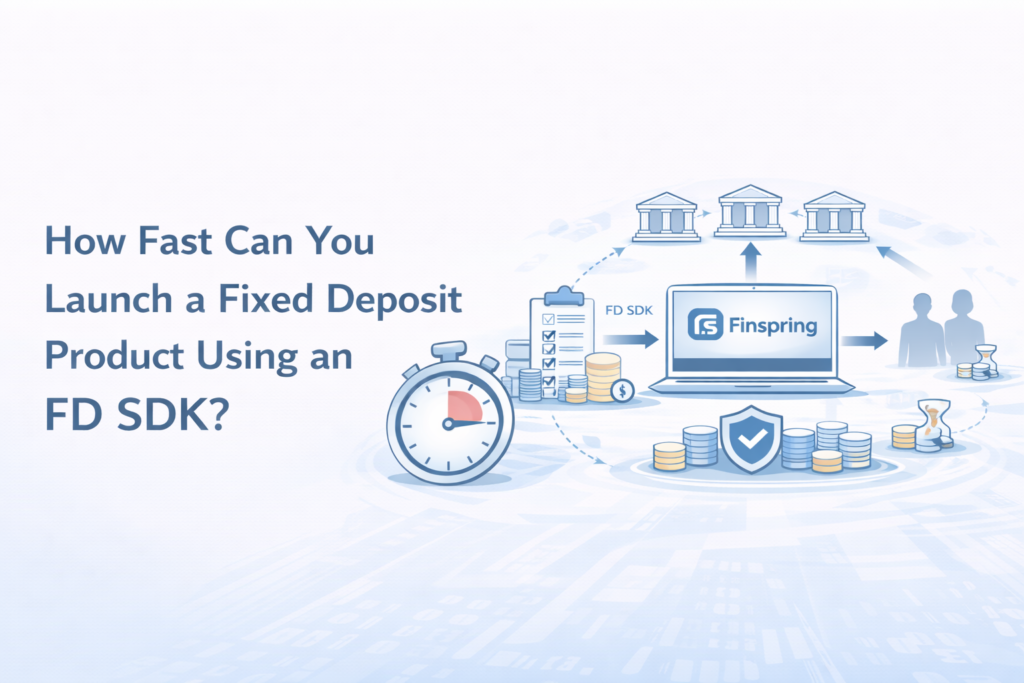
How Fast Can You Launch a Fixed Deposit Product Using a Plug-and-Play FD SDK?

For banks, fintechs, and wealth platforms, Fixed Deposits remain one of the most trusted and regulatorily stable investment products. Yet despite their maturity as a financial instrument, launching a digital FD product is often slower than expected. The delay is rarely about demand or regulatory uncertainty. It is almost always about infrastructure. As platforms move toward faster go-to-market cycles, a key question emerges: How platforms can launch fixed deposit product fast using FD SDKs? The answer depends less on ambition and more on how much of the heavy lifting has already been abstracted away. Why Launching an FD Product Traditionally Takes Time Before understanding speed, it is important to understand where time is usually lost. In a traditional setup, launching a fixed deposit product involves coordinating across multiple layers: Bank partnerships and issuer alignment Product definition and rate structures Compliance workflows (KYC, AML, disclosures) Technology integration with core banking systems Reporting, reconciliation, and audit readiness Post-booking servicing, renewals, and maturity handling Each of these steps often runs sequentially. Even with motivated partners, timelines stretch into months because every component is treated as a bespoke project. As a result, speed to market becomes constrained not by execution quality, but by system readiness. What a Plug-and-Play FD SDK Actually Changes A plug-and-play FD SDK is not a UI shortcut.It is an infrastructure abstraction. Instead of asking platforms to design, integrate, and govern each layer independently, an FD SDK packages the entire lifecycle of an FD product into a pre-built, compliant system. This includes: FD discovery and booking flows Issuer-approved onboarding and compliance checks Payment initiation and confirmation handling State management for long-lived deposits Renewal, maturity, and reporting workflows When these components are already live, tested, and governed, the nature of the launch changes fundamentally. A Realistic FD Product Launch Timeline With an FD SDK When using a mature plug-and-play FD SDK, the launch timeline compresses dramatically. While exact timelines vary by organisation, a typical breakdown looks like this: Week 1: Commercial and Product Alignment Finalise issuer participation Define FD tenures, rates, and eligibility rules Confirm commercial terms No infrastructure build begins until this is locked. Week 2: Integration and Configuration SDK integration into the platform Configuration of product rules and branding guidelines Mapping of reporting requirements This phase is largely configuration, not development. Week 3: Compliance Validation and Testing End-to-end journey testing Compliance sign-off on live flows UAT and operational readiness Because workflows are pre-approved, validation is faster and more predictable. Week 4: Go-Live Production deployment Monitoring and initial volume ramp-up Total realistic timeline: 3–6 weeks. This is a significant reduction from traditional timelines that often exceed 3–6 months. Why Speed Improves Without Cutting Corners A common misconception is that faster launches imply relaxed governance. In reality, the opposite is true. Speed comes from reuse, not shortcuts. Plug-and-play FD SDKs accelerate launches because: Compliance logic is already embedded Issuer responsibilities are clearly defined Reporting pipelines are pre-built Edge cases and failure states are already handled Instead of designing controls from scratch, platforms inherit them. This reduces execution risk while improving speed. What Actually Determines How Fast You Can Launch Even with an FD SDK, some factors influence timelines more than others. 1. Decision Readiness Teams that delay internal approvals or lack clarity on product scope slow themselves down. Speed improves when decisions are made upfront. 2. Issuer Alignment Banks that have already participated in SDK-based distribution go live faster. New issuers may add incremental time, but far less than bespoke integrations. 3. Internal Coordination When product, compliance, and tech teams align early, handoffs disappear. FD SDKs work best in organisations that treat launches as cross-functional initiatives. 4. Expansion vs First Launch Launching the first FD product takes the longest. Adding additional issuers or tenures later often takes days, not weeks. Why FD SDK Speed Matters Strategically Launching fast is not just about convenience. It has structural implications. Early launches capture customer trust sooner Platforms validate distribution assumptions earlier Banks respond to liquidity needs faster Teams avoid long sunk-cost build cycles In a market where rates, tenures, and customer behaviour change quickly, the ability to launch or adjust FD products in weeks rather than months becomes a competitive advantage. Speed After Go-Live Matters More Than Speed to Go-Live Another overlooked benefit of FD SDKs is post-launch agility. With SDK-based infrastructure, platforms can: Add new banks without re-integration Adjust tenures or rates without downtime Launch targeted campaigns quickly Scale volumes without operational redesign This turns FD distribution from a one-time project into a repeatable capability. Why Most Delays Are Self-Inflicted In practice, platforms that struggle to launch quickly using an FD SDK usually face internal blockers: Over-customisation of standard flows Attempting to redesign compliance logic Treating SDKs as code libraries instead of infrastructure Involving too many stakeholders too late The fastest launches occur when teams accept a core truth: Infrastructure is most valuable when it is reused, not reinvented. What “Fast” Looks Like in the Long Term For mature platforms, “fast” eventually stops meaning “first launch.” It starts meaning: How quickly can we add another issuer? How quickly can we respond to rate changes? How fast can we expand into adjacent products like RDs or Bonds? This is where plug-and-play FD SDKs show their true value. They do not just help you launch a fixed deposit product fast once.They help you keep launching without slowing down. Closing Thoughts So, how fast can you launch a fixed deposit product using a plug-and-play FD SDK? Fast enough that infrastructure is no longer the bottleneck. In most cases, weeks instead of months.And more importantly, without compromising compliance, governance, or operational control. For platforms serious about building long-term investment capabilities, speed is no longer about working harder.It is about choosing infrastructure that is already ready.

Brand Control in FD Aggregator Distribution
Fixed Deposit

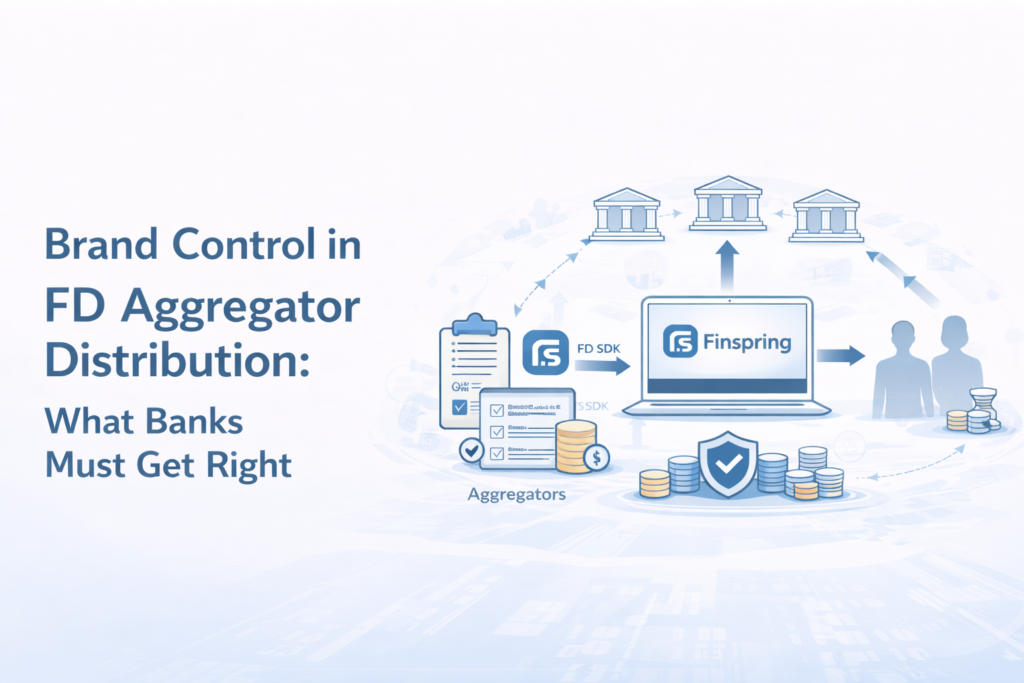
Brand Control in Aggregator-Led FD Distribution: What Banks Need to Know

As Fixed Deposits increasingly move into digital, aggregator-led distribution has become an important growth channel for banks. While the operational and regulatory implications of this shift are widely discussed, one concern often surfaces quietly but persistently inside banks: How to Brand Control in FD Aggregator Distribution? Brand control in a regulated financial product is not about logos or colours. It is about trust, attribution, accountability, and customer perception. When designed correctly, aggregator-led distribution does not dilute a bank’s brand—it can strengthen it. This article explores how banks retain brand control while distributing FDs through aggregators, and where governance matters most. Why Brand Control in FD Aggregator Distribution Matters More in Deposits Than in Lending Deposits are not impulse purchases. Customers associate FDs with: Safety Stability Institutional credibility Any ambiguity around who is holding their money erodes confidence immediately. This makes brand clarity in FD distribution far more critical than in many other financial products. Banks must ensure that: The issuer is unmistakable Responsibility is clearly attributed Customer trust is not intermediated away The Core Principle: The Bank Is Always the Issuer From a regulatory and brand perspective, one rule is non-negotiable: The bank must remain visibly and consistently positioned as the FD issuer. Aggregators act as: Discovery platforms Technology enablers Distribution interfaces They are not the product owner. When this principle is reflected clearly across user journeys, brand risk drops significantly. Where Brand Risk Actually Arises Brand dilution does not come from aggregation itself.It comes from poorly designed distribution experiences. Common risk points include: Ambiguous issuer attribution in UI Inconsistent product naming Aggregator-led messaging that overshadows the bank Lack of bank-controlled disclosures These are design and governance issues—not structural flaws of aggregation. How Banks Retain Brand Control in FD Aggregator Distribution 1. Clear Issuer Attribution at Every Touchpoint Banks should ensure that: Their name is prominently displayed wherever the FD is shown Issuer details are visible before booking, not buried in fine print Confirmation screens clearly state the issuing bank This reassures customers and reinforces institutional trust. 2. Bank-Approved Product Representation FDs listed on aggregators should: Use bank-approved product names Follow standardised descriptions Include mandated disclosures verbatim Aggregators should not paraphrase or reframe products creatively. Brand control is preserved when language discipline is enforced. 3. Consistent Visual Hierarchy (Without Over-Branding) Banks do not need to dominate the UI visually. Instead, they should ensure: Their brand appears in a consistent, respectful hierarchy Logos are used correctly and sparingly There is no confusion about ownership Subtle consistency builds more trust than aggressive branding. 4. Bank-Led Communication for Critical Events Certain communications must always originate from the bank: FD confirmation Maturity notifications Renewal terms Regulatory disclosures Aggregators may facilitate delivery, but the voice must remain the bank’s. This preserves brand authority at moments that matter most. 5. Governance Over Marketing Claims Brand risk often arises when aggregators over-optimize for conversion. Banks should retain approval rights over: Rate messaging Campaign language Comparisons with other issuers Guardrails prevent short-term marketing tactics from damaging long-term brand equity. The Role of Infrastructure in Brand Control in FD Aggregator Distribution Brand control is easiest to maintain when enforced systemically, not manually. Infrastructure can ensure: Standardised issuer attribution across platforms Uniform disclosure templates Consistent confirmation and communication flows When brand rules are embedded into the system, deviations become impossible rather than merely discouraged. Why Aggregators Can Strengthen Bank Brands When done right, aggregators can enhance brand perception. They: Place banks alongside credible peers Increase visibility among digitally native customers Signal modernisation and accessibility For many customers, discovery through a trusted aggregator reinforces—not replaces—trust in the issuing bank. Brand Control in FD Aggregator Distribution As banks scale, they often list FDs across multiple aggregators. This increases brand risk only if governance is fragmented. Banks retain control by: Using standard brand and disclosure guidelines Centralising approval processes Ensuring uniform integration logic across platforms Consistency across aggregators is more important than dominance on any single one. What Banks Should Monitor Regularly Brand governance is not a one-time setup. Banks should periodically review: Issuer visibility in live journeys Accuracy of disclosures Tone of aggregator messaging Customer support attribution These checks prevent drift over time. Brand Is a Governance Function, Not a Marketing One In regulated products, brand control is inseparable from governance. It intersects with: Compliance Customer communication Audit readiness Institutional accountability Treating brand as a governance function ensures that growth does not come at the cost of trust. Closing Thoughts Aggregator-led FD distribution does not mean surrendering Brand Control in FD Aggregator Distribution. It requires banks to: Define clear issuer boundaries Enforce representation standards Embed brand rules into infrastructure Monitor continuously, not reactively When these principles are followed, aggregators become amplifiers of trust, not diluters of it. In a digital-first deposit landscape, the banks that win are not the loudest—but the clearest.

Distribute FDs
Fixed Deposit

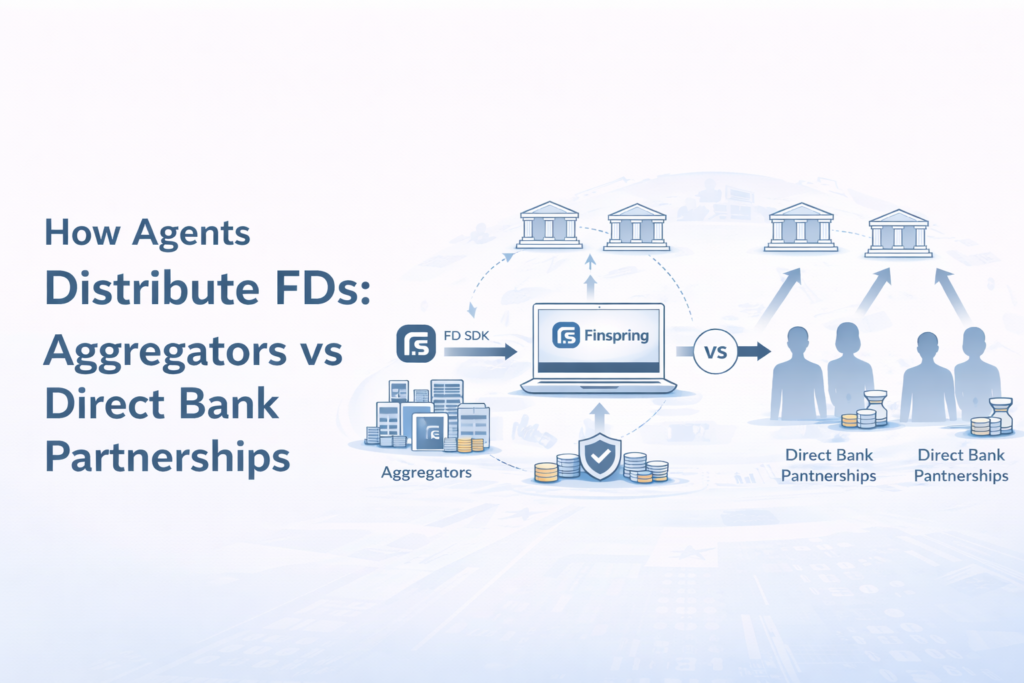
Aggregator-Led FD Distribution vs Direct Bank Partnerships for Agents

For agents and distribution-led platforms, Fixed Deposits remain a core product—trusted by customers, regulatorily stable, and operationally predictable. As digital distribution expands, agents now face a fundamental choice: Should we partner directly with banks, or distribute FDs via aggregator platforms? Both models exist. Both can work.But they differ significantly in control, scalability, dependency, and long-term resilience. This article breaks down how aggregator-led FD distribution compares with direct bank partnerships—and what agents should consider before choosing either path. Understanding the Two Models Direct Bank Partnerships In this model, agents: Partner individually with one or more banks Use bank-specific portals or processes Follow bank-defined workflows for onboarding, booking, and servicing Maintain bilateral relationships with each institution Aggregator-Led Distribution In this model, agents: Access FDs from multiple banks through a single platform Use unified workflows for discovery, booking, and tracking Operate under standardised compliance and reporting frameworks Reduce direct operational dependency on individual banks The difference is not just convenience—it is architecture. 1. Access and Optionality Direct Bank Partnerships Access is limited to partner banks Expanding choice means adding new relationships Each new bank adds incremental operational effort Agents are constrained by the scope and competitiveness of their partners. Aggregator-Led Distribution Multiple banks are available through one system Optionality exists without relationship sprawl Agents can respond to rate and tenure changes dynamically Key Difference:Direct partnerships optimise depth with a few banks.Aggregators optimise breadth without complexity. 2. Operational Complexity Direct Bank Partnerships Each bank introduces: Different onboarding flows Different document requirements Separate dashboards and reporting formats Distinct escalation paths As the number of partners grows, so does operational fatigue. Aggregator-Led Distribution Aggregators absorb this complexity: One onboarding workflow Standardised documentation Centralised tracking and reporting Single operational interface Key Difference:Direct partnerships push complexity onto agents.Aggregators contain complexity at the platform layer. 3. Dependency Risk Direct Bank Partnerships Agents are exposed to: Policy changes by partner banks Rate reductions or campaign withdrawals Temporary pauses in FD acceptance Relationship-driven renegotiations A single partner can disproportionately impact business continuity. Aggregator-Led Distribution Dependency is spread across issuers Business continuity improves during partner-level changes Agents are less exposed to unilateral decisions Key Difference:Direct partnerships concentrate risk.Aggregators distribute it as they distribute FDs in a smarter way. 4. Compliance and Governance Direct Bank Partnerships Compliance processes vary by bank Agents must manage multiple interpretations of KYC and AML Reporting obligations differ across partners This often leads to manual reconciliation and higher error risk. Aggregator-Led Distribution Compliance workflows are standardised Bank-approved processes are embedded into the system Audit trails are centralised and consistent Key Difference:Direct partnerships require compliance coordination.Aggregators enforce compliance by design. 5. Speed to Market Direct Bank Partnerships Launching new initiatives requires: Individual bank approvals Custom integrations or process changes Longer coordination cycles Execution speed depends on the slowest partner. Aggregator-Led Distribution Campaigns can be launched quickly Rate or tenure changes propagate faster Agents can respond to market shifts in near real time Key Difference:Direct partnerships are relationship-paced.Aggregators are system-paced. 6. Economics and Incentives Direct Bank Partnerships Margins may be higher with preferred partners Incentives can be negotiated bilaterally Revenue concentration risk remains high Economics depend heavily on relationship strength. Aggregator-Led Distribution Margins are often more standardised Revenue is diversified across issuers Predictability improves at scale Key Difference:Direct partnerships can be lucrative but volatile.Aggregators prioritise stability and scale. 7. Control and Autonomy Direct Bank Partnerships Agents often feel a stronger sense of: Relationship ownership Negotiation leverage (at smaller scale) Customisation with specific banks However, autonomy reduces as dependence increases. Aggregator-Led Distribution Less direct negotiation with banks More autonomy in product selection and client matching Control shifts from relationships to systems Key Difference:Direct partnerships offer relational control.Aggregators offer structural control. 8. Scalability of the Agent Business Direct Bank Partnerships Scaling requires: More relationships More staff More manual coordination Growth increases operational drag. Aggregator-Led Distribution Scaling is primarily: Volume-based Technology-enabled Less dependent on incremental overhead Key Difference:Direct partnerships scale linearly.Aggregators scale exponentially. 9. Client Experience and Trust Direct Bank Partnerships Clients may associate the agent strongly with a specific bank Choice is limited but clear Experience varies across banks Aggregator-Led Distribution Clients benefit from comparison and choice Experience is more consistent Trust is reinforced through transparency Key Difference:Direct partnerships emphasise loyalty.Aggregators emphasise informed choice. When Direct Bank Partnerships Make Sense Direct partnerships may be preferable when: The agent works deeply with one or two banks Volumes are limited and relationship-driven Customisation matters more than scale The agent values exclusivity When Aggregator-Led Distribution Makes Sense Aggregator-led models are better suited when: Agents want multi-bank optionality Scale and efficiency matter Dependency risk must be reduced Operational simplicity is critical The Hybrid Reality In practice, many mature agents adopt a hybrid approach: Core relationships with select banks Aggregators for breadth, resilience, and scale This balances relationship depth with infrastructural strength. Closing Thoughts The choice between aggregator-led FD distribution and direct bank partnerships: The best way to distribute FDs is not ideological. It is structural. Direct partnerships are relationship-centric.Aggregators are system-centric. As agent businesses professionalise and scale, the question becomes less about which model pays more today and more about: Which model reduces risk, improves resilience, and supports long-term growth? In a market shaped by regulation, technology, and transparency, the answer increasingly lies in the way agents distribute FDs.

FD Aggregator for Agents
Fixed Deposit

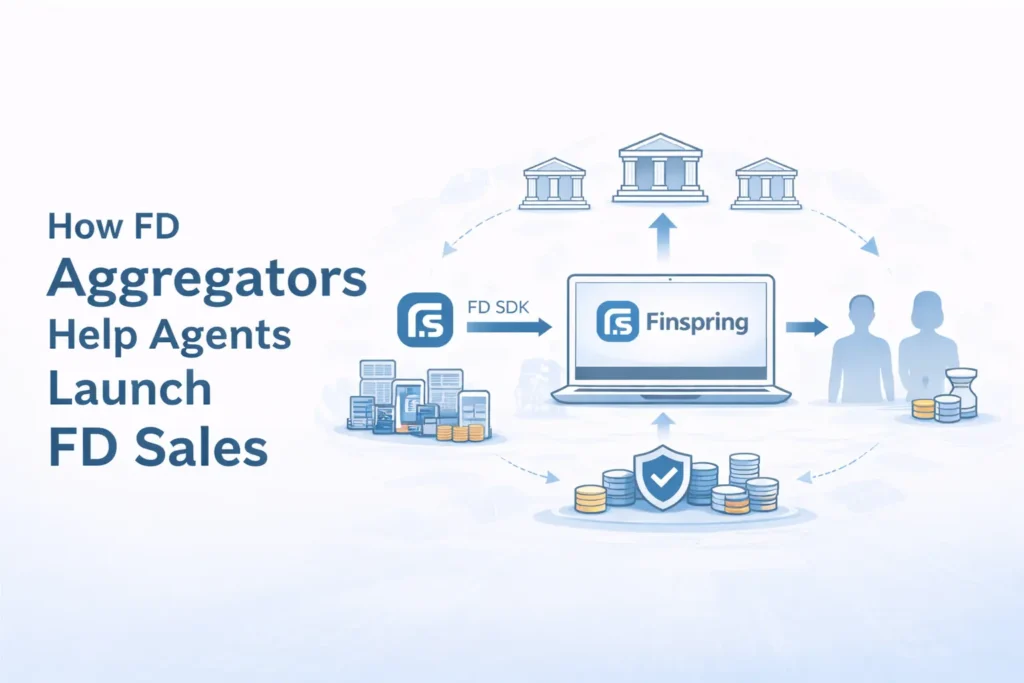
How Aggregator Platforms Help Agents Launch FD Sales Faster

For agents and distribution-led platforms, Fixed Deposits are one of the most reliable products to take to market. They are trusted by customers, well understood by regulators, and operationally stable. Yet despite this, launching FD sales is often slower than it should be. The delay is rarely about demand. It is about setup, coordination, and readiness. FD Aggregator for Agents change this equation by removing friction at the system level, allowing agents to go live faster—without cutting corners on compliance or governance. This article explains how. Why FD Sales Take Time to Launch in the First Place Agents looking to start FD distribution directly with banks often encounter delays caused by: Individual bank onboarding timelines Separate compliance approvals per partner Different documentation and process requirements Portal access and training cycles Manual coordination across teams Even with motivated partners, launching FD sales can take weeks or months, especially when agents aim to work with more than one bank. Speed to market becomes a structural challenge—not an execution failure. FD Aggregator for Agents Redesign the Launch Problem Aggregator platforms approach FD distribution differently. Instead of asking agents to repeat the same setup work for every bank, aggregators centralise readiness and expose it through a single system. This fundamentally changes how fast agents can start selling. 1. Pre-Integrated Bank Access The biggest accelerator is simple: Banks are already integrated. Aggregator platforms: Maintain live integrations with multiple banks and NBFCs Handle ongoing technical alignment Absorb bank-specific variations in systems and workflows For agents, this means: No individual tech integrations No waiting for bank IT dependencies No repeated setup cycles Once the agent is onboarded, FD products are immediately available. 2. Single Onboarding Instead of Multiple Setups Direct partnerships require agents to: Submit documents multiple times Complete bank-specific onboarding Undergo repeated compliance reviews Aggregator platforms consolidate this into: One onboarding process One documentation flow One approval cycle This reduces launch friction dramatically. Agents move from relationship onboarding to platform activation. 3. Standardised Compliance by Design Compliance is one of the slowest parts of any FD launch. Aggregators speed this up by: Pre-defining bank-approved KYC and AML workflows Standardising onboarding journeys Embedding checks directly into the system Agents do not need to interpret requirements repeatedly.They operate within pre-approved compliance rails. As a result: Approval cycles shorten Errors reduce Launch timelines become predictable 4. Unified Product Discovery and Sales Flows Launching FD sales is not just about access—it is about usability. Aggregators provide: A single interface to browse FD options Consistent presentation of tenures, rates, and terms Unified booking and confirmation flows Agents do not need to learn multiple systems or train teams repeatedly. Sales readiness improves immediately. 5. Faster Training and Enablement Direct bank partnerships often require: Bank-specific training sessions Separate SOPs per partner Ongoing coordination for updates Aggregator platforms: Offer a single enablement model Maintain updated workflows centrally Push changes uniformly across the system This reduces time spent on training and re-training, especially for agent teams. 6. Instant Readiness Across Multiple Banks One of the biggest advantages of aggregation is parallel readiness. Without aggregators: Each new bank adds weeks of setup Scaling choice takes time With aggregators: Multiple banks are live from day one Agents can start with one issuer and expand immediately Business is not delayed by partner onboarding cycles This enables agents to: Launch FD sales faster Offer choice from the start Avoid relaunching every time they add a new bank 7. Reduced Dependency on Bank Timelines Banks move at different speeds. Policy changes, internal reviews, or system upgrades can delay go-lives. Aggregator platforms: Buffer agents from these delays Maintain continuity across issuers Reduce exposure to individual partner timelines Agents are no longer gated by the slowest moving institution. 8. Quicker Go-to-Market for Digital and Assisted Models For agents operating digitally or in assisted models, speed matters even more. FD Aggregator for Agents support: Digital-first journeys Assisted booking workflows Centralised tracking and reporting Agents can launch FD sales alongside: Websites Apps Assisted sales teams …without waiting for custom builds. 9. Lower Operational Overhead at Launch Launching faster is not only about speed—it is about focus. Aggregator platforms remove: Manual coordination Spreadsheet tracking Ad-hoc follow-ups Agents can focus on: Client acquisition Advisory conversations Distribution strategy Instead of launch logistics. 10. Faster Iteration After Launch Speed does not end at go-live. Aggregator platforms allow agents to: Adjust focus across banks quickly Respond to rate changes without downtime Expand offerings without relaunching This makes FD distribution adaptive, not static. Why Speed Matters More Than Ever In a competitive distribution environment: Early movers capture client trust Delays lead to lost opportunities Customers expect instant availability Agents who take months to launch risk being overtaken by those who can start in weeks—or days. Aggregation compresses time-to-market without compromising structure. What FD Aggregator for Agents Do Not Compromise It is important to clarify what faster launch does not mean: It does not bypass regulation It does not dilute issuer responsibility It does not remove compliance checks Speed comes from reusing approved infrastructure, not from shortcuts. From Setup-Led to Infrastructure-Led Launches The biggest shift aggregator platforms introduce is philosophical. Agents move from: Launching through repeated setupsto Launching through pre-built infrastructure This changes FD distribution from a project into a capability. Closing Thoughts Aggregator platforms help agents launch FD sales faster by removing structural friction—not by lowering standards. They: Centralise integrations Standardise compliance Simplify operations Enable immediate scale For agents and distribution platforms, speed to market is no longer a function of relationships alone. It is a function of infrastructure. And in a regulated, competitive market, infrastructure-led speed is a decisive advantage.

Building an FD Aggregator
Fixed Deposit

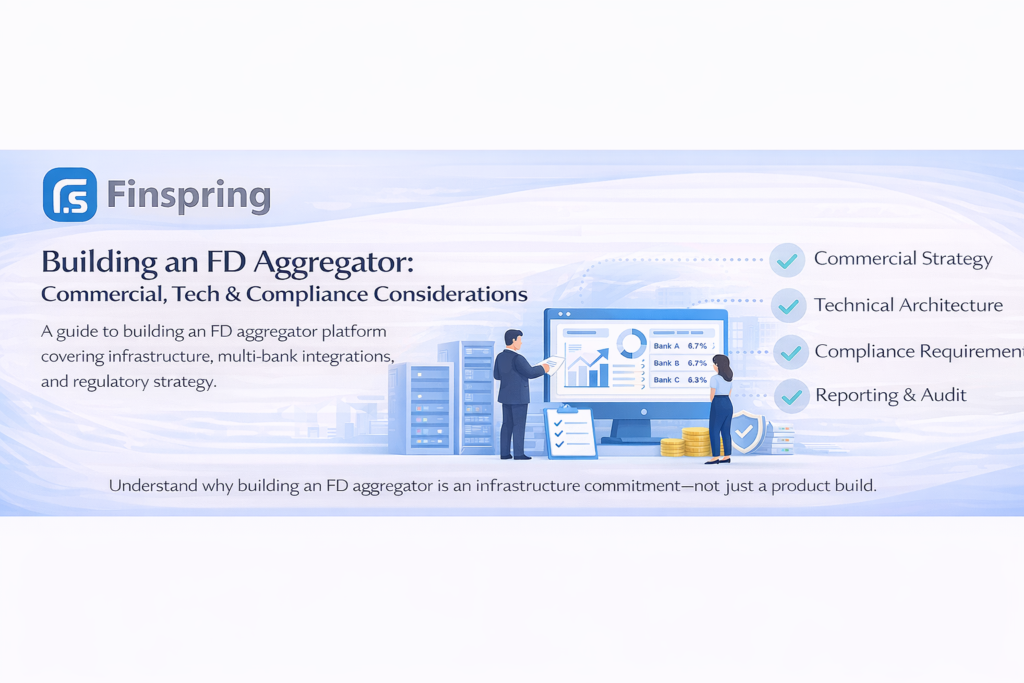
Building an FD Aggregator: Commercial, Tech & Compliance Considerations

Fixed Deposit (FD) aggregation has emerged as a powerful distribution and infrastructure layer in the digital financial ecosystem. For fintechs and platforms, building an FD aggregator can unlock scale, diversification, and recurring revenue. For banks and NBFCs, it offers structured digital distribution without losing regulatory control. However, building an FD aggregator is not simply a product or UI exercise. It is an infrastructure decision—with deep commercial, technical, and compliance implications. This article breaks down what it actually takes to build an FD aggregator, and where teams often underestimate complexity. 1. The Commercial Layer: More Than Commissions Most teams start with a simple commercial assumption: “We’ll earn a commission per FD booking.” In reality, the commercial model is more nuanced. Key Commercial Considerations a. Revenue Structure Commission-based revenue (per booking or AUM-linked) Platform or access fees (for B2B distribution) Hybrid models combining both Each model has different implications for: Cash flow predictability Partner incentives Long-term scalability b. Bank Participation Economics Banks evaluate aggregators on: Cost of funds impact Incrementality of deposits Operational efficiency gains An aggregator must clearly demonstrate that it is not merely shifting deposits from one channel to another. c. Scale vs Margin Trade-offs Early-stage aggregators often over-optimize for margin. At scale, volume consistency and partner retention matter more than per-transaction margins. Commercial success depends on alignment, not extraction. 2. The Tech Layer: Where Complexity Actually Lives Technology is often assumed to be the hardest part—but most complexity does not sit in the UI. It sits in orchestration. Core Technical Building Blocks a. Multi-Bank Integration Each bank has: Different core systems Different API maturity Different data formats Building point-to-point integrations does not scale. Successful aggregators design: A normalized internal data model Bank-specific adapters at the edge A stable internal contract that does not change per partner b. Workflow Orchestration FD journeys include: Discovery Eligibility Booking Payment Confirmation Post-booking servicing These steps vary subtly across banks. The aggregator’s job is not to hide differences—but to absorb them at the system level, not push them to users or agents. c. State Management FDs are long-lived products. The system must handle: Pending states Partial failures Delayed confirmations Renewals and maturities This requires careful state design, not just APIs. 3. Compliance Layer: The Non-Negotiable Foundation Compliance is not a feature you add later. In FD aggregation, it is the foundation. Core Compliance Responsibilities a. Clear Role Definition Regulators care deeply about: Who is the issuer (the bank) Who is the distributor (the aggregator) Who owns the customer relationship These roles must be explicit in: Contracts System flows Customer communication Ambiguity creates regulatory risk. b. KYC & AML Alignment While banks retain ultimate responsibility, aggregators often: Facilitate onboarding Collect documents Initiate checks This requires: Bank-approved workflows Consistent execution Clear audit trails Any deviation across partners becomes a compliance liability. c. Data Governance Aggregators must answer: Where does customer data reside? Who can access it? How is it logged and audited? Being “just a platform” does not exempt you from data accountability. 4. Reporting & Audit: Often Underestimated One of the fastest ways to lose bank trust is poor reporting. Banks require: Transaction-level visibility Reconciliation-ready data Regulator-aligned formats An aggregator must build: Centralized reporting pipelines Bank-specific reporting outputs Immutable logs for audits This is not glamorous work—but it is decisive for long-term partnerships. 5. Operational Design: Humans Still Exist Even the best systems require operations. Key questions: How are exceptions handled? Who resolves failed transactions? How are customer escalations routed? Early aggregators often rely on manual workarounds. At scale, this becomes unmanageable. Operational processes must be: Clearly defined Tool-supported Exception-focused, not transaction-focused 6. Trust Is the Real Product FD aggregation sits at the intersection of: Customer money Bank balance sheets Regulatory oversight Trust is built through: Predictable behaviour Transparent communication Consistent compliance Stable systems A single failure may not kill an aggregator. Repeated inconsistency will. 7. Build vs Partner: A Strategic Choice Many teams underestimate the cost and time of building everything in-house. Key trade-offs include: Speed to market vs control Capital expenditure vs operating leverage Maintenance burden vs focus Some platforms choose to: Build a thin layer Partner for deeper infrastructure Retain ownership of experience and distribution This hybrid approach is increasingly common. 8. Scaling Beyond FDs: Design Early or Pay Later FD aggregation rarely stays limited to FDs. Natural extensions include: Recurring Deposits Bonds Mutual Funds If the system is not designed with multi-asset expansion in mind: Each new product becomes a rewrite Compliance complexity multiplies Reporting fragments The cost of redesign later is far higher than designing modularly upfront. 9. Common Pitfalls to Avoid Treating FD aggregation as a UI problem Underestimating reporting and audits Over-customizing for early partners Blurring issuer and distributor roles Ignoring treasury and compliance stakeholders Most failures are structural, not market-driven. Closing Thoughts Building an FD aggregator is not about launching faster. It is about designing responsibly. The platforms that succeed are those that: Respect regulatory boundaries Invest early in infrastructure Align commercial incentives Design for scale, not demos In a regulated financial ecosystem, aggregation is not a shortcut. It is an architectural commitment. Read how banks measure FD Aggregator ROI, here.

Scroll to Top
Good move, automating your backend!