Finspring Innovations Private Limited

Uncategorized

Uncategorized

Future of Wealth Management: Why Every Consumer Platform Will Offer Investments

The future of wealth management is no longer confined to banks, brokerage firms, or dedicated investment apps. A major shift is underway as consumer platforms across industries begin integrating investment products directly into their digital experiences. Whether it’s a fintech app, payroll platform, insurance provider, e-commerce marketplace, employee benefits solution, or a consumer super app, businesses are realizing that wealth management is becoming an essential part of the customer journey. This transformation is being driven by embedded finance, API-driven infrastructure, and changing consumer expectations. Instead of downloading multiple applications to manage their finances, customers increasingly expect to save, invest, and grow their wealth from the platforms they already use every day. The future of wealth management is not about creating another investment app—it is about making investing available everywhere. The Evolution of Wealth Management Traditional wealth management followed a simple model. Customers visited banks or financial advisors to purchase investment products such as Fixed Deposits, Mutual Funds, or Bonds. Digital transformation changed this model by introducing online investing. Now, embedded finance is creating the next evolution. Investment products are moving beyond dedicated financial institutions and becoming integrated into digital ecosystems where customers already spend their time. This shift is redefining how businesses think about financial services. Why Consumer Platforms Are Entering Wealth Management Customer expectations have changed significantly. People increasingly value convenience, speed, and personalization. Instead of switching between multiple apps, users want one platform where they can: Spend Save Invest Track portfolios Achieve financial goals Offering investment products helps businesses meet these expectations while strengthening customer relationships. Embedded Finance Is Driving the Future Embedded finance has already transformed: Payments Lending Insurance The next major category is wealth management. Businesses can now integrate investment products directly into their existing applications using APIs rather than building financial infrastructure internally. This significantly lowers implementation barriers while enabling faster innovation. As API ecosystems continue to mature, embedded wealth management will become increasingly common across digital platforms. Consumers Want Financial Convenience Today’s customers expect frictionless experiences. Consider how people already: Order food Book travel Shop online Pay bills Manage subscriptions without leaving a single application. Investing is following the same trend. Rather than redirecting users to third-party investment portals, businesses are embedding financial products directly into existing customer journeys. Convenience is becoming a competitive advantage. Investment Products Are Becoming Everyday Features Investment products are no longer viewed as specialized financial services. Increasingly, they are becoming standard platform capabilities. Common embedded investment products include: Fixed Deposits Digital Gold Mutual Funds Bonds Goal-based investing Recurring investment plans Businesses can introduce these products gradually while expanding financial ecosystems over time. AI Will Personalize Wealth Management Artificial intelligence will play a significant role in the future of investing. Rather than presenting identical investment options to every customer, platforms will personalize recommendations using: Financial goals Spending habits Risk preferences Savings patterns Investment history AI-powered personalization improves customer experiences while increasing investment adoption. As machine learning models continue evolving, wealth management will become increasingly proactive and intelligent. Wealth Management Will Become Invisible One of the biggest trends shaping the future is invisible finance. Customers will not think about switching into “investment mode.” Instead, investing will naturally become part of everyday digital experiences. Examples include: Investing spare change after purchases. Automatically allocating part of a salary to investments. Buying Digital Gold during festive shopping. Receiving personalized investment suggestions after achieving savings milestones. Investment opportunities will appear naturally within existing customer journeys. Every Industry Can Participate The future of wealth management extends beyond traditional financial institutions. Fintech Companies Expand beyond payments into comprehensive financial ecosystems. Digital Banks Offer diversified investment products. Payroll Platforms Enable salary-linked investing. Insurance Companies Combine protection and wealth creation. Employee Benefit Platforms Support workplace financial wellness. E-commerce Platforms Offer Digital Gold and reward-linked investments. Consumer Super Apps Create all-in-one financial experiences. Any platform with engaged users can potentially benefit from embedded wealth management. API Infrastructure Makes It Possible Launching investment products once required years of development and multiple financial partnerships. Today, API-driven infrastructure enables businesses to integrate investment capabilities much faster. Modern APIs support: Customer onboarding Digital KYC Investment execution Portfolio management Payment processing Reporting Compliance Notifications Businesses can launch secure investment experiences without building complex financial systems from scratch. Why Businesses Should Prepare Now The transition toward embedded wealth management has already begun. Businesses that delay adoption may eventually compete against platforms offering significantly broader financial experiences. Early adopters benefit from: Stronger customer relationships Higher engagement Greater customer lifetime value Additional revenue streams Improved competitive positioning Launching investment products today creates a foundation for future financial ecosystems. The Role of Trust As wealth management becomes embedded across digital platforms, trust will become increasingly important. Customers expect businesses to provide: Secure transactions Transparent investment information Reliable infrastructure Strong compliance Excellent user experiences Technology partners will play a critical role in enabling businesses to meet these expectations. How Finspring Enables the Future of Wealth Management The future of wealth management depends on infrastructure that is secure, scalable, and easy to integrate. Finspring provides API-driven financial infrastructure that enables businesses to embed investment products into their existing digital platforms through a single integration. Using Finspring, organizations can launch: Fixed Deposits Digital Gold Mutual Funds Bonds Additional embedded investment products Instead of investing years in backend financial systems, businesses can focus on delivering innovative customer experiences while leveraging modern infrastructure to bring wealth management products to market faster. Looking Ahead The future of wealth management is not about creating more investment apps—it is about integrating investing into every meaningful digital experience. Customers increasingly expect financial services to be available wherever they already interact, shop, work, and manage their daily lives. Businesses that embrace embedded wealth management today will be better positioned to increase engagement, strengthen loyalty, diversify revenue streams, and create long-term competitive advantages. As APIs, artificial intelligence, and embedded finance continue evolving, wealth management will become a standard capability across consumer platforms rather than a specialized financial service. The businesses that recognize this shift early will help define the
Uncategorized

Choosing the Right Wealth Management Technology Partner in 2026

The demand for embedded wealth management is growing rapidly. Fintech companies, digital banks, insurance providers, payroll platforms, employee benefits solutions, and consumer apps are all looking to integrate investment products into their digital experiences. However, launching wealth management products isn’t just about choosing what to offer—it’s about selecting the right technology partner. Your technology partner determines how quickly you can launch, how easily you can scale, how secure your platform remains, and how smoothly your customers experience investing. Choosing the wrong provider can lead to long development cycles, operational complexity, limited scalability, and poor customer experiences. The right partner, on the other hand, allows you to launch investment products efficiently while focusing on growing your business. This guide explores the factors businesses should evaluate when selecting a wealth management platform provider. Why Your Technology Partner Matters Building financial infrastructure from scratch is a complex undertaking. Businesses must manage: Product integrations Banking partnerships Regulatory compliance Digital onboarding Payment infrastructure Portfolio management Security Reporting Rather than building each component independently, many organizations partner with API-driven infrastructure providers that offer these capabilities through a single platform. A strong technology partner reduces operational complexity while accelerating product launches. What Is a Wealth Management Technology Partner? A wealth management technology partner provides the infrastructure businesses need to launch investment products digitally. Instead of developing financial systems internally, businesses integrate APIs that support wealth management operations. Typical capabilities include: Investment product APIs Digital KYC Customer onboarding Payment infrastructure Portfolio management Reporting Compliance support Security Analytics This allows businesses to focus on customer experience while the infrastructure provider manages backend operations. Key Factors to Evaluate Not every wealth management platform provider offers the same capabilities. Here are the most important criteria to consider. 1. Product Coverage One of the first questions to ask is: Which investment products does the platform support? A comprehensive provider should enable businesses to launch multiple products through a single integration. Examples include: Fixed Deposits Digital Gold Mutual Funds Bonds Goal-based investing Future embedded investment products Choosing a provider with broad product coverage allows businesses to expand without switching infrastructure later. 2. API Quality The API experience directly affects development speed. Evaluate: RESTful APIs Documentation quality SDK availability Sandbox environments Sample code Error handling API versioning Developer-friendly APIs reduce integration effort while improving implementation quality. 3. Speed to Market Launching investment products quickly creates competitive advantages. Ask providers: How long does implementation typically take? What onboarding support is available? Are integrations pre-built? Is technical assistance included? The faster your platform goes live, the sooner you begin delivering value to customers. 4. Compliance and Regulatory Support Financial services require strict regulatory compliance. Look for providers offering: Digital KYC AML workflows Identity verification Audit trails Consent management Regulatory reporting Built-in compliance reduces operational overhead while helping businesses remain aligned with applicable regulations. 5. Security Customer trust depends on strong security. Essential security capabilities include: Data encryption Secure API gateways Multi-factor authentication Access controls Fraud monitoring Continuous security monitoring Enterprise-grade security protects both customer information and business operations. 6. Scalability Your business will evolve. Choose infrastructure that supports future growth. Ask questions like: Can new products be added later? Does the platform support higher transaction volumes? Can APIs handle increased customer activity? Is the architecture cloud-native? Scalable infrastructure prevents expensive migrations as your business expands. 7. Customer Experience Technology should enhance—not complicate—the customer journey. Evaluate whether the provider supports: Fast onboarding Seamless investment journeys Mobile-first experiences Portfolio tracking Notifications Goal-based investing The smoother the customer experience, the higher the adoption rates. 8. Reporting and Analytics Operational visibility is essential for growth. A strong platform should provide: Investment reports Customer insights Product performance Portfolio analytics Operational dashboards Compliance reporting Analytics help businesses make better strategic decisions. 9. Reliability and Performance Investment platforms must operate consistently. Look for providers offering: High uptime Fast API response times Infrastructure redundancy Disaster recovery Monitoring systems Reliable infrastructure ensures uninterrupted customer experiences. Questions to Ask Before Choosing a Partner Before making a decision, consider asking: Which investment products are supported? How long does integration take? What compliance features are included? How scalable is the infrastructure? What security certifications are available? Is developer documentation comprehensive? What support is available during implementation? Can additional products be added later? Clear answers help reduce implementation risks. Common Mistakes Businesses Make When selecting a provider, businesses often focus only on immediate requirements. Common mistakes include: Choosing Based Only on Price Lower costs may lead to limited functionality or higher long-term operational expenses. Ignoring Scalability Businesses frequently underestimate future product expansion. Selecting flexible infrastructure avoids expensive migrations. Overlooking Developer Experience Poor documentation slows integration and increases engineering effort. Underestimating Compliance Compliance should be built into the platform—not added later. Selecting Single-Product Platforms Choosing providers that only support one investment product limits future growth. A unified platform provides greater flexibility. Why API-Driven Infrastructure Is Becoming the Standard Modern businesses increasingly prefer API-first platforms because they offer: Faster implementation Lower operational complexity Better scalability Improved customer experiences Easier maintenance Continuous product innovation Rather than managing financial infrastructure internally, businesses can focus on customer acquisition, product strategy, and growth. Why Businesses Choose Finspring Businesses looking to launch wealth management products need infrastructure that is secure, scalable, and easy to integrate. Finspring provides API-driven financial infrastructure that enables organizations to launch investment products through a single integration. With Finspring, businesses can offer: Fixed Deposits Digital Gold Mutual Funds Bonds Additional embedded investment products The platform simplifies integration while helping businesses reduce development time, improve scalability, and deliver modern investment experiences without building financial infrastructure from scratch. The Right Partner Accelerates Growth Choosing a wealth management technology partner is one of the most important decisions a business can make when entering embedded finance. The ideal provider should offer more than APIs—it should provide the infrastructure, security, compliance, scalability, and product flexibility needed to support long-term growth. Businesses that choose a scalable, API-driven platform today will be better positioned to launch investment products quickly, respond to evolving customer expectations, and expand into new

add investment products to app
Uncategorized

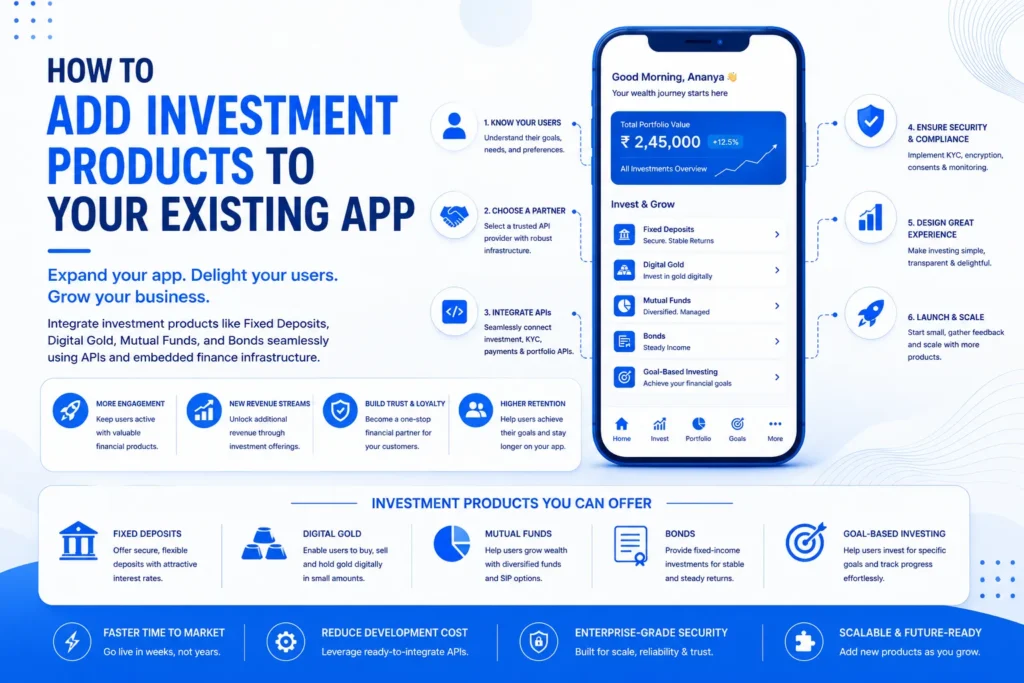
How to Add Investment Products to Your Existing App

Modern users expect more from the apps they use every day. Whether it’s a fintech platform, payroll solution, insurance app, digital bank, employee benefits portal, or consumer super app, customers increasingly want to save, invest, and grow their wealth without switching between multiple applications. For businesses, this presents a significant opportunity. Adding investment products to an existing app can increase user engagement, improve retention, and create new revenue streams. The good news is that businesses no longer need to become financial institutions or build complex financial infrastructure to make this happen. With API-driven embedded finance platforms, organizations can integrate products like Fixed Deposits, Digital Gold, Mutual Funds, and Bonds directly into their existing applications. In this guide, we’ll explain how businesses can add investment products to an app, the technology involved, and the best practices for delivering a seamless customer experience. Why Add Investment Products to Your App? Customers are looking for convenience. Instead of downloading separate applications for investing, they prefer platforms that offer multiple financial services in one place. Adding investment products helps businesses: Increase customer engagement Improve user retention Generate additional revenue streams Strengthen customer loyalty Differentiate from competitors Increase customer lifetime value Rather than becoming just another app, businesses can become an essential part of their customers’ financial lives. Which Investment Products Can You Offer? Modern embedded finance platforms support a wide range of investment products. Fixed Deposits Fixed Deposits offer stable returns over fixed tenures and appeal to customers seeking low-risk investment options. Ideal for: First-time investors Goal-based saving Capital preservation Digital Gold Digital Gold allows users to purchase and hold gold online without physical storage. Benefits include: Fractional investments High liquidity Easy accessibility Long-term wealth preservation Mutual Funds Mutual Funds provide professionally managed, diversified investment portfolios suitable for long-term wealth creation. Features often include: SIPs One-time investments Portfolio tracking Fund discovery Bonds Government and corporate bonds provide predictable income while helping users diversify investment portfolios. Goal-Based Investing Customers increasingly invest for specific objectives such as: Retirement Home ownership Children’s education Emergency funds Travel Goal-based investing makes wealth management more personalized and meaningful. Step 1: Understand Your Customers Before integrating investment products, identify what your users actually need. Consider: Customer demographics Financial literacy Risk appetite Spending behavior Long-term financial goals For example: A payroll platform may prioritize recurring investments and Fixed Deposits, while a consumer rewards app might begin with Digital Gold. Choosing products based on customer needs improves adoption and engagement. Step 2: Choose an Embedded Finance Partner Rather than building financial infrastructure internally, businesses typically integrate with an API platform that provides access to regulated investment products. A strong infrastructure partner should offer: Multiple investment products Secure APIs Digital KYC Payment integration Portfolio management Compliance support Reporting capabilities This significantly reduces development effort while accelerating product launches. Step 3: Integrate Investment APIs APIs connect your frontend application with backend financial systems. Typical API capabilities include: Product Discovery Allow customers to browse available investment options. Customer Onboarding Create investment accounts through digital registration workflows. Digital KYC Verify customer identity while meeting regulatory requirements. Investment Execution Enable customers to invest in selected products directly within the app. Portfolio Management Display investments, returns, holdings, and performance. Notifications Provide investment confirmations, maturity alerts, and portfolio updates. A well-designed API architecture ensures a seamless customer experience. Step 4: Design a Simple Investment Journey Technology is only part of the solution. User experience plays a critical role in adoption. Businesses should focus on: Easy Navigation Investment products should feel like a natural extension of the existing app. Clear Information Explain products using simple language rather than financial jargon. Personalized Recommendations Suggest investments based on customer behavior and financial goals. Progress Tracking Allow users to monitor investments through intuitive dashboards. Mobile Optimization Ensure the entire investment journey is optimized for smartphones. Reducing friction encourages customers to invest more frequently. Step 5: Prioritize Security and Compliance Financial products require enterprise-grade security. Businesses should implement: Data encryption Multi-factor authentication Secure API gateways Digital KYC Audit trails Consent management Fraud monitoring Many embedded finance providers include these capabilities as part of their infrastructure. Step 6: Launch Incrementally Businesses do not need to launch every investment product on day one. A phased rollout often delivers better results. For example: Phase 1 Fixed Deposits Phase 2 Digital Gold Phase 3 Mutual Funds Phase 4 Bonds Phase 5 Goal-based investing This approach reduces complexity while allowing businesses to learn from customer feedback. Which Businesses Can Add Investment Products? Investment products are valuable across many industries. Fintech Companies Expand beyond payments into wealth management. Digital Banks Offer diversified financial products. Payroll Platforms Enable salary-linked investing. Insurance Companies Combine protection with investment opportunities. Employee Benefit Platforms Support workplace financial wellness. Consumer Super Apps Deliver all-in-one financial experiences. E-commerce Platforms Introduce Digital Gold and savings products as loyalty features. Benefits of API-Driven Integration Using APIs instead of building financial infrastructure internally provides several advantages. Faster Time to Market Launch investment products in weeks rather than years. Lower Development Costs Avoid building complex backend systems. Better Scalability Add new products as customer demand grows. Improved Customer Experience Deliver seamless investing within existing digital journeys. Built-In Compliance Leverage integrated KYC, reporting, and security workflows. Enterprise-Grade Security Protect customer data using proven financial infrastructure. How Finspring Helps Businesses Add Investment Products Building financial infrastructure independently requires significant engineering, regulatory expertise, and operational resources. Finspring simplifies this process by providing API-driven infrastructure that enables businesses to integrate investment products into their existing applications through a single platform. With Finspring, businesses can quickly launch: Fixed Deposits Digital Gold Mutual Funds Bonds Additional embedded investment products Instead of managing backend complexity, organizations can focus on customer experience, product innovation, and business growth while leveraging secure, scalable financial infrastructure. The Future of Digital Apps Is Embedded Finance Customers increasingly expect financial services to be available wherever they already spend their time. Businesses that add investment products today position themselves to increase engagement, strengthen customer relationships, diversify revenue streams, and create long-term competitive advantages. With modern

Fixed Deposits vs Digital Gold vs Mutual Funds
Uncategorized

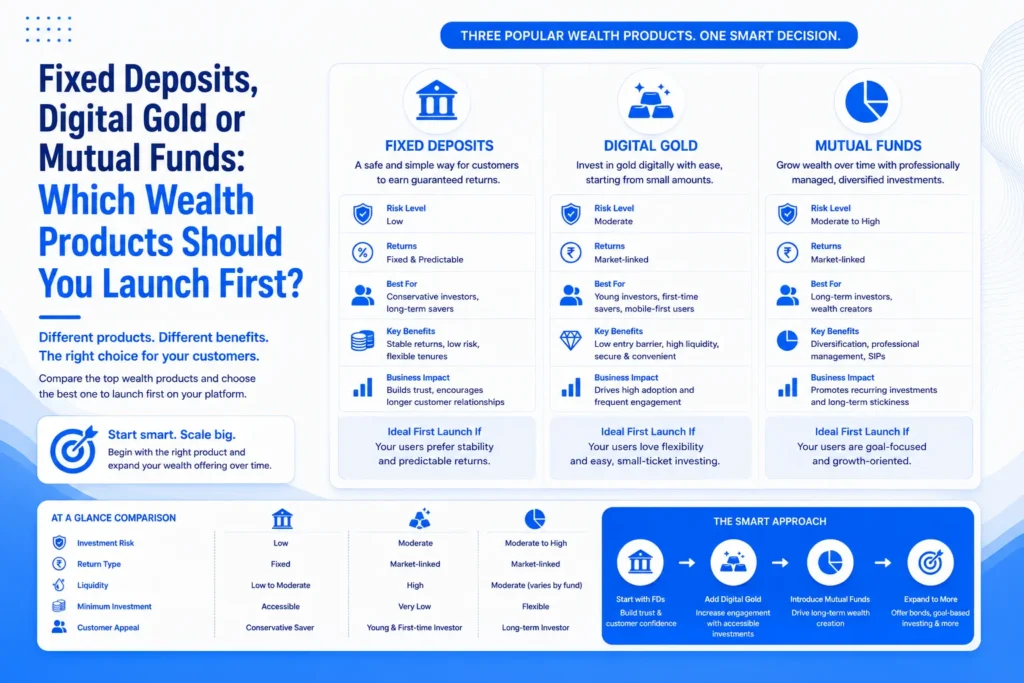
Fixed Deposits vs Digital Gold vs Mutual Funds: Which Wealth Product Should You Launch First?

As embedded finance continues to reshape digital experiences, businesses across industries are exploring ways to offer investment products within their existing platforms. Whether you’re a fintech startup, digital bank, insurance company, payroll platform, employee benefits provider, or consumer app, adding wealth management products can improve customer engagement, strengthen loyalty, and create new revenue opportunities. One of the first questions businesses face is: Which investment product should we launch first? Three of the most popular options are Fixed Deposits (FDs), Digital Gold, and Mutual Funds. Each serves different customer needs, offers unique business advantages, and appeals to different investor segments. In this guide, we’ll compare these three investment products to help you decide which one best aligns with your business goals and customer base. Why Offer Wealth Management Products? Customers increasingly expect financial services to be available within the apps they already use. Instead of switching between multiple platforms, users prefer a single digital experience where they can: Save money Invest Track portfolios Achieve financial goals Businesses that provide investment products often benefit from: Higher customer engagement Better retention Increased customer lifetime value Additional revenue opportunities Stronger brand loyalty Launching the right product first creates the foundation for a broader embedded wealth management strategy. Fixed Deposits Fixed Deposits remain one of the most trusted financial products, particularly among customers seeking predictable returns and lower investment risk. Best For First-time investors Conservative investors Long-term savers Goal-based savings Advantages Stable returns Low investment risk Flexible investment tenures Easy to understand Strong customer trust Business Benefits Businesses offering Fixed Deposits often attract customers looking for reliable savings products. They also encourage longer customer relationships because investments typically remain active until maturity. Potential Considerations Fixed Deposits may appeal less to customers seeking higher growth potential or market-linked investments. Digital Gold Digital Gold has become one of the fastest-growing digital investment products due to its simplicity and accessibility. Customers can purchase fractional amounts of gold online without worrying about physical storage. Best For Younger investors First-time savers Mobile-first users Customers interested in inflation hedging Advantages Small investment amounts High liquidity Easy digital transactions Secure storage Strong consumer familiarity Business Benefits Digital Gold integrates naturally into consumer apps, loyalty programs, payroll platforms, and e-commerce ecosystems. Its low investment threshold encourages higher customer participation. Potential Considerations Gold prices fluctuate with market conditions, making returns less predictable than Fixed Deposits. Mutual Funds Mutual Funds provide professionally managed investment portfolios designed for long-term wealth creation. They allow customers to invest across diversified asset classes without managing individual securities. Best For Long-term investors Growth-focused customers Regular investors Financial planning users Advantages Diversification Professional fund management SIP support Multiple risk categories Long-term wealth creation Business Benefits Mutual Funds often encourage recurring investments through Systematic Investment Plans (SIPs), leading to ongoing customer engagement. Potential Considerations Because Mutual Funds are market-linked investments, returns are not guaranteed and may fluctuate over time. Side-by-Side Comparison Feature Fixed Deposits Digital Gold Mutual Funds Investment Risk Low Moderate Moderate to High Return Type Fixed Market-linked Market-linked Customer Appeal Conservative investors Younger, digital-first users Long-term investors Minimum Investment Generally accessible Very low Flexible Liquidity Depends on tenure High Varies by fund type Best Use Case Capital preservation Flexible savings Long-term wealth creation Customer Engagement Moderate High High Each product serves a different purpose, making them complementary rather than competing offerings. Which Product Should Your Business Launch First? The answer depends on your customers. Launch Fixed Deposits If… Your platform serves: Salary earners Conservative investors Payroll users Banking customers Long-term savers FDs provide a simple, trusted entry point into embedded wealth management. Launch Digital Gold If… Your customers are: Young professionals Mobile-first users E-commerce shoppers Rewards program participants First-time investors Digital Gold’s accessibility and low entry barrier make it ideal for driving adoption. Launch Mutual Funds If… Your audience focuses on: Long-term investing Financial planning Wealth creation Portfolio diversification Mutual Funds are particularly effective for customers already comfortable with investing. Why Many Businesses Launch Multiple Products Rather than choosing just one investment option permanently, many organizations adopt a phased approach. For example: Phase 1 Launch Fixed Deposits to build customer trust. Phase 2 Introduce Digital Gold to encourage frequent investing. Phase 3 Expand into Mutual Funds for long-term wealth creation. Phase 4 Add Bonds and goal-based investing. This strategy allows businesses to serve different customer segments while expanding product offerings over time. The Role of APIs Launching investment products no longer requires building financial infrastructure internally. API-driven platforms simplify integration by providing: Customer onboarding Digital KYC Investment execution Portfolio management Payment processing Reporting Compliance workflows Businesses can integrate multiple investment products while focusing on customer experience rather than backend operations. How Finspring Helps Businesses Launch Wealth Products Building investment infrastructure independently can require years of development and regulatory coordination. Finspring provides API-driven infrastructure that enables businesses to launch wealth management products through a single integration. Businesses can quickly offer: Fixed Deposits Digital Gold Mutual Funds Bonds Additional embedded investment products This allows organizations to expand their financial offerings while reducing operational complexity and accelerating time to market. Which Wealth Product Should You Choose? There isn’t a single “best” investment product for every business. The right choice depends on your users, your platform, and your long-term strategy. Choose Fixed Deposits if your customers prioritize stability and predictable returns. Choose Digital Gold if your users prefer flexible, accessible investments with low entry barriers. Choose Mutual Funds if your audience is focused on long-term wealth creation and portfolio growth. Ultimately, the strongest embedded finance platforms combine all three, giving customers the flexibility to choose investments that align with their financial goals. With API-driven infrastructure making integrations faster than ever, businesses no longer have to choose between simplicity and scale—they can start with one product and expand into a complete wealth management ecosystem over time. Frequently Asked Questions (FAQs) Which wealth management product should businesses launch first? The best product depends on your customer base. Fixed Deposits suit conservative investors, Digital Gold appeals to younger and mobile-first users, while Mutual Funds are ideal

one-stop wealth management platform
Uncategorized

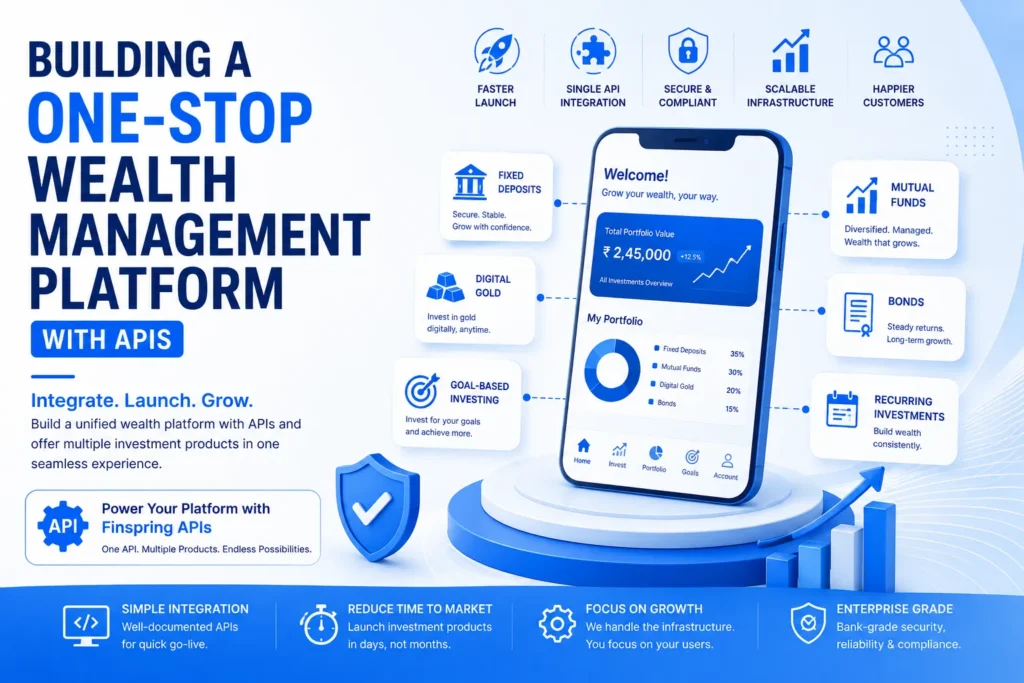
Building a One-Stop Wealth Management Platform with APIs

Customers today expect more than just a banking or payments app. They want a single platform where they can save, invest, grow, and manage their wealth without juggling multiple applications. This shift has given rise to the one-stop wealth management platform—a digital ecosystem that brings together multiple investment products under one seamless user experience. Traditionally, creating such a platform required years of development, regulatory partnerships, and significant operational resources. Today, API-driven financial infrastructure has made it possible for businesses to launch comprehensive wealth management solutions much faster. Whether you’re a fintech startup, bank, payroll provider, insurance company, or consumer platform, APIs make it easier than ever to offer investment products that increase customer engagement and create new revenue streams. Here’s how businesses can build a modern wealth management platform using APIs. What Is a One-Stop Wealth Management Platform? A one-stop wealth management platform enables users to access multiple financial products from a single application. Instead of switching between separate apps for savings, investments, and financial planning, customers can manage everything in one place. A comprehensive platform may include: Fixed Deposits Digital Gold Mutual Funds Bonds Goal-based investing Portfolio tracking Investment insights Recurring investment plans Financial planning tools The goal is to create a seamless financial experience that keeps users engaged throughout their wealth-building journey. Why Businesses Are Moving Toward Integrated Wealth Platforms Consumer expectations have changed dramatically. Users increasingly value convenience, simplicity, and personalization over fragmented financial experiences. For businesses, integrating wealth management products offers several strategic advantages: Increased Customer Retention The more financial needs customers can fulfill within one platform, the less likely they are to switch to competitors. Higher Customer Lifetime Value Investment products encourage long-term engagement, increasing the value of each customer relationship. New Revenue Opportunities Wealth management services can create recurring income through commissions, distribution partnerships, and value-added financial services. Stronger Brand Positioning Offering comprehensive financial solutions positions businesses as trusted financial partners rather than single-purpose service providers. The Core Building Blocks of a Wealth Management Platform Creating a successful platform starts with selecting the right investment products. Fixed Deposits Fixed Deposits remain one of the most trusted wealth-building instruments. They appeal to users seeking predictable returns and low-risk investments. Digital Gold Digital Gold enables customers to invest in gold without purchasing physical assets. Its accessibility makes it popular among younger investors and first-time savers. Mutual Funds Mutual Funds provide diversified investment opportunities managed by professional fund managers. They support long-term wealth creation across multiple risk categories. Bonds Government and corporate bonds help investors diversify portfolios while generating relatively stable returns. Goal-Based Investing Instead of simply offering products, platforms increasingly organize investments around financial goals, including: Retirement Children’s education Home ownership Emergency funds Vacation planning Goal-based investing creates a more meaningful customer experience. Why APIs Have Changed Everything In the past, launching investment products required businesses to build: Financial infrastructure Compliance systems Banking partnerships Reporting frameworks Settlement processes Customer onboarding Today, APIs simplify much of this complexity. Instead of developing these systems internally, businesses can integrate financial products through secure API connections. This dramatically reduces development timelines while enabling faster product launches. Essential APIs for Wealth Management Platforms Modern wealth management platforms typically combine several APIs. Investment APIs These enable customers to invest in products such as: Fixed Deposits Digital Gold Mutual Funds Bonds without leaving the application. KYC APIs Customer verification remains essential for financial services. Integrated KYC APIs simplify onboarding through digital identity verification while supporting regulatory compliance. Portfolio APIs Portfolio APIs allow users to: View investments Track performance Monitor asset allocation Analyze returns from a centralized dashboard. Payment APIs Investment journeys require seamless money movement. Payment APIs facilitate: Deposits Withdrawals SIP payments Recurring investments Refunds while creating frictionless customer experiences. Reporting APIs Businesses need operational visibility. Reporting APIs help generate transaction reports, compliance data, customer activity summaries, and investment analytics. Designing a Great User Experience Technology alone doesn’t create a successful wealth platform. User experience plays an equally important role. Successful platforms emphasize: Simple Onboarding Reduce the number of steps required to begin investing. Clear Product Information Explain investment products in plain language. Personalized Recommendations Recommend investment options based on customer preferences and financial goals. Goal Tracking Allow users to monitor progress toward savings and investment objectives. Mobile-First Design Most investors now manage wealth from smartphones, making responsive design essential. Security and Compliance Matter Financial products require high standards of security and compliance. Businesses should prioritize: End-to-end encryption Multi-factor authentication Secure payment processing Audit trails Regulatory reporting Customer consent management Fraud monitoring Modern financial infrastructure providers often include many of these capabilities, reducing implementation complexity for businesses. Who Can Benefit from Embedded Wealth Management? API-driven wealth platforms are no longer limited to banks. Many industries are integrating investment products into their customer journeys. Examples include: Fintech Companies Expand beyond payments and lending. Payroll Platforms Offer salary-linked investment opportunities. Insurance Companies Combine protection with wealth-building products. Employee Benefit Platforms Help employees invest directly through workplace benefits. Consumer Super Apps Create comprehensive financial ecosystems within a single application. Digital Banks Expand product offerings while improving customer retention. Why Scalability Matters Businesses often begin with one investment product before expanding. For example: Launch Fixed Deposits first. Add Digital Gold later. Introduce Mutual Funds. Expand into Bonds. Build goal-based investing. API-driven architecture supports this modular approach, allowing businesses to scale without rebuilding infrastructure. How Finspring Supports Wealth Management Platforms Launching a modern wealth management platform requires reliable financial infrastructure. Rather than spending years building investment systems, businesses can leverage Finspring’s API-driven infrastructure to integrate financial products quickly and securely. Through a single integration, businesses can offer products such as: Fixed Deposits Digital Gold Mutual Funds Bonds Additional embedded investment solutions This enables organizations to accelerate product launches while focusing on customer experience, innovation, and business growth instead of backend financial operations. The Future of Wealth Management Is Platform-Led Consumers no longer want fragmented financial experiences. They expect one trusted platform that enables them to save, invest, track portfolios, and achieve financial goals with minimal effort. Businesses

Wealth Management APIs
Uncategorized

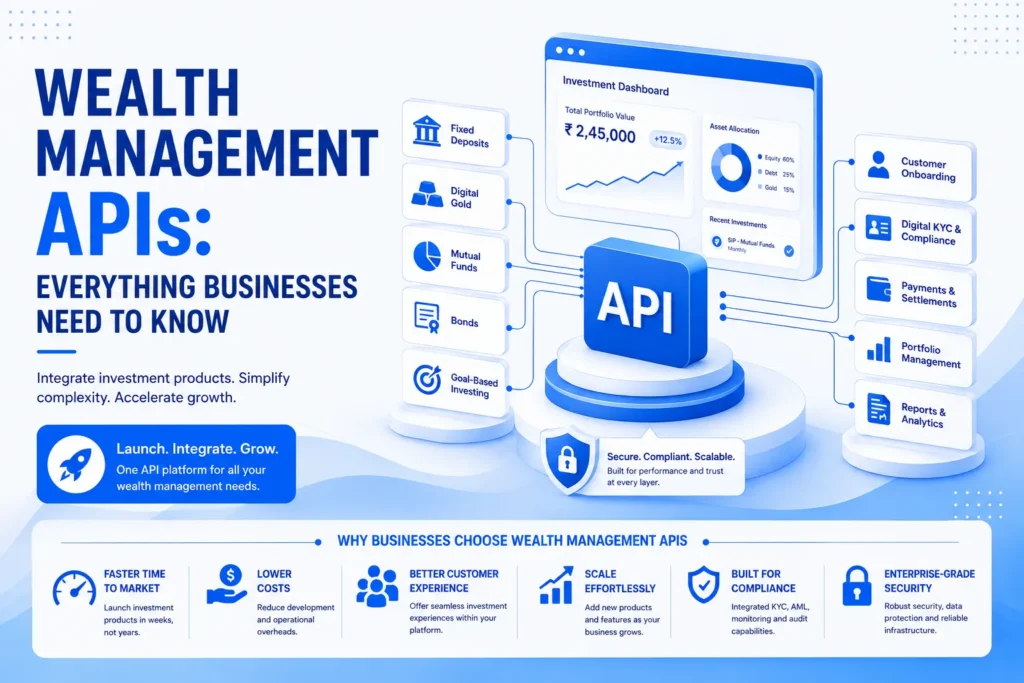
Wealth Management APIs: Everything Businesses Need to Know

The way businesses offer financial products is changing rapidly. In the past, launching investment services required years of development, multiple banking partnerships, regulatory expertise, and significant operational resources. Today, wealth management APIs have simplified this process, making it possible for digital businesses to integrate investment products quickly and securely. Whether you’re a fintech startup, digital bank, insurance company, payroll platform, employee benefits provider, or consumer app, wealth management APIs enable you to offer investment products without building complex financial infrastructure from scratch. By integrating a single API platform, businesses can provide customers with investment opportunities such as Fixed Deposits, Digital Gold, Mutual Funds, and Bonds—all within their existing digital experience. This guide explains what wealth management APIs are, how they work, and why they are becoming the foundation of modern embedded finance. What Are Wealth Management APIs? A wealth management API is a set of application programming interfaces that allows businesses to integrate investment products and wealth-building services into their websites, mobile apps, or digital platforms. Instead of building proprietary investment systems, businesses connect to APIs that manage the backend infrastructure. These APIs enable features such as: Investment product integration Customer onboarding Digital KYC Portfolio management Payment processing Transaction reporting Compliance workflows Notifications and alerts As a result, businesses can deliver investment experiences while relying on secure infrastructure providers to handle much of the operational complexity. Why Businesses Are Using Wealth Management APIs Digital businesses increasingly recognize that investment products improve customer engagement and create new revenue opportunities. However, building financial infrastructure independently presents several challenges: Long development cycles Regulatory complexity Banking partnerships Compliance management Operational overhead Security requirements Wealth management APIs eliminate many of these barriers by providing ready-to-integrate infrastructure. This allows businesses to focus on user experience and customer acquisition rather than backend financial systems. Investment Products Supported by Wealth Management APIs Modern API platforms support multiple investment products. Fixed Deposits Businesses can integrate Fixed Deposits that allow customers to earn predictable returns over flexible investment tenures. FD APIs typically support: Investment creation Interest calculations Maturity tracking Portfolio updates Digital Gold Digital Gold APIs allow customers to purchase, sell, and hold gold digitally. Capabilities often include: Fractional purchases Live pricing Secure storage Redemption Portfolio visibility Mutual Funds Mutual Fund APIs simplify access to professionally managed investment portfolios. Businesses can offer: SIP creation One-time investments Fund discovery Portfolio tracking Performance reporting Bonds Bond APIs allow businesses to provide fixed-income investment opportunities while helping customers diversify portfolios. Common features include: Bond listings Investment execution Interest tracking Maturity management Goal-Based Investing Many API platforms support investment journeys organized around customer goals such as: Retirement Education Home ownership Emergency funds Vacation savings Goal-based investing improves personalization while encouraging long-term engagement. Core Components of Wealth Management APIs A complete wealth management API platform typically consists of several services. Customer Onboarding API Supports: Registration Profile creation Consent management Customer verification Fast onboarding improves conversion rates while reducing operational friction. Digital KYC API Digital KYC APIs simplify customer identity verification and regulatory compliance. Typical capabilities include: Identity verification Document validation AML checks Customer screening Investment API This is the core API responsible for investment execution. Functions include: Product discovery Investment creation Portfolio updates Order confirmation Transaction history Portfolio API Portfolio APIs provide customers with complete visibility into investments. Users can: View holdings Track returns Monitor asset allocation Review historical performance Real-time portfolio tracking significantly improves customer engagement. Payment API Investment journeys require seamless movement of funds. Payment APIs manage: Deposits Withdrawals Recurring investments SIP collections Refunds Secure payment infrastructure is essential for delivering frictionless investment experiences. Reporting API Businesses require analytics to monitor operations. Reporting APIs provide: Customer activity Investment reports Compliance documentation Transaction summaries Operational insights Benefits of Wealth Management APIs Businesses adopting API-driven investment infrastructure gain several advantages. Faster Time to Market Launch wealth management products in weeks instead of years. Lower Development Costs Avoid building financial systems from scratch. Better Customer Experience Deliver seamless investment journeys within existing applications. Easier Scalability Add new investment products without redesigning infrastructure. Improved Security Leverage enterprise-grade infrastructure built specifically for financial services. Regulatory Support Simplify compliance with integrated KYC, reporting, and security workflows. Industries Using Wealth Management APIs Wealth management APIs are no longer limited to banks. Organizations across industries are adopting embedded investment solutions. Fintech Companies Expand beyond payments into long-term investing. Digital Banks Offer diversified wealth management products. Insurance Companies Combine protection with wealth-building services. Payroll Platforms Enable salary-linked investment experiences. Employee Benefits Platforms Support financial wellness initiatives. Consumer Apps Increase engagement through embedded financial products. Choosing the Right Wealth Management API Platform Not all API providers offer the same capabilities. Businesses should evaluate providers based on: Product Coverage Can the platform support Fixed Deposits, Digital Gold, Mutual Funds, Bonds, and future investment products? Scalability Will the infrastructure support future business growth? Security Does the provider offer enterprise-grade security, encryption, and access controls? Compliance Are KYC, AML, reporting, and regulatory workflows included? Developer Experience Comprehensive documentation, SDKs, testing environments, and technical support reduce integration time. Reliability High availability and performance are essential for financial applications. How Finspring Simplifies Wealth Management APIs Building wealth management infrastructure internally is expensive, time-consuming, and operationally complex. Finspring provides API-driven financial infrastructure that enables businesses to integrate multiple investment products through a single platform. Using Finspring’s APIs, businesses can launch: Fixed Deposits Digital Gold Mutual Funds Bonds Additional embedded investment solutions Instead of managing backend infrastructure, organizations can focus on building exceptional customer experiences while accelerating product launches. The Future of Wealth Management APIs As embedded finance continues to transform digital businesses, wealth management APIs will become increasingly important. Customers expect investment products to be available wherever they already manage their finances. Businesses that adopt API-driven wealth management can increase engagement, improve customer retention, diversify revenue streams, and create stronger competitive advantages. Rather than building financial infrastructure from scratch, organizations can leverage modern APIs to launch secure, scalable, and compliant investment products that meet evolving customer expectations. Frequently Asked Questions (FAQs) What is a wealth management API? A

Uncategorized

Digital Wealth Management Infrastructure Explained: APIs, Architecture & Components

Digital wealth management has evolved from a niche financial service into a core offering for fintechs, digital banks, insurance companies, payroll platforms, and consumer apps. As businesses race to launch investment products, one challenge consistently stands out: building the technology behind them. Offering products like Fixed Deposits, Digital Gold, Mutual Funds, and Bonds requires much more than an attractive user interface. Behind every successful investment platform is a sophisticated digital wealth management infrastructure that handles customer onboarding, investment execution, compliance, payments, portfolio management, and security. The good news is that businesses no longer need to build this infrastructure themselves. API-driven platforms have made it possible to launch modern wealth management products faster while reducing operational complexity. In this guide, we’ll explain what digital wealth management infrastructure is, the key components involved, and how businesses can leverage it to bring investment products to market. What Is Digital Wealth Management Infrastructure? Digital wealth management infrastructure is the technology foundation that enables businesses to offer investment products through websites, mobile applications, and digital platforms. Instead of building every financial system internally, businesses use infrastructure providers that connect them to regulated investment products and automate backend operations. A modern infrastructure typically supports: Customer onboarding Investment product integration Digital KYC Payment processing Portfolio management Compliance workflows Transaction reporting Security and authentication Analytics and notifications This allows businesses to focus on delivering exceptional customer experiences while relying on robust backend systems. Why Infrastructure Matters Launching investment products involves far more than displaying financial information. Behind every investment transaction, multiple systems must work together. For example, when a customer invests in a Fixed Deposit, the infrastructure may: Verify customer identity Process payment Validate eligibility Execute the investment Generate confirmations Update the portfolio Record compliance data Notify the customer Without reliable infrastructure, delivering this experience consistently becomes difficult. Core Components of Wealth Management Infrastructure Modern digital investment platforms consist of several interconnected layers. 1. Product Integration Layer This layer connects businesses with financial products. Through APIs, businesses can integrate offerings such as: Fixed Deposits Digital Gold Mutual Funds Bonds Goal-based investment solutions Instead of creating individual integrations for every product, businesses can often access multiple investment options through a unified infrastructure platform. 2. Customer Onboarding Before customers can begin investing, they must complete onboarding requirements. Infrastructure platforms typically provide: Digital registration Identity verification Document collection Consent management Account creation Efficient onboarding reduces friction and improves conversion rates. 3. Digital KYC and Compliance Compliance is a critical component of wealth management infrastructure. Common capabilities include: Digital KYC AML screening Identity verification Regulatory reporting Audit trails Customer consent management Embedding these workflows into infrastructure simplifies regulatory compliance while improving operational efficiency. 4. Payment Infrastructure Investment products require secure movement of funds. Payment infrastructure manages: Deposits Withdrawals Investment funding SIP collections Refunds Settlement workflows Reliable payment systems ensure seamless customer experiences throughout the investment lifecycle. 5. Investment Execution Engine Once a customer submits an investment request, the execution engine processes the transaction. Responsibilities include: Order validation Product allocation Investment confirmation Transaction recording Portfolio updates Automation significantly reduces processing time and operational errors. 6. Portfolio Management System Customers expect real-time visibility into their investments. Portfolio infrastructure enables users to: View holdings Track returns Monitor diversification Review historical performance Analyze asset allocation Comprehensive portfolio dashboards improve engagement and encourage repeat investment activity. 7. Reporting and Analytics Businesses require operational visibility to manage investment products effectively. Reporting systems provide: Transaction reports Customer activity Product performance Investment trends Operational insights Compliance documentation Analytics help businesses optimize customer experiences while supporting strategic decision-making. 8. Security Infrastructure Financial services demand enterprise-grade security. Essential security capabilities include: Data encryption Multi-factor authentication Secure API gateways Fraud monitoring Access controls Audit logging Robust security builds customer trust while protecting sensitive financial information. Why APIs Have Become the Foundation APIs connect frontend applications with backend financial infrastructure. Instead of developing individual systems, businesses integrate standardized APIs that expose investment functionality securely. Common API categories include: Investment APIs Enable customers to invest in products such as Fixed Deposits, Digital Gold, Mutual Funds, and Bonds. KYC APIs Support digital identity verification and regulatory compliance. Portfolio APIs Provide real-time investment information and performance tracking. Payment APIs Handle deposits, withdrawals, and recurring investments. Reporting APIs Generate operational and compliance reports. Together, these APIs simplify development while enabling scalable financial services. Building for Scalability Digital wealth management platforms should support future expansion. Businesses often begin with one investment product before gradually adding more. A scalable architecture allows organizations to: Launch Fixed Deposits first Add Digital Gold Expand into Mutual Funds Introduce Bonds Offer goal-based investing Build recurring investment plans API-driven infrastructure makes this modular growth possible without requiring significant redevelopment. Industries Using Digital Wealth Infrastructure Modern wealth management infrastructure supports businesses across multiple industries. Fintech Companies Expand beyond payments into investments. Digital Banks Offer broader wealth management capabilities. Insurance Platforms Integrate investment products alongside protection solutions. Payroll Providers Enable salary-linked investing. Employee Benefits Platforms Support long-term financial wellness. Consumer Apps Increase engagement through embedded investment products. Benefits of API-Driven Infrastructure Businesses adopting modern infrastructure gain several advantages. Faster Product Launches Reduce development timelines through pre-built integrations. Lower Operational Complexity Avoid building financial systems internally. Improved Customer Experience Deliver seamless investment journeys. Better Scalability Expand product offerings without redesigning infrastructure. Enhanced Security Leverage enterprise-grade financial systems. Regulatory Support Simplify compliance with integrated workflows. How Finspring Simplifies Wealth Management Infrastructure Building digital wealth infrastructure independently can require years of development and complex regulatory coordination. Finspring simplifies this process by providing API-driven infrastructure that enables businesses to launch investment products through a single integration. Using Finspring’s platform, businesses can integrate: Fixed Deposits Digital Gold Mutual Funds Bonds Other embedded investment products Instead of managing backend financial operations, organizations can focus on customer experience, product innovation, and business growth while relying on secure, scalable infrastructure. The Future of Wealth Management Infrastructure As embedded finance continues to reshape financial services, digital wealth management infrastructure will become increasingly important. Businesses that invest in scalable, API-driven architecture can launch products faster, respond

embedded wealth management
Uncategorized

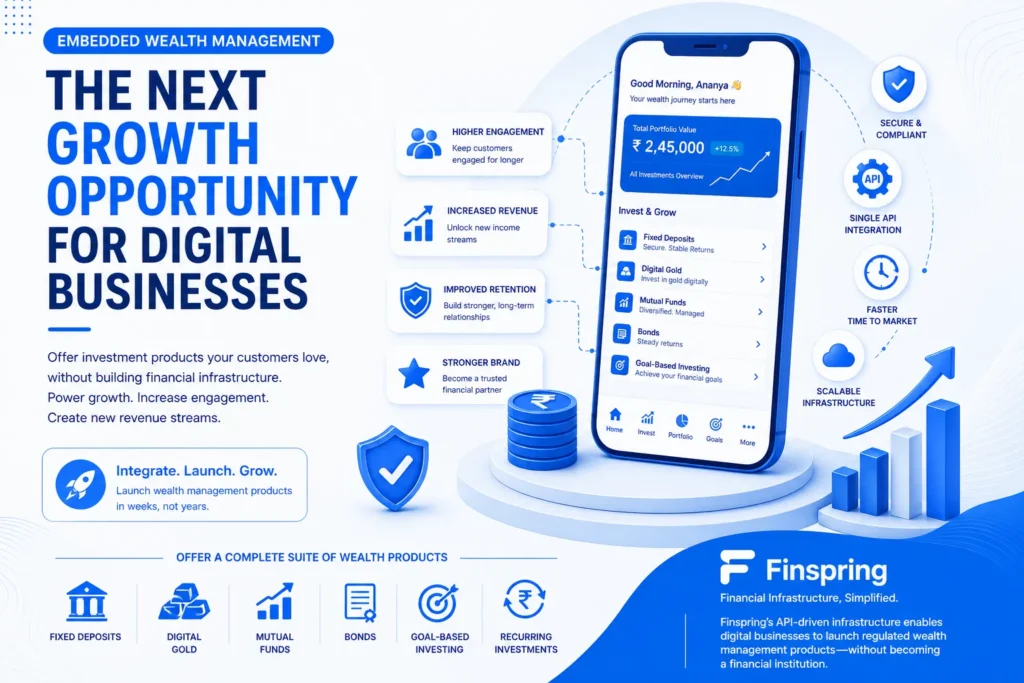
Embedded Wealth Management: The Next Growth Opportunity for Digital Businesses

Digital businesses are constantly looking for new ways to increase customer engagement, improve retention, and create sustainable revenue streams. While embedded payments and lending have already transformed customer experiences, the next evolution of embedded finance is here—embedded wealth management. Instead of sending customers to third-party investment platforms, businesses can now integrate wealth management products directly into their own applications. Customers can save, invest, and grow their money without leaving the digital platforms they already trust. Whether you’re building a fintech app, digital bank, payroll platform, insurance solution, employee benefits platform, or consumer super app, embedded wealth management offers an opportunity to become more than just a service provider. It allows businesses to become an integral part of their customers’ financial journeys. In this article, we’ll explore what embedded wealth management is, why it’s growing rapidly, and how businesses can use API-driven infrastructure to launch investment products quickly. What Is Embedded Wealth Management? Embedded wealth management is the integration of investment products and wealth-building services directly into a digital platform through APIs. Rather than requiring users to open separate investment accounts or download another application, businesses can provide investment opportunities within their existing customer experience. Common embedded wealth management products include: Fixed Deposits Digital Gold Mutual Funds Bonds Goal-based investing Portfolio tracking Recurring investment plans Customers enjoy a seamless experience, while businesses increase engagement by offering more value in a single platform. Why Embedded Wealth Management Is Growing Several industry trends are accelerating the adoption of embedded wealth management. Changing Customer Expectations Consumers expect digital experiences that are simple, fast, and personalized. They no longer want to manage different financial needs across multiple applications. A unified platform that combines spending, saving, and investing delivers greater convenience and strengthens customer loyalty. Embedded Finance Is Expanding Embedded finance has already transformed payments, lending, and insurance. The next logical step is wealth management. Businesses are recognizing that investment products are not just financial services—they are engagement tools that encourage customers to remain active on their platforms over the long term. APIs Have Reduced Technical Complexity Launching wealth management products once required years of engineering and financial partnerships. Today, API-driven infrastructure allows businesses to integrate investment products without building financial systems from scratch. This significantly reduces development time while enabling faster innovation. Why Businesses Should Offer Wealth Management Products Embedded wealth management creates benefits beyond simply expanding product offerings. Increase Customer Engagement Investment products encourage customers to return regularly to monitor portfolios, review returns, and make additional investments. This increases platform activity and customer interaction. Improve Customer Retention The more financial services customers use within a platform, the less likely they are to switch to competitors. Wealth management strengthens long-term customer relationships. Unlock New Revenue Streams Investment products can create recurring revenue opportunities through distribution partnerships, commissions, and value-added financial services. This helps businesses diversify beyond their core products. Strengthen Brand Positioning Offering investment solutions positions businesses as trusted financial partners instead of single-purpose applications. Customers increasingly value platforms that support multiple aspects of their financial lives. Popular Embedded Wealth Management Products Businesses can choose from several investment products based on customer needs. Fixed Deposits Fixed Deposits remain popular among users seeking stable returns and capital preservation. They are particularly attractive for conservative investors and goal-based savings. Digital Gold Digital Gold enables customers to invest in gold with small amounts while eliminating concerns about physical storage. Its accessibility has made it one of the fastest-growing digital investment products. Mutual Funds Mutual Funds provide professionally managed, diversified investment portfolios suitable for long-term wealth creation. Many digital platforms include SIP (Systematic Investment Plan) capabilities to encourage recurring investments. Bonds Government and corporate bonds help investors diversify portfolios while generating relatively stable income. They are valuable additions for users with lower risk tolerance. Goal-Based Investing Modern customers increasingly invest for specific objectives such as: Retirement Children’s education Home ownership Emergency funds Travel Goal-based investing makes wealth management more personalized and engaging. Industries Embracing Embedded Wealth Management Embedded wealth management extends beyond traditional financial institutions. Fintech Companies Expand from payments and lending into long-term wealth creation. Digital Banks Offer a broader range of investment products while increasing customer lifetime value. Payroll Platforms Help employees invest directly after receiving salaries. Insurance Companies Combine protection with wealth-building opportunities. Employee Benefit Platforms Support financial wellness initiatives through investment products. Consumer Super Apps Deliver comprehensive financial ecosystems from a single application. How APIs Enable Embedded Wealth Management APIs are the foundation of modern embedded finance. Rather than building complex financial infrastructure internally, businesses connect to secure APIs that provide access to regulated investment products. Typical API capabilities include: Customer onboarding Digital KYC Investment execution Portfolio management Transaction reporting Payment processing Notifications Compliance workflows This allows businesses to launch wealth management features much faster than traditional development approaches. Building a Seamless Customer Experience Technology alone is not enough. Successful embedded wealth management platforms prioritize user experience. Businesses should focus on: Easy Onboarding Reduce friction during account creation and investment activation. Personalized Recommendations Suggest investment products based on customer preferences and financial goals. Transparent Information Clearly explain returns, risks, fees, and investment timelines. Mobile-First Design Ensure all investment experiences are optimized for smartphones. Real-Time Portfolio Tracking Allow customers to monitor investments, returns, and progress toward financial goals from a single dashboard. A great user experience increases adoption and encourages repeat engagement. Why Compliance Still Matters Although API infrastructure simplifies implementation, businesses must continue to prioritize compliance. Modern embedded finance platforms typically support: Digital KYC AML monitoring Consent management Secure authentication Audit trails Regulatory reporting Data encryption These capabilities help businesses deliver secure and compliant financial services while reducing operational complexity. How Finspring Powers Embedded Wealth Management Launching embedded wealth management products no longer requires businesses to build financial infrastructure from scratch. Finspring provides API-driven infrastructure that enables businesses to integrate regulated investment products into their platforms through a single integration. Using Finspring, organizations can offer: Fixed Deposits Digital Gold Mutual Funds Bonds Additional embedded investment products This enables faster product launches while allowing businesses

launch wealth management products
Uncategorized

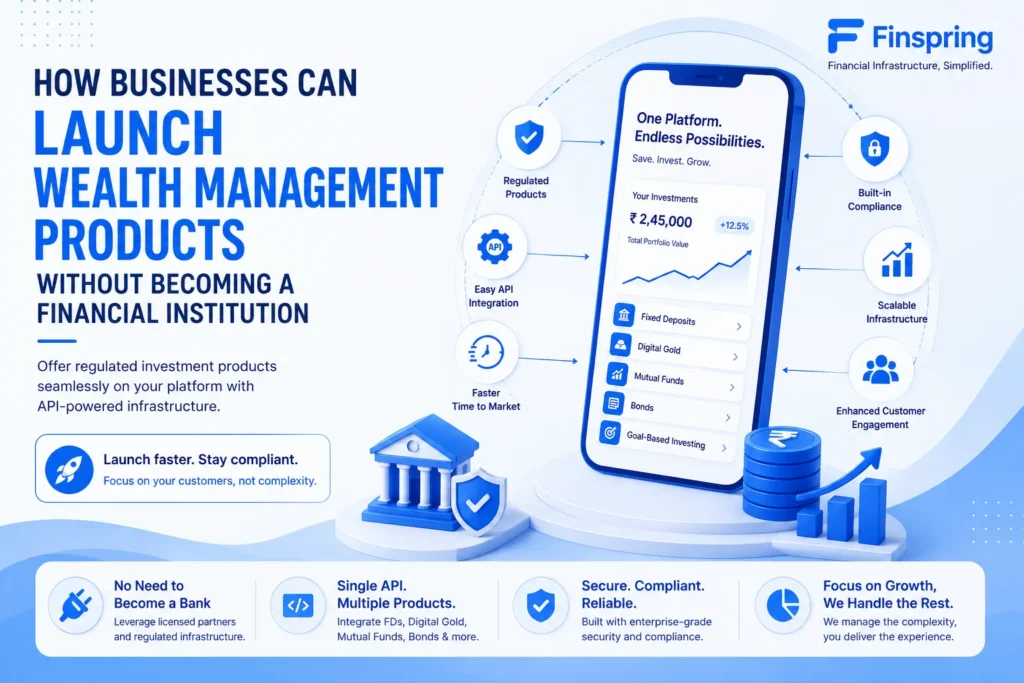
How Businesses Can Launch Wealth Management Products Without Becoming a Financial Institution

The financial services industry is no longer limited to banks, NBFCs, and traditional investment firms. Today, businesses across industries are embedding financial products directly into their platforms, allowing customers to save, invest, and grow their wealth without leaving the apps they already use. Whether it’s a fintech startup, payroll platform, insurance company, employee benefits provider, or consumer app, businesses are finding new ways to create value by offering investment products. The best part? They don’t need to become a financial institution to do it. Thanks to modern API-driven infrastructure and embedded finance, launching wealth management products has become significantly faster and more accessible. Businesses can integrate regulated financial products into their digital experiences while relying on trusted infrastructure partners for the underlying technology and operations. Here’s how organizations can launch wealth management products without becoming a financial institution. Why Businesses Are Expanding into Wealth Management Customer expectations have evolved. Instead of using separate apps for banking, investing, payments, and financial planning, consumers increasingly prefer platforms that offer everything in one place. Adding wealth management products enables businesses to: Increase customer engagement Improve retention Create recurring revenue opportunities Differentiate from competitors Deliver greater long-term customer value Rather than simply offering a service, businesses become part of their customers’ financial journey. You Don’t Need to Build a Bank One of the biggest misconceptions about embedded finance is that businesses must become regulated financial institutions before offering investment products. In reality, modern financial infrastructure allows companies to integrate investment solutions while partnering with licensed providers for product distribution, custody, compliance, and other regulated functions. Businesses focus on: Customer experience Product design User engagement Distribution Branding Infrastructure providers handle much of the backend complexity. This dramatically lowers the barrier to entering wealth management. Understanding Embedded Wealth Management Embedded wealth management refers to integrating investment products directly into non-financial platforms. Instead of redirecting customers to third-party investment portals, businesses provide wealth-building opportunities within their own applications. Examples include: Payroll apps offering Fixed Deposits after salary credits Insurance apps enabling Digital Gold investments Employee benefit platforms providing retirement-focused investments Consumer apps integrating Mutual Funds Super apps combining multiple investment products Customers enjoy a seamless experience while businesses strengthen platform engagement. Wealth Management Products You Can Offer Modern API infrastructure enables businesses to launch multiple investment products. Fixed Deposits Provide customers with low-risk savings options offering predictable returns and flexible tenures. Digital Gold Allow users to purchase and hold gold digitally without dealing with physical storage or logistics. Mutual Funds Offer professionally managed investment portfolios suited to different financial goals and risk profiles. Bonds Enable customers to diversify investments through fixed-income securities issued by governments and corporations. Goal-Based Investing Help users save toward milestones such as retirement, home ownership, education, or emergency funds through personalized investment journeys. The Role of APIs APIs act as the bridge between your digital platform and financial infrastructure. Instead of building investment systems internally, businesses connect to APIs that provide access to regulated financial products and operational workflows. Typical API capabilities include: Investment product integration Digital onboarding KYC verification Payment processing Portfolio management Transaction reporting Investment tracking Customer notifications With a single integration, businesses can add sophisticated financial capabilities without years of development. Building a Great Customer Experience The success of embedded wealth management depends on more than simply offering investment products. Businesses should prioritize a seamless user experience. Simple Onboarding Allow customers to begin investing with minimal steps. Personalized Recommendations Suggest products based on customer preferences, financial goals, and investment behavior. Transparent Information Present clear information about investment options, risks, and expected outcomes. Goal Tracking Help customers visualize progress toward financial objectives. Mobile-First Design Ensure investment experiences are optimized for smartphones, where most users manage their finances. A frictionless experience encourages higher adoption and long-term engagement. Compliance Without Operational Complexity Financial services involve regulatory obligations, including identity verification, transaction monitoring, audit requirements, and customer protection. Instead of managing these independently, businesses can rely on infrastructure partners that incorporate compliance capabilities into their platforms. Common features include: Digital KYC AML monitoring Secure payment processing Consent management Audit trails Regulatory reporting This simplifies operations while helping businesses deliver compliant financial services. Which Businesses Can Launch Wealth Management Products? Embedded wealth management is relevant across many industries. Fintech Companies Expand beyond payments and lending into investments. Payroll Platforms Offer salary-linked wealth creation products. Employee Benefit Providers Help employees build long-term financial security. Insurance Companies Combine protection with investment opportunities. Consumer Apps Increase engagement through integrated financial products. E-commerce Platforms Introduce Digital Gold, savings products, or investment rewards. Digital Banks Expand product portfolios while increasing customer lifetime value. Why Time to Market Matters Building financial infrastructure internally often requires years of engineering, regulatory coordination, and operational setup. API-driven platforms significantly reduce this timeline. Businesses can: Launch products faster Test new investment offerings Expand product portfolios incrementally Respond quickly to market opportunities Scale with customer demand This flexibility enables businesses to innovate without large upfront investments. How Finspring Makes It Possible Launching wealth management products doesn’t have to involve building complex financial systems. Finspring provides API-driven infrastructure that enables businesses to integrate investment products quickly through a single platform. Using Finspring’s infrastructure, organizations can offer: Fixed Deposits Digital Gold Mutual Funds Bonds Other embedded investment solutions without becoming regulated financial institutions or building backend financial infrastructure from scratch. Businesses remain focused on delivering exceptional customer experiences while Finspring simplifies product integration and operational complexity. The Future Belongs to Embedded Wealth Management The next generation of financial services will be delivered through the digital platforms customers already trust. Businesses that integrate wealth management products today are positioning themselves to increase customer engagement, improve retention, diversify revenue streams, and become long-term financial partners for their users. With API-powered infrastructure removing many of the traditional barriers, launching investment products is no longer reserved for banks. Any forward-thinking digital business can participate in the growing embedded finance ecosystem and offer modern wealth management experiences. Frequently Asked Questions (FAQs) Can businesses offer wealth management products without becoming a bank? Yes.

wealth management instruments
Uncategorized

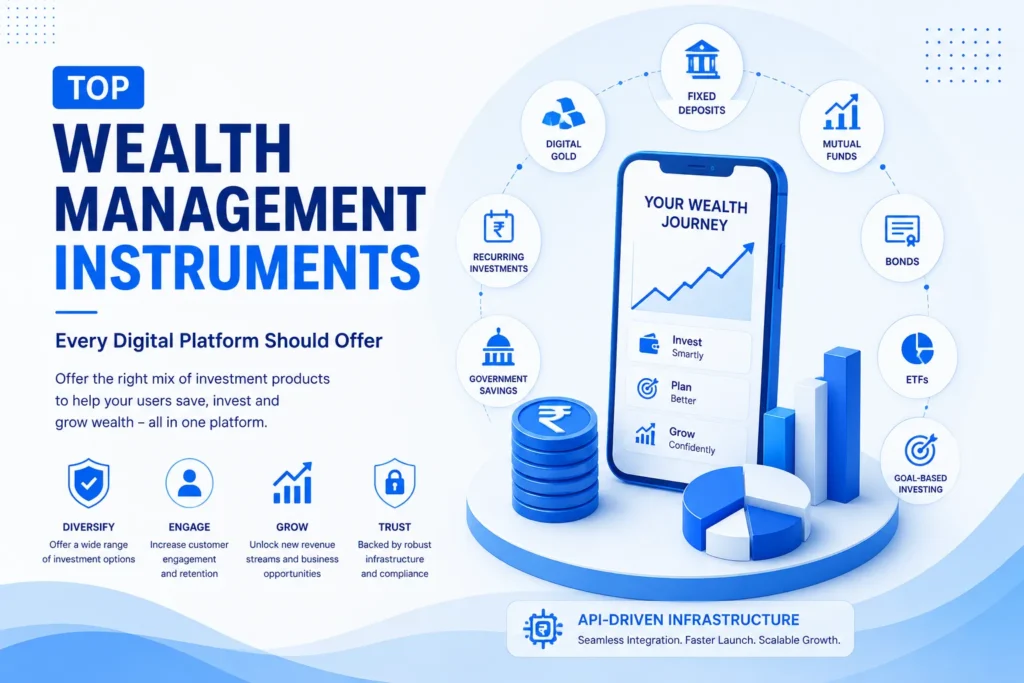
Top Wealth Management Instruments Every Digital Platform Should Offer

The wealth management industry has evolved beyond traditional banks and investment firms. Today, digital businesses—including fintechs, neobanks, payroll platforms, insurance companies, e-commerce marketplaces, and consumer apps—are integrating investment products directly into their customer journeys. This shift is powered by embedded finance, allowing businesses to offer wealth-building opportunities without becoming financial institutions themselves. However, choosing the right wealth management instruments is essential. The right mix of products helps businesses attract different customer segments while creating recurring engagement and new revenue opportunities. Here are the top wealth management instruments every digital platform should consider offering. 1. Fixed Deposits (FDs) Fixed Deposits remain one of the most trusted investment products worldwide. They appeal to users seeking stable, predictable returns with relatively low risk. Unlike market-linked investments, Fixed Deposits offer guaranteed interest over a predefined tenure, making them ideal for conservative investors and first-time savers. Key Benefits Guaranteed returns Capital preservation Flexible investment tenures Low investment risk Suitable for emergency and goal-based savings Why Digital Platforms Should Offer FDs Many customers already trust their banking, payroll, or financial apps. Adding Fixed Deposits allows users to grow savings without leaving the platform, increasing engagement and customer retention. 2. Digital Gold Digital Gold has become one of the fastest-growing investment products due to its accessibility and convenience. Instead of purchasing physical gold, users can buy fractional amounts online with secure storage provided by regulated partners. Digital Gold is especially attractive to younger investors because they can begin investing with relatively small amounts. Benefits Fractional investments High liquidity Safe digital storage Easy gifting Inflation hedge Digital Gold is commonly integrated into: Savings apps Reward programs E-commerce platforms Employee benefit applications Its flexibility makes it an excellent addition to modern digital wealth platforms. 3. Mutual Funds Mutual Funds allow investors to participate in professionally managed portfolios across equities, debt instruments, hybrid funds, and index funds. Rather than selecting individual securities, customers invest in diversified portfolios managed by experienced fund managers. Advantages Diversification Professional management Multiple risk categories SIP (Systematic Investment Plan) support Long-term wealth creation Mutual Funds are particularly valuable for users seeking long-term financial growth while minimizing the complexity of portfolio management. 4. Bonds Bonds are fixed-income securities that provide predictable returns over a defined period. Governments, corporations, and financial institutions issue bonds to raise capital, while investors earn regular interest payments. Benefits Stable income Lower volatility than equities Portfolio diversification Long-term financial planning Capital preservation Businesses serving conservative investors often include bonds as part of balanced investment portfolios. 5. Exchange Traded Funds (ETFs) Exchange Traded Funds combine diversification with the flexibility of stock market trading. Unlike Mutual Funds, ETFs can be bought and sold throughout market hours. Key Advantages Lower management costs Broad market exposure High liquidity Diversification Passive investment strategy As financial literacy grows, ETFs are becoming increasingly popular among younger investors seeking cost-effective portfolio diversification. 6. Recurring Investment Plans Recurring investment products encourage disciplined saving through automated monthly investments. Rather than requiring large one-time investments, users contribute fixed amounts regularly toward financial goals. Examples include: Monthly Digital Gold purchases Systematic Investment Plans (SIPs) Automated Fixed Deposit ladders Goal-based investment plans Automation significantly improves customer retention while helping users build wealth consistently over time. 7. Government Savings Products Government-backed investment schemes remain attractive due to their stability and sovereign backing. These instruments often appeal to: First-time investors Retirement planners Risk-averse individuals Long-term savers Depending on the market, businesses may integrate government savings products into their digital investment offerings to provide diversified options for users. 8. Goal-Based Investment Portfolios Modern investors rarely invest without purpose. Instead of choosing products individually, customers increasingly prefer investment journeys built around goals such as: Buying a home Retirement planning Children’s education Emergency funds Vacation savings Goal-based investing combines multiple wealth management instruments into personalized portfolios tailored to each user’s financial objectives. This approach improves user engagement by making investing more meaningful and outcome-focused. 9. Managed Investment Portfolios Many customers want investment opportunities without actively managing portfolios. Managed portfolios automatically allocate funds across multiple investment instruments based on: Risk profile Investment horizon Financial goals Market conditions These products simplify wealth management for users while offering digital platforms higher-value financial services. 10. Digital Cash Management Products Cash management has become an important part of modern wealth management. Customers increasingly expect their idle balances to generate returns instead of remaining unused. Digital platforms are responding by offering: Interest-bearing accounts Automated savings Sweep accounts Short-term investment options These products improve customer satisfaction while encouraging users to keep funds within the platform ecosystem. Choosing the Right Wealth Management Mix Not every platform needs to offer every investment product immediately. Businesses should select wealth management instruments based on: Customer Demographics Young professionals may prefer Digital Gold and Mutual Funds, while retirees often prioritize Fixed Deposits and Bonds. Risk Appetite Different customers have different investment preferences. Offering multiple risk categories allows businesses to serve broader audiences. Business Model A payroll platform may focus on recurring investments, while an e-commerce marketplace could emphasize Digital Gold and reward-based investing. User Experience Investment products should integrate seamlessly into the existing customer journey rather than feeling like standalone financial services. Why APIs Are Making Wealth Management More Accessible Launching investment products once required extensive regulatory approvals, complex infrastructure, and years of development. Today, API-driven financial infrastructure enables businesses to integrate wealth management instruments much faster. Using modern APIs, digital platforms can offer products such as: Fixed Deposits Digital Gold Mutual Funds Bonds Goal-based investing Portfolio management without building the entire financial ecosystem themselves. This allows businesses to focus on customer experience while relying on secure backend infrastructure for investment operations. The Future of Digital Wealth Management As embedded finance continues to expand, customers will increasingly expect investment opportunities wherever they manage their finances. Rather than visiting multiple financial institutions, users will invest directly through the digital platforms they already trust. Businesses that offer a diversified portfolio of wealth management instruments can improve customer engagement, strengthen loyalty, and unlock new revenue opportunities. Platforms like Finspring make this possible by providing API-driven

Scroll to Top
Good move, automating your backend!