Finspring

Fixed Deposit

Selling FDs
Fixed Deposit

Selling FDs Digitally Without Replacing Bank Apps or Branches

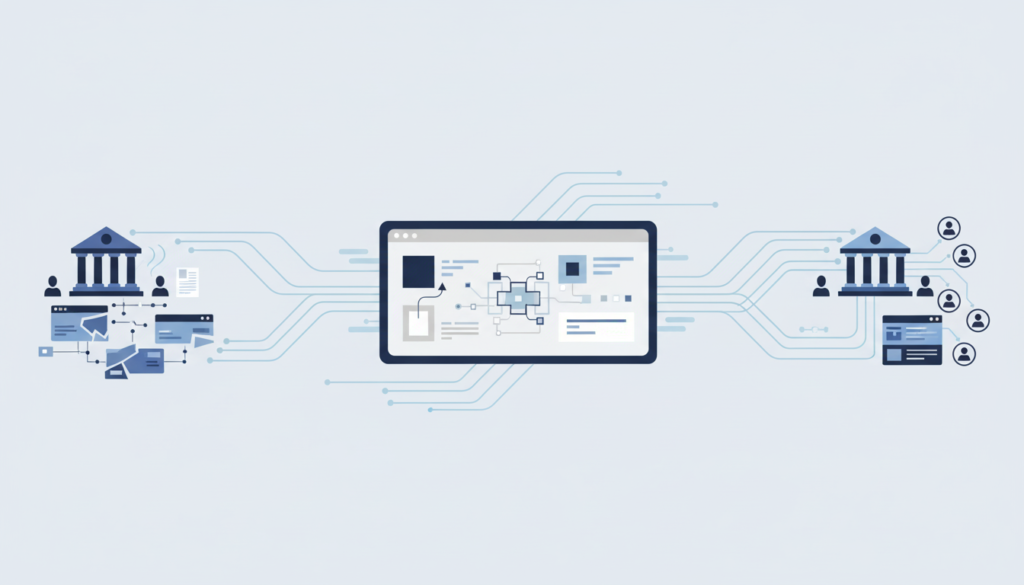
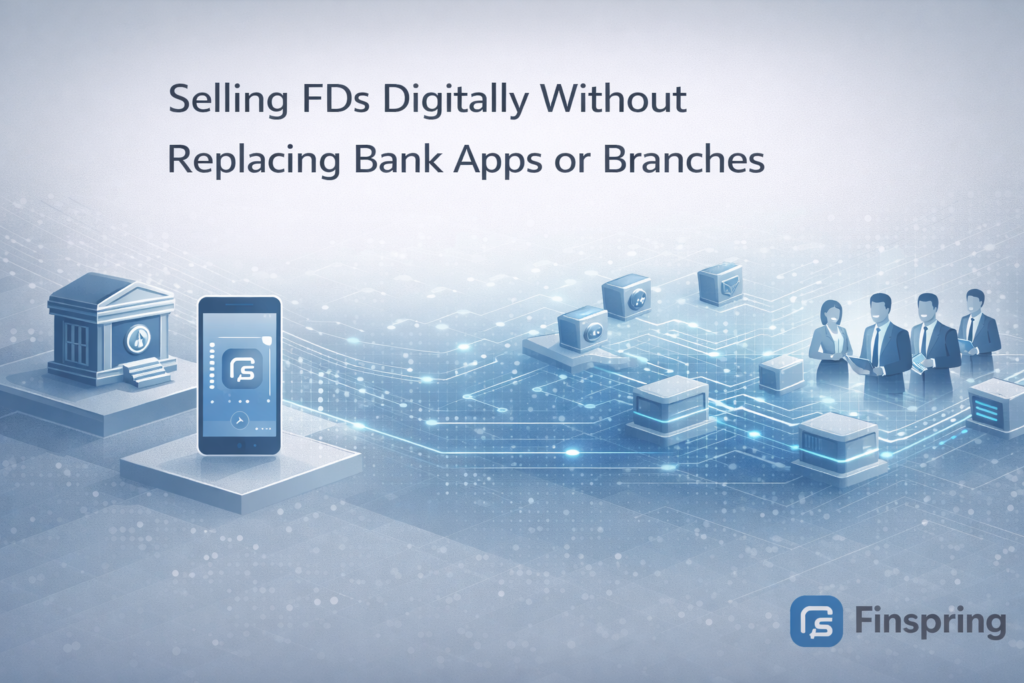
For many banks, digital transformation of fixed deposit distribution comes with a perceived trade-off. Either modernize aggressively and risk disrupting existing channels, or protect branches and bank apps at the cost of slower growth. This is a false choice. Banks are selling FDs digitally at scale without replacing their mobile apps, internet banking platforms, or branch networks. The key is not channel replacement, but channel enablement through aggregator-led distribution. This article explains how banks can digitize FD sales, expand reach, and improve efficiency while preserving their existing channels and customer relationships. Why Banks Hesitate to Digitize FD Distribution Fully Fixed deposits remain a core liability product, deeply embedded in branch workflows and bank-owned digital platforms. Banks hesitate to change this setup for several reasons: Branches still contribute a large share of FD volumes Bank apps are tightly coupled with core systems Compliance and governance concerns remain high Channel conflict fears discourage experimentation As a result, many banks treat digital FD distribution as an extension of their existing apps rather than a separate distribution layer. This limits scale. The Problem With App-Only and Branch-Only FD Distribution 1. Bank Apps Serve Existing Customers, Not New Reach Bank-owned apps are excellent for servicing existing customers. However, they rarely acquire net-new FD customers efficiently. Challenges include: Low discovery outside the bank’s ecosystem Limited presence in advisor-led sales journeys Dependence on the customer already holding a bank account This makes app-only FD growth incremental rather than expansive. 2. Branch Expansion Is Costly and Linear Branches provide trust but do not scale economically. Every additional branch or relationship manager increases: Fixed operating costs Training and compliance overhead Geographic limitations Branch-led growth scales linearly with cost, which constrains profitability. 3. Digital Does Not Mean Direct-to-Consumer Only Many banks equate digital distribution with direct-to-consumer acquisition. In reality, a large share of fixed deposits are sold through: Wealth managers Financial advisors Agents with long-term client relationships Ignoring these channels limits digital impact. The Alternative: Digital Distribution Without Channel Replacement The most effective FD distribution models today do not replace branches or bank apps. They sit alongside them. Aggregator-led FD distribution acts as an external digital layer that: Extends reach beyond bank-owned channels Enables agents and advisors digitally Feeds deposits back into the bank’s core systems This approach preserves existing channels while unlocking new ones. What an Aggregator-Led FD Model Actually Does An FD aggregator platform connects: Bank FD products and rate engines Agents, advisors, and wealth platforms Digital onboarding and booking workflows Instead of forcing banks to rebuild their apps or restructure branches, aggregators provide: A neutral distribution interface Standardized digital processes Centralized reporting and controls Banks remain product owners. Aggregators enable distribution. How Are Banks Selling FDs Digitally Without Replacing Their Apps 1. Banks Keep Their Primary Customer Interfaces In an aggregator model: Bank apps continue serving direct customers Branches continue servicing walk-in and relationship-based clients Aggregator-led distribution operates in parallel, not in conflict. Customers acquired via agents or platforms are still booked into the bank’s systems. 2. Agents Become Digital Without Becoming Bank Employees Instead of onboarding agents directly onto bank portals, banks distribute FDs through aggregator platforms that agents already use. This allows banks to: Avoid managing agent operations directly Reduce onboarding and training burden Scale distribution without internal headcount Agents sell digitally, but the bank does not need to build agent-facing apps. 3. Digital Onboarding Happens Outside the Core App Aggregator platforms handle: KYC verification Document collection Application validation Once complete, the confirmed FD is routed into the bank’s systems via secure integrations. This ensures: Clean data intake Faster processing Reduced operational load on bank apps Why This Model Works Better Than App Expansion Alone Lower Customer Acquisition Cost Banks avoid: Paid digital marketing escalation App install dependency Competing with fintech CAC dynamics Instead, they leverage existing trust networks through agents and advisors. Faster Time to Market Launching FD campaigns via bank apps often requires: App updates Testing cycles User adoption delays Aggregator-led distribution allows banks to: Launch or modify FD offerings centrally Push changes instantly across agent networks Respond quickly to fixed deposit rate changes No Channel Conflict Because aggregator-led distribution targets incremental demand, it does not cannibalize: Branch volumes App-based renewals Branches and apps continue to serve loyal customers. Aggregators bring new ones. Addressing Common Bank Concerns Will This Reduce App Engagement? No. App engagement is driven by existing customers. Aggregator-led FDs primarily bring: New-to-bank customers Deposits that would otherwise go to competing banks These customers may later be onboarded into bank apps. Does This Dilute Brand Control? Modern aggregator platforms preserve: Bank branding at the point of sale Mandatory disclosures Product-specific messaging Banks control the product rules. Aggregators execute distribution. Is Compliance Harder to Manage? In practice, compliance often improves. Aggregator platforms enforce: Standardized workflows Mandatory validations Complete audit logs This reduces manual exceptions common in branch-led processes. When This Model Makes the Most Sense Selling FDs digitally without replacing apps or branches is ideal when: Banks want nationwide reach quickly Fixed deposit rates are competitive and dynamic Agent-led distribution remains important Operational efficiency is a priority It is particularly effective for banks seeking FD growth without expanding physical infrastructure. How Finspring Enables This Distribution Model Finspring.ai is built to help banks scale FD distribution digitally without disrupting existing channels. It enables banks to: Distribute FDs through a large agent and platform network Maintain full control over products, rates, and compliance Integrate digitally without rebuilding bank apps Track performance through centralized dashboards Banks grow FD volumes while keeping branches and apps exactly where they are. The Bigger Shift in FD Distribution Strategy The future of fixed deposit growth is not about choosing between branches and digital. It is about building a layered distribution strategy where: Branches serve trust-heavy relationships Bank apps serve existing customers Aggregators unlock scalable external networks Each channel plays a distinct role. Conclusion Banks do not need to replace their apps or branches for selling FDs digitally at scale. Aggregator-led distribution allows banks to: Expand reach Lower acquisition
Future of Fixed Deposits
Fixed Deposit

The Future of Fixed Deposits: Aggregators, Agents, and Bank Platforms

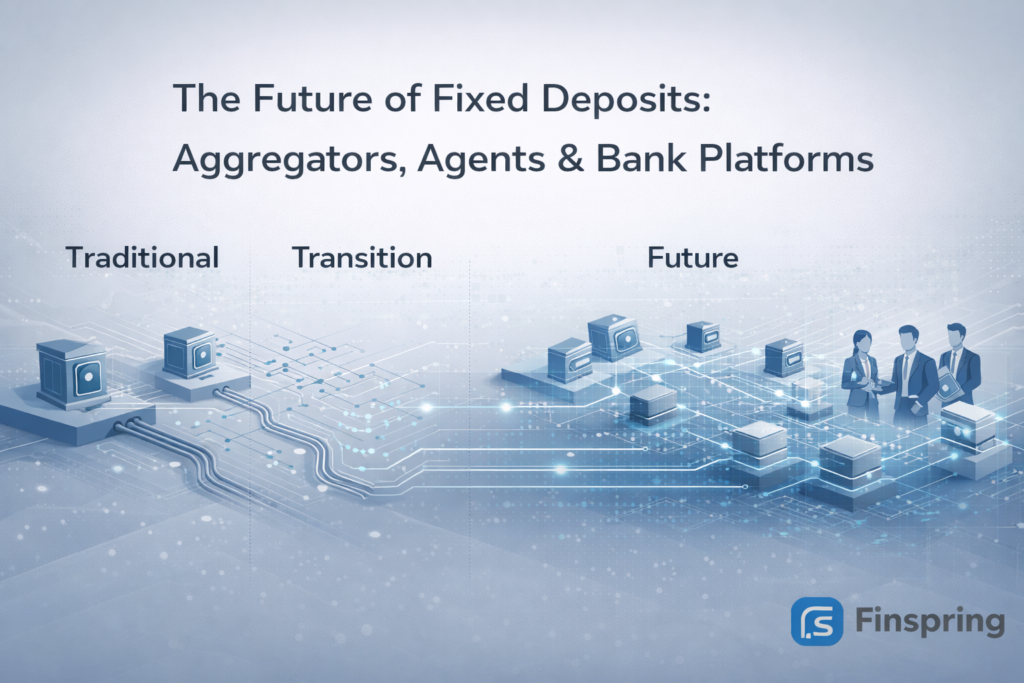
Fixed deposits have long been one of the most stable pillars of banking. They offer predictable returns, capital protection, and broad appeal across retail, HNI, and institutional customers. For decades, however, the way fixed deposits were distributed remained largely unchanged. That is no longer the case. As financial distribution becomes more digital, network-driven, and platform-centric, fixed deposits are entering a new phase of evolution. The future of fixed deposit growth will not be driven solely by branches or proprietary bank channels. It will be shaped by aggregators, agents, and bank platforms working together in a connected ecosystem. This article explores how that future is unfolding, why traditional models are being rethought, and what role each stakeholder plays in the next phase of fixed deposit distribution. Why Fixed Deposit Distribution Is Changing The fundamentals of fixed deposits have not changed. The environment around them has. Banks today face several structural pressures: Rising cost of distribution Slower branch-led growth Increasing competition on fixed deposit rates Digitally savvy customers expecting faster experiences Agents and advisors demanding better tools At the same time, customers are no longer confined to a single bank relationship. They compare rates, seek advice from independent advisors, and expect seamless digital journeys. These forces are pushing fixed deposits away from siloed, bank-centric distribution toward platform-driven networks. The Traditional Fixed Deposit Model and Its Limits Historically, banks controlled fixed deposit distribution end to end. How the Old Model Worked Banks acquired customers through branches or internal sales teams Agents were tied to specific institutions Technology systems were bank-specific Rate comparison was manual or opaque This model offered control, but it came with clear constraints. Structural Limitations Dimension Traditional Model Cost structure High fixed costs Speed Slow to scale Geographic reach Limited Agent productivity Constrained Rate responsiveness Delayed As competition intensified, these limitations became more visible. The Emergence of Aggregator-Led Fixed Deposits Distribution Aggregator platforms emerged to address these inefficiencies. An FD aggregator acts as a neutral digital layer connecting: Multiple banks Multiple agents and advisors Wealth and fintech platforms Instead of building and managing every distribution node, banks plug into an existing ecosystem. This shift does not remove banks from the equation. It repositions them. The New Roles in the Fixed Deposit Ecosystem The future of fixed deposits is defined by clearer role separation. 1. Banks: Product, Risk, and Governance Owners In the platform-driven model, banks focus on what they do best: Structuring fixed deposit products Managing balance sheet and liquidity Pricing and risk discipline Regulatory compliance Distribution becomes a scalable interface, not a fixed asset. 2. Aggregators: Distribution Infrastructure Providers Aggregators provide the connective tissue. They enable: Single-platform multi-bank access Standardized onboarding and workflows Real-time fixed deposit rate visibility Centralized reporting and auditability Aggregators turn fragmented distribution into reusable infrastructure. 3. Agents and Advisors: Trust and Relationship Engines Agents remain central to fixed deposit growth. Their value lies in: Trusted customer relationships Local and segment-specific reach Advisory-driven conversions Aggregator platforms enhance agent productivity instead of replacing it. Why Agents Will Remain Critical in the Future Despite digital growth, fixed deposits remain trust-heavy products. Customers still prefer: Known advisors Relationship-driven recommendations Human reassurance for capital protection products What changes is how agents operate. With aggregator platforms, agents gain: Access to multiple banks through one system Faster onboarding and execution Transparent rate comparison Centralized commission tracking This allows agents to scale without operational overload. Why Aggregators Will Become Core Infrastructure FD aggregators are no longer just intermediaries. They are becoming infrastructure layers for the deposit ecosystem. Key Reasons Distribution Is Now a Network ProblemScale comes from connecting networks, not expanding branches. Speed and Flexibility MatterAggregators allow banks to respond quickly to changes in fixed deposit rates and demand. Cost Efficiency Is StructuralOne integration unlocks many channels, keeping customer acquisition costs under control. Governance Can Be Embedded DigitallyModern platforms enforce rules, disclosures, and audit trails programmatically. Bank Platforms vs Aggregator Platforms Some banks attempt to build proprietary platforms. While effective for owned channels, these often struggle to scale externally. Dimension Bank-Owned Platform Aggregator Platform Bank coverage Single bank Multiple banks Agent adoption Limited High Scalability Linear Network-driven Integration effort High Low Neutrality No Yes In practice, the future lies in interoperability, not exclusivity. How Fixed Deposits Benefit from Platform-Led Distribution Platform-led models improve fixed deposit outcomes across the board. For Banks Lower cost of liability acquisition Faster market expansion Better rate competitiveness Improved data visibility For Agents Higher productivity Better client outcomes Faster closures More predictable earnings For Customers Transparent comparison of fixed deposit rates Faster booking Reduced documentation friction Access to multiple banks without complexity Technology as the Foundation of the Future The future fixed deposit ecosystem is API-driven. Key capabilities include: Real-time product and rate APIs Digital KYC and onboarding Automated compliance checks Secure transaction execution Unified analytics and reporting Without this foundation, aggregation does not scale. How Finspring Fits Into the Future Finspring.ai is designed to support this evolving ecosystem. It enables: Banks to expand FD distribution without expanding operational complexity Agents to access multiple banks through a single platform Wealth and fintech platforms to add fixed deposits seamlessly Centralized governance, reporting, and control Finspring acts as infrastructure, not a competing channel. The Long-Term Direction of Fixed Deposit Growth Fixed deposits are not becoming obsolete. They are becoming platform-native. The future will be defined by: Network-led distribution Agent-empowered workflows Aggregator-driven infrastructure Bank-controlled product and risk layers Banks that embrace this model gain flexibility, speed, and cost advantages. Those that resist it face rising costs and shrinking reach. Conclusion The future of fixed deposits will not be built by banks alone, agents alone, or platforms alone. It will be built at the intersection of all three. Aggregators provide the infrastructure, agents provide trust, and banks provide the products and governance. Together, they form a scalable, resilient distribution model suited to modern financial markets. Fixed deposits may be a traditional product, but their future is unmistakably platform-driven. Read more about FD Aggregation, here.

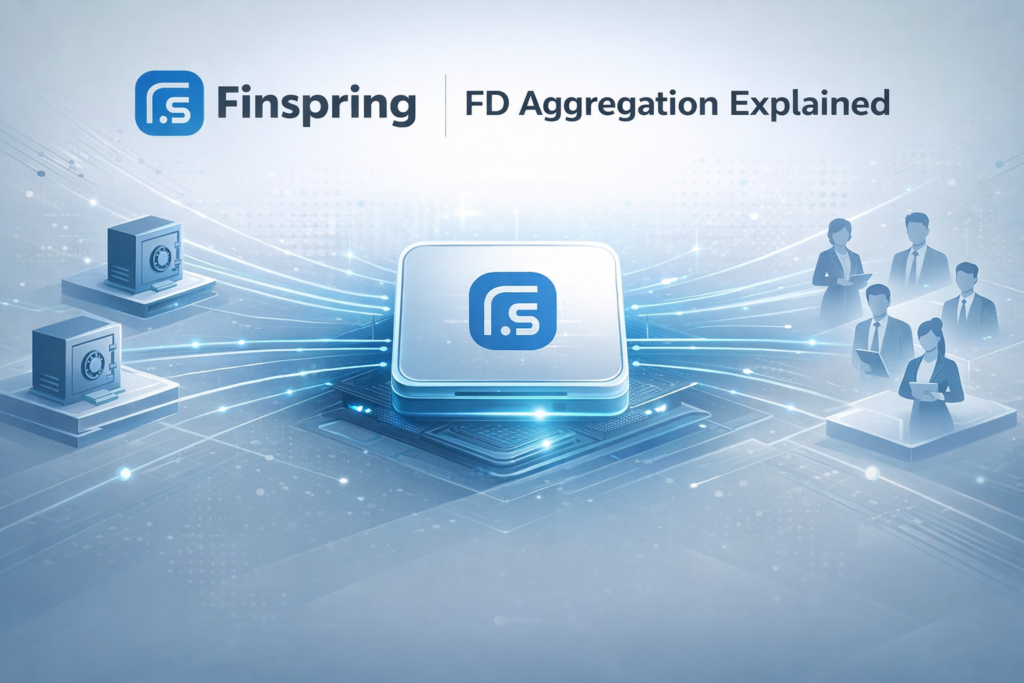
FD Aggregation Explained
Fixed Deposit

FD Aggregation Explained: How Fixed Deposit Distribution Works in the Platform Era

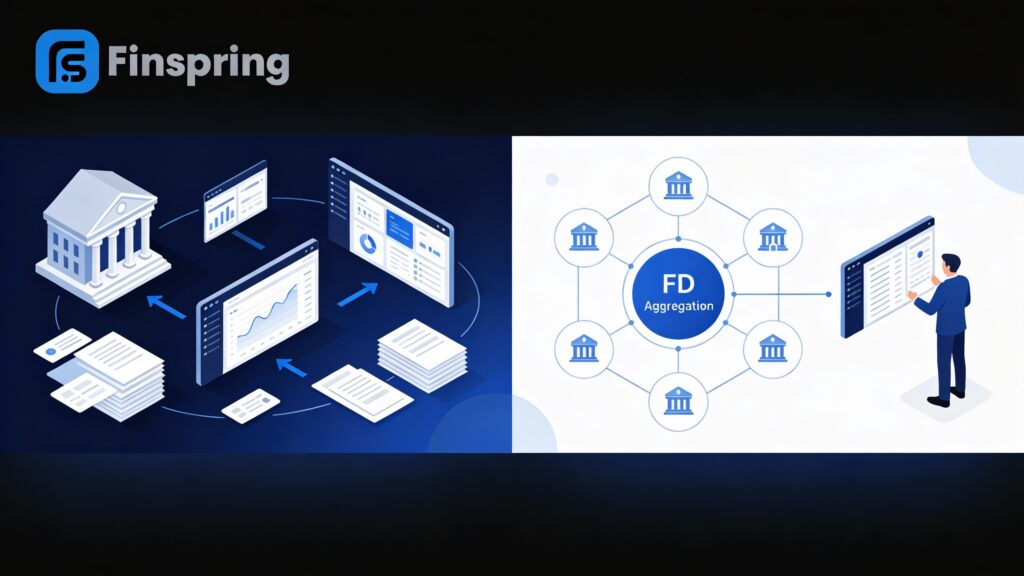
Fixed deposits remain one of the most trusted financial products globally. They offer capital protection, predictable returns, and broad appeal across retail, HNI, and institutional investors. Yet, while the product itself has remained stable, the way fixed deposits are distributed has changed significantly. At the center of this change is FD aggregation. It has emerged as a modern distribution model that connects banks, agents, wealth platforms, and customers through a single digital layer. It replaces fragmented, bank-by-bank processes with unified access, standardized workflows, and scalable infrastructure. This article explains FD aggregation in simple terms, how it works, why it matters, and how it is reshaping fixed deposit distribution. What Is FD Aggregation? FD aggregation refers to a platform-based model where fixed deposit products from multiple banks are made available through a single system to multiple distribution partners such as agents, wealth managers, fintech platforms, and advisors. Instead of each distributor onboarding separately with every bank, the aggregators allows: One platform integration Access to multiple banks Standardized onboarding and workflows Centralized reporting and controls In short, FD aggregation decouples distribution from individual bank systems while preserving compliance and control. Why FD Aggregation Exists Traditional fixed deposit distribution relied on direct relationships between banks and distributors. While functional, this model introduced structural inefficiencies as scale increased. Key Limitations of the Traditional Model Separate onboarding for each bank Multiple dashboards and reporting formats Manual comparison of fixed deposit rates Operational delays and documentation friction Limited scalability for agents and banks As digital distribution expanded and customer expectations shifted toward faster, simpler experiences, these limitations became harder to ignore. Aggregation emerged as a solution to these structural constraints. How FD Aggregation Works At a high level, FD aggregators functions as a neutral infrastructure layer between banks and distributors. Step-by-Step FD Aggregation Flow Banks integrate with the aggregator platformFixed deposit products, rates, rules, and eligibility criteria are connected via APIs. Distributors access the platformAgents, wealth managers, or platforms onboard once and gain access to multiple banks. Products are displayed in a unified interfaceDistributors can view, compare, and recommend fixed deposits across banks. Digital onboarding and bookingKYC, documentation, and booking are handled through standardized workflows. Centralized tracking and reportingApplication status, commissions, and maturity data are tracked in one place. This structure enables many-to-many connectivity without exponential operational complexity. FD Aggregation vs Traditional FD Distribution Aspect Traditional Model Aggregation Model Bank access One bank at a time Multiple banks Distributor onboarding Repeated One-time Rate comparison Manual Real-time Workflows Fragmented Standardized Scalability Limited High Cost efficiency Low High This shift is not incremental. It is architectural. Who Uses FD Aggregation Platforms? FD aggregation serves multiple stakeholders across the financial ecosystem. 1. Banks Banks use aggregators to: Expand distribution without opening branches Access large agent and advisor networks Reduce cost of acquiring deposits Compete transparently on fixed deposit rates 2. Agents and Wealth Managers Agents benefit from: Single-platform access to multiple banks Faster onboarding and execution Better product choice for clients Centralized commission tracking 3. Wealth and Fintech Platforms Wealth platforms use aggregation to: Add fixed deposits without direct bank integrations Complete asset allocation offerings Improve retention during volatile markets Retain idle or surplus client cash Why FD Aggregation Matters Strategically FD aggregation is not just about convenience. It changes the economics and scalability of fixed deposit distribution. 1. Lower Cost of Distribution Banks avoid: Hiring and managing large sales teams Expanding physical infrastructure Duplicating integrations for each partner Costs shift from fixed to variable and outcome-driven. 2. Faster Time to Market New fixed deposit products or rate changes can be launched instantly across networks without long rollout cycles. 3. Better Customer Outcomes Customers benefit from: Transparent rate comparison Faster booking Reduced documentation friction Access to multiple banks without opening multiple relationships The Role of Technology in Aggregation FD aggregation platforms are inherently technology-driven. Key enablers include: API banking for real-time product and rate updates Digital KYC and verification services Rule-based validation and compliance Secure transaction processing Centralized analytics and reporting Without these capabilities, aggregation would not scale. Governance and Compliance in FD Aggregation A common concern is whether aggregation compromises control. In practice, modern FD aggregation platforms often improve governance by embedding controls directly into workflows. Banks can enforce: Eligibility rules Mandatory disclosures Audit trails Role-based access Transaction-level visibility Every action is logged and traceable, making aggregator-led distribution regulator-friendly. When FD Aggregation Makes the Most Sense Aggregation is particularly effective when: Banks seek nationwide or multi-region reach Distributors work with multiple client segments Fixed deposit rates change frequently Digital onboarding is a priority Cost efficiency matters at scale In competitive deposit markets, aggregation often becomes a necessity rather than an option. How Platforms Like Finspring Enable FD Aggregation Finspring.ai is built as an FD aggregation platform designed for scale, compliance, and simplicity. It enables: Single-platform access to multiple banks Standardized onboarding and booking workflows Real-time fixed deposit product and rate visibility Centralized reporting and analytics Governance-aligned distribution This allows banks, agents, and wealth platforms to participate in fixed deposit distribution without operational overload. The Bigger Shift: From Products to Platforms Aggregation reflects a broader transformation in financial services. Distribution is moving from: Institution-owned channelsto Platform-enabled networks Banks that embrace this shift gain speed, flexibility, and cost advantages. Those that resist it face rising acquisition costs and limited reach. Conclusion FD aggregation explains how fixed deposits are distributed in the platform era. By separating distribution from individual bank systems and consolidating access through a single layer, aggregation enables: Scalable growth Lower costs Better advisory quality Faster execution Stronger compliance As fixed deposits continue to play a central role in portfolios, the infrastructure that distributes them will increasingly define who grows faster and more efficiently. FD aggregation is no longer an emerging concept.It is the foundation of modern fixed deposit distribution. Read why wealth platforms are adding fixed deposit products via aggregators, here.

Fixed Deposits via Aggregators
Fixed Deposit

Why Wealth Platforms Are Adding Fixed Deposits via Aggregators

How Fixed Deposits Are Becoming a Strategic Product for Modern Wealth Platforms Wealth platforms were once built almost exclusively around market-linked products. Mutual funds, equities, PMS, and alternative investments dominated dashboards and client conversations. That is changing. Across India and global markets, wealth platforms are increasingly adding fixed deposits to their product mix. But instead of building direct bank integrations, most are choosing to offer FDs via aggregator platforms. This shift is deliberate. Fixed deposits are no longer viewed as low-engagement legacy products. They are now a strategic layer that improves retention, wallet share, and platform stickiness. The Changing Role of Fixed Deposits in Wealth Management Fixed deposits used to sit outside wealth platforms because: Today, the context is different. Clients want: Fixed deposits meet these needs, especially for conservative, high-value, and liquidity-focused clients. Why Wealth Platforms Cannot Ignore Fixed Deposits Anymore 1. Clients Expect Asset Allocation, Not Product Silos Modern investors do not think in products. They think in allocation. Wealth platforms are expected to offer: Without fixed deposits, platforms leave a gap in the low-risk allocation bucket. 2. Fixed Deposits Improve Retention During Market Volatility During market downturns: Fixed deposits act as a stabilizer, keeping clients active on the platform even when risk appetite declines. 3. Idle Cash Is a Missed Opportunity Wealth platforms often hold: Without fixed deposits, this cash leaks out to banks. With FD offerings, platforms retain assets and relationships. Why Aggregators Are the Preferred Route for Adding FDs While the strategic case for FDs is strong, execution matters.Most wealth platforms choose aggregators because direct bank integrations create friction. Key Reasons Wealth Platforms Use FD Aggregators 1. Single Integration, Multiple Banks Aggregator platforms provide: Model Integration Effort Direct bank integrations High and repetitive Aggregator integration One-time This allows wealth platforms to go live faster and scale wider. 2. Broader Fixed Deposit Choice for Clients Clients compare: Aggregators enable wealth platforms to offer choice without bias toward a single institution. This improves trust and conversion. 3. Faster Time to Market Building FD distribution internally requires: Aggregator platforms already have this infrastructure in place, reducing launch timelines from months to weeks. How Fixed Deposits Strengthen the Wealth Platform Value Proposition A. Better Portfolio Construction FDs allow advisors to: This positions the platform as allocation-driven, not product-pushing. B. Improved Client Trust and Stickiness Offering fixed deposits signals: Clients are more likely to consolidate assets on platforms that support both growth and safety. C. Increased Revenue Per Client While FD margins may be lower than equity products, they: Low-margin products can still be high-impact strategically. Aggregator-Led FD Distribution vs Direct Bank Tie-Ups Dimension Direct Bank FD Aggregator-Led FD Bank choice Limited Multiple Integration effort High Low Operational burden Platform-owned Aggregator-managed Time to launch Slow Fast Scalability Linear High For wealth platforms focused on speed and flexibility, aggregators are the logical choice. Compliance and Control Are Not Compromised A common concern is regulatory exposure. Modern FD aggregators embed: This allows wealth platforms to stay compliant without building heavy internal systems. Why Fixed Deposits via Aggregators Are a Low-Risk Expansion From a platform perspective: Wealth platforms distribute FDs without taking banking risk, making this a low-risk product addition. When FD Aggregation Makes the Most Sense for Wealth Platforms FD aggregation is especially valuable for platforms serving: In these segments, fixed deposits are not optional. They are expected. How Finspring Enables Wealth Platforms to Offer FDs Finspring.ai enables wealth platforms to add fixed deposits seamlessly by: This makes fixed deposits a strategic extension, not an operational headache. The Bigger Strategic Shift Wealth platforms are evolving into financial ecosystems, not just investment apps. Adding fixed deposits via aggregators: In a competitive landscape, platforms that ignore fixed deposits risk becoming incomplete. Conclusion Fixed deposits are no longer peripheral to wealth platforms. They are a core building block of modern portfolio management. By using aggregator platforms, wealth companies can add FDs quickly, compliantly, and at scale without compromising their focus on innovation and client experience. For wealth platforms aiming to become long-term financial hubs, adding fixed deposits via aggregators is not just logical. It is inevitable. Read how banks achieve network-led FD distribution, here.

FD Distribution
Fixed Deposit

From Bank-Centric to Network-Led FD Distribution: An Aggregator Playbook

How Banks Are Rethinking Fixed Deposit Growth in a Platform-Driven World For decades, fixed deposit distribution followed a predictable model. Banks owned the customer, controlled the channel, and pushed deposits through branches, relationship managers, and proprietary digital platforms. That model is now under pressure. Rising distribution costs, limited geographic reach, and changing customer behavior are forcing banks to rethink how fixed deposits are sold. The result is a clear industry shift: from bank-centric FD distribution to network-led distribution powered by aggregators. This article breaks down why this transition is happening, how aggregator-led models work, and what banks can learn from a proven FD aggregation playbook. Understanding the Bank-Centric FD Distribution Model In a bank-centric model, the bank controls every layer of distribution: Strengths of the Traditional Model Structural Limitations Aspect Bank-Centric Model Cost structure High fixed costs Speed to market Slow Geographic reach Limited Scalability Linear As competition for deposits intensifies, these limitations become more visible. What Network-Led FD Distribution Looks Like Network-led distribution flips the model. Instead of banks building and managing every distribution node, they connect to existing networks of agents, advisors, and wealth managers through aggregator platforms. In this model: The result is a modular, scalable FD ecosystem. Why Banks Are Moving Toward Network-Led Models 1. Distribution Is No Longer a Competitive Advantage In today’s market, distribution is infrastructure, not differentiation. Banks win on: Aggregator platforms allow banks to outsource distribution mechanics without giving up strategic control. 2. Customer Trust Lives With Advisors, Not Institutions For fixed deposits, trust is critical. Many customers still rely on: Network-led distribution allows banks to tap into this trust instead of trying to recreate it digitally or through branches. 3. Faster Reach Without Capital Expansion Opening branches or hiring sales teams is capital-intensive. Aggregator-led networks offer: All without long setup cycles. The Aggregator Playbook for Network-Led FD Distribution Step 1: Decouple Distribution From Core Banking The first shift is conceptual. Banks must separate: from: This decoupling makes external distribution possible. Step 2: Standardize FD Products for Platform Distribution Aggregator platforms work best when FD products are: Product Element Platform Requirement Tenure Configurable Rates Real-time Eligibility Rule-based Documentation Standardized Standardization allows products to scale across networks without friction. Step 3: Enable Single-Platform Multi-Bank Access From an agent’s perspective, simplicity matters. Aggregator platforms provide: This increases agent adoption and ensures banks are visible where decisions are made. Step 4: Maintain Control Through Rules, Not Presence In a network-led model, control is enforced through: Banks no longer need physical presence to maintain governance. Step 5: Measure Performance at the Network Level Network-led distribution produces richer data. Banks can track: This feedback loop helps refine products and pricing faster. Bank-Centric vs Network-Led FD Distribution Dimension Bank-Centric Network-Led Control Direct Rule-based Cost High fixed Variable Reach Limited Nationwide Speed Slow Fast Scalability Linear Exponential The network-led model does not replace banks. It amplifies them. Addressing Common Bank Concerns Loss of Brand Visibility Aggregator platforms preserve bank branding at the point of sale while expanding reach. Compliance Risk Modern platforms embed compliance directly into workflows, often improving adherence. Channel Conflict Network-led distribution complements, rather than replaces, existing channels by serving incremental demand. Why Aggregators Are Becoming Strategic Infrastructure FD aggregators are evolving from intermediaries to infrastructure partners. They provide: Banks that treat aggregators as short-term channels often underutilize their value. How Finspring Enables the Network-Led Model Finspring.ai is designed to support the shift from bank-centric to network-led FD distribution by: This allows banks to expand fixed deposit reach without expanding operational complexity. The Long-Term Strategic Impact Network-led FD distribution changes how banks think about growth. It enables: Over time, banks that embrace this model gain structural advantages over those that rely solely on owned channels. Conclusion The future of fixed deposit distribution is not owned by a single institution. It is built on networks. By moving from a bank-centric mindset to a network-led approach, banks can scale FD growth faster, cheaper, and more flexibly. Aggregator platforms provide the playbook and the infrastructure to make this transition work. For banks navigating competitive deposit markets, the question is no longer whether to adopt network-led distribution, but how quickly. Read how banks achieve Low-CAC FD Growth, here.

FD Growth
Fixed Deposit

Low-CAC FD Growth: Why Aggregator-Led Distribution Works

How Banks Scale Fixed Deposit Volumes Without Inflating Acquisition Costs Customer acquisition cost has quietly become one of the biggest pressure points for banks distributing fixed deposits. Branch expansion is expensive, digital ads are increasingly inefficient, and direct sales teams scale linearly with cost. Yet some banks are growing fixed deposit volumes faster without a proportional increase in CAC. The difference is not marketing creativity.It is distribution architecture. Aggregator-led FD distribution has emerged as one of the most reliable ways to achieve low-CAC fixed deposit growth while maintaining control, compliance, and visibility. Why Traditional FD Distribution Drives High CAC Before understanding why aggregators work, it helps to examine why conventional FD distribution models struggle. Branch-Centric Distribution Direct Digital Acquisition In-House Sales Teams Channel CAC Characteristics Branches High fixed and operational cost Paid digital Volatile and inflationary Internal sales Headcount-dependent In all three cases, CAC rises as banks try to grow faster. What Aggregator-Led FD Distribution Changes FD aggregators introduce a different model. Instead of banks acquiring customers directly, they plug into an existing distribution network of: These agents already have: Banks gain access without paying to create that demand from scratch. How Aggregator Models Lower CAC Structurally Low-CAC growth through aggregators is not accidental. It is built into the model. 1. Shared Demand Instead of Paid Demand Aggregators do not generate demand via ads.They aggregate existing demand from agents and advisors. This eliminates: Banks pay for outcomes, not eyeballs. 2. One Integration, Multiple Distribution Channels With aggregator-led distribution: Model Cost to Add New Agent Direct bank onboarding High Aggregator onboarding Near zero This creates compounding efficiency as scale increases. 3. Relationship-Led Conversions Improve Efficiency Fixed deposits are trust-heavy products. Customers prefer to place deposits through: Aggregator platforms enable these relationships digitally, leading to: Higher conversion directly reduces CAC. The CAC Math Behind Aggregator-Led FD Growth Traditional CAC includes: Aggregator-led CAC mainly includes: Cost Component Traditional Model Aggregator Model Marketing High Minimal Sales Fixed Variable Ops Repetitive Centralized CAC predictability Low High This shifts CAC from a fixed burden to a controllable variable. Why Aggregators Scale Better Than Bank-Owned Channels Distribution Scales Without Headcount Aggregator platforms allow banks to grow FD volumes without: The distribution layer scales independently of bank operations. Faster Market Penetration Aggregators already operate across: Banks can: Speed itself reduces acquisition inefficiencies. The Role of Technology in Sustaining Low CAC Aggregator-led distribution only works when supported by strong infrastructure. Key enablers include: This reduces manual intervention, which is a hidden CAC driver. Why Low CAC Does Not Mean Low Control A common misconception is that lower CAC comes at the cost of governance. In reality, modern FD aggregators allow banks to: Low CAC is achieved through efficiency, not loss of oversight. Agent Incentives Align Naturally With Bank Objectives Aggregator platforms align incentives cleanly: There is no incentive to inflate leads or push unsuitable products. This alignment further protects CAC from inefficiencies. When Aggregator-Led Distribution Makes the Most Sense Aggregator models work best for: They are especially effective in competitive fixed deposit rate environments where speed and reach matter. How Finspring Enables Low-CAC FD Growth Finspring.ai is built to support low-CAC FD distribution by: This allows banks to grow fixed deposit volumes without building costly distribution machinery internally. The Strategic Advantage of Low-CAC FD Growth Lower CAC does more than reduce costs. It allows banks to: Over time, this creates a structural advantage that branch-led or ad-led models struggle to match. Conclusion Low-CAC FD growth is not a marketing tactic. It is a distribution decision. Aggregator-led FD distribution works because it: For banks looking to grow fixed deposits in a cost-conscious, competitive environment, aggregator-led distribution is no longer an alternative. It is the most efficient path forward. Read about the roles of APIs in FD aggregator platforms, here.

API Banking
Fixed Deposit

The Role of APIs in FD Aggregator Platforms

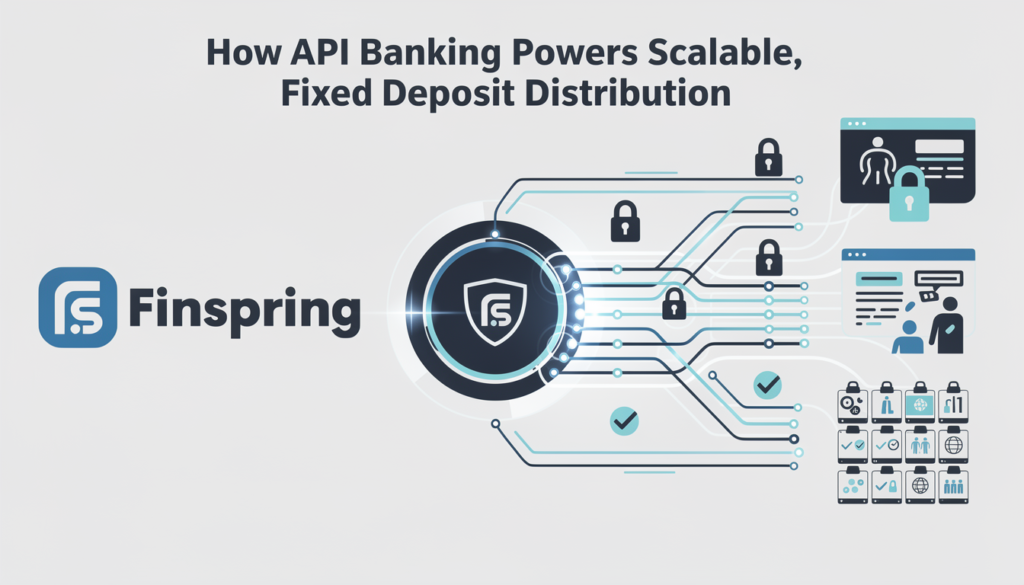
How API Banking Powers Scalable, Secure Fixed Deposit Distribution FD aggregator platforms have emerged as a critical distribution layer between banks, agents, and customers. While the user-facing experience often looks simple, the real engine behind this scalability is invisible. That engine is API banking. APIs enable FD aggregator platforms to connect with multiple banks, standardize workflows, surface real-time fixed deposit data, and execute transactions securely at scale. Without APIs, aggregator-led distribution would not be operationally viable. This article explains the role APIs play in FD aggregator platforms, why they matter for banks and agents, and how they enable faster, more reliable fixed deposit distribution. What Is API Banking in the Context of FD Aggregators? API banking refers to the use of secure, programmatic interfaces that allow systems to communicate with each other in real time. In FD aggregation, APIs connect: Instead of manual uploads or file-based integrations, APIs allow data and actions to move instantly between systems. Why FD Aggregator Platforms Are API-First by Design FD aggregators operate in a multi-bank environment. Each bank has: APIs act as the translation layer that normalizes these differences into a single, consistent workflow. Without APIs: With APIs: Core API Functions in FD Aggregator Platforms 1. Fixed Deposit Product and Rate APIs One of the most critical API functions is fetching live product data. APIs allow aggregator platforms to: Without APIs With APIs Manual rate updates Real-time rate sync Risk of outdated data Always current Delayed campaigns Instant launches This is essential in a market where fixed deposit rates change frequently. 2. Customer and Agent Onboarding APIs Onboarding is often the biggest friction point in deposit distribution. APIs integrate: This allows FD aggregators to offer: For agents, this means more customers onboarded per day. For banks, it means cleaner, compliant data intake. 3. FD Booking and Transaction APIs Once a customer selects a fixed deposit, APIs handle: This removes the need for: Step API Role Application submission Secure data push Validation Rule-based checks Booking Real-time execution Confirmation Instant response How APIs Enable Single-Platform Multi-Bank Access From an agent’s perspective, an FD aggregator feels like one platform. Under the hood, APIs are: This abstraction is what allows agents to access multiple banks without learning multiple systems. APIs and Compliance Control A common concern with aggregator platforms is governance. APIs help banks maintain control by enabling: Every API call can be: This makes aggregator-led distribution auditable and regulator-friendly. Reporting and Analytics Through APIs Beyond transactions, APIs also power reporting. Aggregator platforms use APIs to: Reporting Dimension API Contribution Application funnel Status APIs Rate performance Product APIs Agent productivity Activity APIs Revenue tracking Settlement APIs This data is critical for banks optimizing fixed deposit distribution strategies. Why APIs Improve Speed to Market Launching a new fixed deposit product traditionally requires: With APIs: This agility allows banks to respond quickly to market changes in fixed deposit rates without operational delays. Scalability Without Operational Complexity APIs allow FD aggregators to scale in three directions simultaneously: And they do so without: This is why aggregator platforms can grow rapidly while maintaining stability. Security and Reliability of API-Led FD Platforms Modern API banking follows strict security standards: For FD aggregators, this ensures: Security is not a feature add-on. It is built into the API layer. What Banks Should Look for in API-Driven FD Aggregators Banks evaluating aggregator platforms should assess: Strong API design is a predictor of long-term platform viability. How Finspring Uses APIs to Power FD Aggregation Finspring.ai is built as an API-first FD aggregation platform. Its architecture enables: By using APIs as core infrastructure, Finspring allows banks to scale fixed deposit distribution without compromising control or reliability. The Bigger Picture FD aggregation is not just a distribution shift. It is an infrastructure shift. At the center of this shift is API banking, enabling: As fixed deposits continue to be a core liability product, the platforms distributing them will increasingly be judged by the strength of their API foundations. Conclusion APIs are the backbone of FD aggregator platforms. They make multi-bank access possible, ensure real-time fixed deposit data, and enable scalable, compliant distribution. For banks, agents, and platforms alike, API banking is not optional infrastructure. It is the foundation that allows fixed deposit ecosystems to function at speed and scale. Read how FD Aggregators help Agents reach more customers faster, here.

FD Aggregators
Fixed Deposit

How FD Aggregators Help Agents Reach More Customers Faster

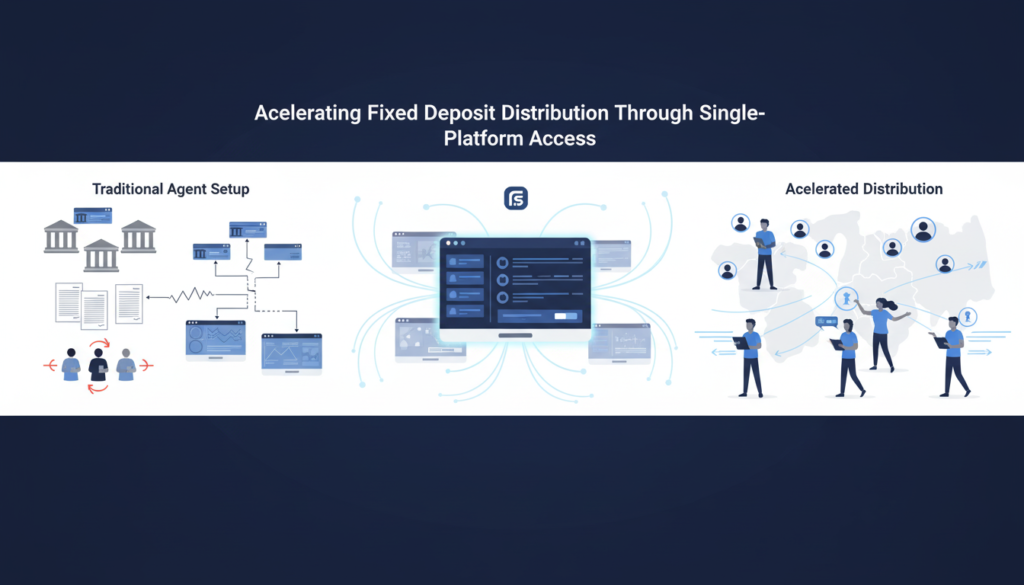
Accelerating Fixed Deposit Distribution Through Single-Platform Access For agents and wealth distributors, speed and reach define success. The ability to engage more customers, close more applications, and manage portfolios efficiently has become far more important than simply having access to a single bank’s products. As fixed deposit distribution becomes increasingly competitive, agents are turning to FD aggregators to overcome the limitations of traditional bank-by-bank models. Aggregator platforms enable agents to reach more customers faster by simplifying access, improving conversion rates, and removing operational bottlenecks. This article explains how FD aggregators transform agent productivity and why they are becoming a critical layer in modern fixed deposit distribution. The Traditional Agent Bottleneck Historically, agents distributed fixed deposits through direct bank relationships. While familiar, this approach introduced structural friction that limited scale. Common Challenges Agents Faced As customer expectations evolved toward faster, digital-first experiences, these constraints became increasingly visible. What Is an FD Aggregator? An FD aggregator is a neutral platform that connects multiple banks, multiple agents, and digital workflows into a single system. From an agent’s perspective, it replaces fragmented bank portals with: This unified structure fundamentally changes how agents operate. How FD Aggregators Help Agents Reach More Customers 1. Faster Client Onboarding Speed is the first advantage. FD aggregators standardize onboarding processes across banks, allowing agents to submit applications digitally without repeating documentation for each institution. Result: This allows agents to serve more customers using the same time and resources. 2. Real-Time Access to Fixed Deposit Products Agents using aggregators can instantly view: This eliminates the need for manual checks across multiple bank systems. Distribution Model Time to Compare Rates Direct bank portals High Manual coordination Very high FD aggregator Near-instant Faster comparisons lead to faster decisions and quicker closures. 3. Broader Customer Coverage Without Geographic Limits Traditional agent distribution is often tied to physical branches or regional bank partnerships. FD aggregators remove this dependency by: Agents can now reach customers across cities and regions without expanding physical presence. Why Single-Platform Access Improves Conversion Reduced Customer Drop-Off Every additional step in a process increases the risk of abandonment. Aggregator platforms reduce: This streamlined experience keeps customers engaged until completion. Better Client Confidence Clients are more likely to proceed when agents can: Access to multiple banks through one platform improves advisory credibility. Aggregators vs Traditional Distribution: Agent Impact Factor Traditional Model Aggregator Model Banks accessible One or few Multiple Systems used Many One Rate comparison Manual Real-time Customer reach Limited Expanded Scalability Low High This difference directly affects how many customers an agent can serve in a given period. How Aggregators Increase Agent Productivity Higher Output Per Agent By reducing non-selling activities such as: FD aggregators allow agents to focus on: One agent can now manage a larger customer base without compromising service quality. Centralized Reporting and Tracking Agents benefit from: Metric Aggregator View Submitted applications ✓ Confirmed fixed deposits ✓ Pending actions ✓ Earnings summary ✓ This clarity enables better planning and follow-ups. Impact on Customer Experience From the customer’s perspective, aggregator-led distribution feels: Customers benefit from: This improves satisfaction and increases referral potential. Why Banks Support Agent-Led Aggregator Distribution FD aggregators do not only benefit agents. Banks gain access to: Importantly, banks can scale distribution without expanding internal sales teams or branches. Where FD Aggregators Deliver the Most Value FD aggregator platforms are particularly effective when: In such environments, aggregators outperform traditional distribution models. How Finspring Enables Faster Customer Reach for Agents Finspring.ai is designed as a bank-first, agent-friendly FD aggregation platform. It enables: By removing operational friction, Finspring allows agents to scale customer outreach efficiently while helping banks grow fixed deposit volumes. The Bigger Shift in FD Distribution Agents today are no longer limited by physical reach or institutional silos. The combination of: is redefining how fixed deposits are sold. FD aggregators are not just tools for convenience. They are infrastructure for scale. Conclusion FD aggregators help agents reach more customers faster by eliminating fragmentation, improving access to fixed deposit products, and streamlining the entire distribution journey. With a single platform, agents can: For banks and agents alike, aggregator-led distribution represents the future of scalable fixed deposit growth. Read how to scale FD Sales without increasing the headcount, here.

Scaling FD Sales
Fixed Deposit

Scaling FD Sales Without Expanding Agent Headcount: The Aggregator Advantage

How Banks Can Grow Fixed Deposit Sales Using Digital Aggregator Platforms Scaling fixed deposit sales has historically meant growing a bank’s agent network. More agents, more reach, more deposit applications. But as digital transformation reshapes financial distribution, scaling with headcount alone is no longer necessary — or even optimal. Today, leading banks are using FD aggregator platforms to expand market reach, increase fixed deposit sales, and improve conversion — without adding agent headcount. This aggregator advantage enables banks to deliver better access to fixed deposit interest rates, more product options, and faster onboarding — all while keeping operational costs in check. In this article, we’ll explore how aggregator platforms help banks scale fixed deposit sales, why they work better than traditional expansion models, and what success looks like in practice. Why Headcount-Dependent Growth Hits a Ceiling Agent networks have powered deposit distribution for decades. But the traditional model faces several constraints: 1. Rising Operational CostsHiring, training, managing, and incentivizing agents requires ongoing investment. 2. Geographic SaturationThere are only so many productive agents you can recruit within a region before diminishing returns set in. 3. Inconsistent Customer ExperienceDifferent agents use varied processes, resulting in varied customer journeys and drop-offs. 4. Limited Digital IntegrationTraditional agents rely on branch systems, paper, or siloed portals, slowing fixed deposit conversions. These limitations become especially acute when market conditions require rapid rate shifts or campaigns around fixed deposit rates. The Aggregator Advantage — An Overview An aggregator platform is a neutral, digital distribution layer that brings together fixed deposit products from multiple banks and delivers them to multiple channels — including agents, partners, and digital marketplaces — from one interface. Banks benefit by: Agents and partners benefit by: How Aggregators Scale FD Sales Without More Agents Here are the key mechanisms through which aggregator platforms create scale: 1. Multi-Bank Access in a Single Interface Instead of each agent needing to onboard separately with each bank, aggregator platforms allow access to multiple banks with one login. Traditional Aggregator Bank A portal Unified portal Bank B portal Unified interface Bank C portal One integration Benefit: Agents spend less time logging into multiple systems and more time closing fixed deposit applications. 2. Real-Time Comparison of Fixed Deposit Rates Agents are more effective when they can quickly compare offers. Bank Tenure Fixed Deposit Interest Rate Bank A 1 Year 6.75% Bank B 1 Year 7.00% Bank C 1 Year 6.80% Aggregators surface competitive fixed deposit rates instantly, enabling agents to recommend the best options without manual research. 3. Standardized Digital Onboarding Automating documentation and KYC improves conversion rates. Before Aggregators After Aggregators This speed directly turns more opportunities into confirmed fixed deposit bookings. 4. Unified Reporting and Performance Tracking Instead of managing spreadsheets across banks, agents see consolidated dashboards: Metric Aggregator Dashboard Applications submitted ✓ Confirmed FDs ✓ Average ticket ✓ Deposit revenues ✓ This visibility allows more accurate forecasting and prioritization. Benefits Beyond Headcount Reduction Higher Productivity Per Agent With an aggregator platform, one agent can handle significantly more volume: This raises productivity without raising salaries or hires. Lower Customer Drop-Off Fragmented systems are a major cause of drop-off during fixed deposit booking. Aggregators streamline flows end-to-end: Streamlined process leads to: Competitive Edge on Fixed Deposit Rates Aggregator platforms make it easier for agents to present rate-led recommendations and tailor offers based on tenure and client risk preferences. This agility can be the difference in saturated or competitive fixed deposit markets. Does Scale Through Aggregators Hurt Agent Loyalty? A common concern is whether consolidating banks under a single platform dilutes agent loyalty to individual banks. In practice: Rather than competing on headcount, banks now compete on experience and earnings. When Aggregator Platforms Work Best Aggregator platforms provide the most value when: ✔ There Is a Large Fixed Deposit Portfolio Multiple tenures, ticket sizes, and segmented products benefit from comparison. ✔ Customers Care About Best Available Fixed Deposit Rates Transparency increases agent credibility. ✔ The Bank Wants to Reduce Operational Overheads Fewer agents with better tools delivers better ROI. ✔ Digital Onboarding Is a Priority Modern clients expect seamless digital journeys. Common Missteps When Adopting Aggregator Even with clear advantages, some banks fall into pitfalls: 1. Ignoring Agent Training Providing access is not enough — training on workflows ensures adoption. Checklist 2. Not Integrating Reporting Early Delayed or manual reporting undercuts the aggregator value. Best Practice 3. Neglecting Governance Agents must comply with bank standards. Controls to Include Case Comparison: Branch-Led vs Aggregator-Led Sales Feature Branch-Led Aggregator-Led Agent Headcount Need High Low Rate Comparison Manual Real-Time Onboarding Efficiency Moderate High Reporting Siloed Unified Customer Experience Inconsistent Consistent Cost of Sales High Lower How Banks Measure Success With Aggregator Platforms Key Success Metrics Metric What It Shows Application to Confirmed FD ratio Conversion efficiency Avg. Fixed Deposit Interest Rate Sold Competiveness Agent Productivity Score Realised scale Revenue per Agent ROI trend Time to Onboard Operational efficiency These metrics help banks optimize distribution without expanding headcount. Why This Strategy Matters for Modern Banks In a world where digital channels drive financial product sales, banks can no longer rely exclusively on agent expansion or branch proliferation. Customers want choice, speed, and clarity around fixed deposit rates. Agents want a single, efficient system that maximizes earnings. Aggregator platforms satisfy both needs. They provide a single platform for: This is the future of high-velocity deposit distribution. How Finspring.ai Helps Banks Scale FD Sales Finspring.ai is designed to enable banks to scale fixed deposit distribution without increasing headcount. Key Capabilities By combining distribution reach with operational efficiency, Finspring.ai gives banks a sustainable way to grow term deposits and fixed deposit volumes through existing agent networks. Final Takeaway Scaling FD sales no longer requires scaling headcount. The aggregator advantage lies in combining: This creates a distribution model that is: For banks aiming to grow fixed deposit sales in the digital age, the aggregator advantage is not just an option — it is a strategic imperative. Read how wealth managers use FD aggregators to scale to multiple

FD Aggregators
Fixed Deposit

How Wealth Managers Use FD Aggregators to Access Multiple Banks

For wealth managers and financial advisors, fixed deposits remain a core product. They offer capital protection, predictable returns, and strong appeal across conservative and moderate investor segments. However, the way fixed deposits are distributed has changed significantly. Today, wealth managers are moving away from bank-by-bank processes and adopting FD aggregator platforms to access multiple banks through a single interface. This shift is driven by the need for efficiency, competitiveness, and better client outcomes. This article explains how wealth managers use FD aggregators, why single-platform multi-bank access matters, and how this model reshapes fixed deposit distribution at scale. The Traditional Challenge Wealth Managers Faced Historically, wealth managers worked directly with individual banks. While this model was functional, it introduced several structural limitations. Key Problems With Bank-by-Bank FD Distribution As client portfolios grew, this fragmented approach became inefficient and difficult to scale. What Is an FD Aggregator Platform? An FD aggregator is a neutral technology platform that connects multiple banks and multiple wealth managers through a single system. Instead of logging into five different bank portals, wealth managers can: This fundamentally changes how fixed deposits are advised and executed. Why Multi-Bank Access Matters to Wealth Managers 1. Better Fixed Deposit Selection for Clients Clients no longer want generic recommendations. They want options. With aggregator platforms, wealth managers can: This improves advisory quality and strengthens trust. 2. Faster Portfolio Construction When managing multiple clients, speed matters. FD aggregators reduce: Wealth managers can build diversified fixed deposit portfolios in hours instead of days. 3. One Platform, One Workflow One of the strongest advantages of FD aggregators is operational simplicity. Instead of handling: Wealth managers operate through: How Wealth Managers Actually Use FD Aggregators Below is a practical breakdown of how aggregators fit into a wealth manager’s daily workflow. Step-by-Step Usage Flow This workflow is consistent regardless of the bank chosen. Comparison: Traditional Model vs Aggregator Model Aspect Traditional Bank Model FD Aggregator Model Bank access One bank at a time Multiple banks Rate comparison Manual Real-time Onboarding Repeated One-time Reporting Fragmented Centralized Scalability Limited High Client experience Inconsistent Standardized Why Aggregators Improve Fixed Deposit Advisory Quality Neutral Recommendations FD aggregators remove institutional bias. Wealth managers are no longer forced to recommend a product simply because it belongs to a specific bank. This allows: Better Risk Distribution Access to multiple banks allows wealth managers to: This flexibility is difficult to achieve through direct bank partnerships alone. Impact on Wealth Manager Productivity Time Saved Per Client Using an FD aggregator can reduce: Over a year, this translates into hundreds of hours saved, allowing wealth managers to focus on client acquisition and advisory depth. Improved Revenue Predictability Aggregators typically offer: This improves cash flow predictability for wealth managers and firms. Why Clients Also Benefit Clients may not interact with the aggregator directly, but they feel the impact. Benefits include: A smoother experience increases client retention. Why Banks Support Aggregator-Led Access From a banking perspective, FD aggregators: This creates a win-win ecosystem. How Finspring Supports Wealth Manager-Led FD Distribution Finspring.ai is built to enable secure, compliant, and scalable fixed deposit aggregation. For wealth managers, this means: For banks, it means distribution expansion without compromising governance or control. The Bigger Shift in Fixed Deposit Distribution The role of wealth managers is evolving. They are no longer just distributors. They are advisors, portfolio builders, and long-term partners. FD aggregators support this evolution by: As fixed deposits remain a foundational investment product, the platforms enabling their distribution will define who grows fastest. Conclusion Wealth managers use FD aggregators because they solve real problems. Single-platform, multi-bank access improves advisory quality, operational efficiency, and client trust. In an environment where fixed deposit competition is driven by rates, speed, and experience, aggregators are no longer optional infrastructure. They are a strategic advantage. Read how White Label is Different from Aggregator FD Distribution, here.

Scroll to Top
Good move, automating your backend!